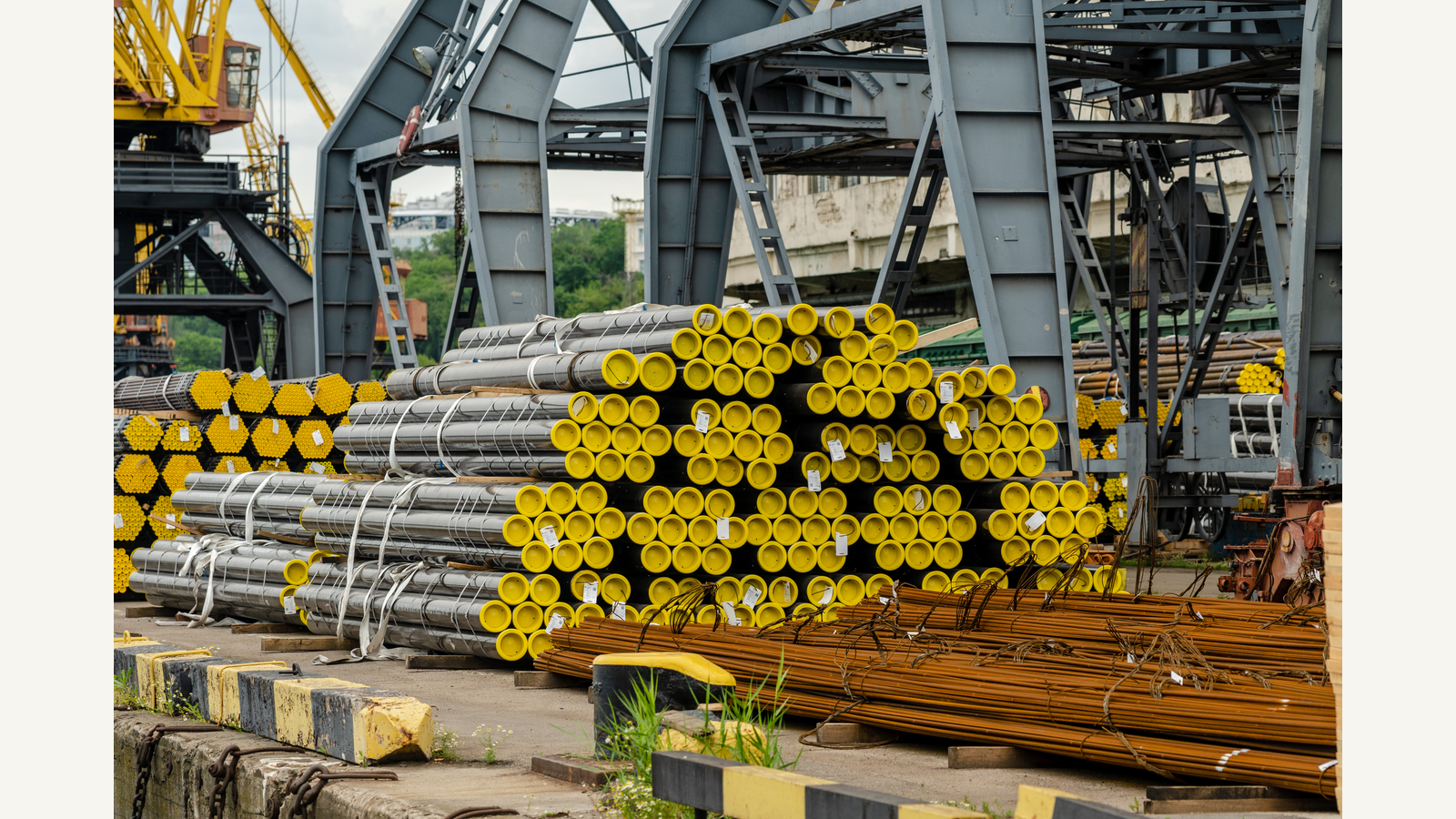
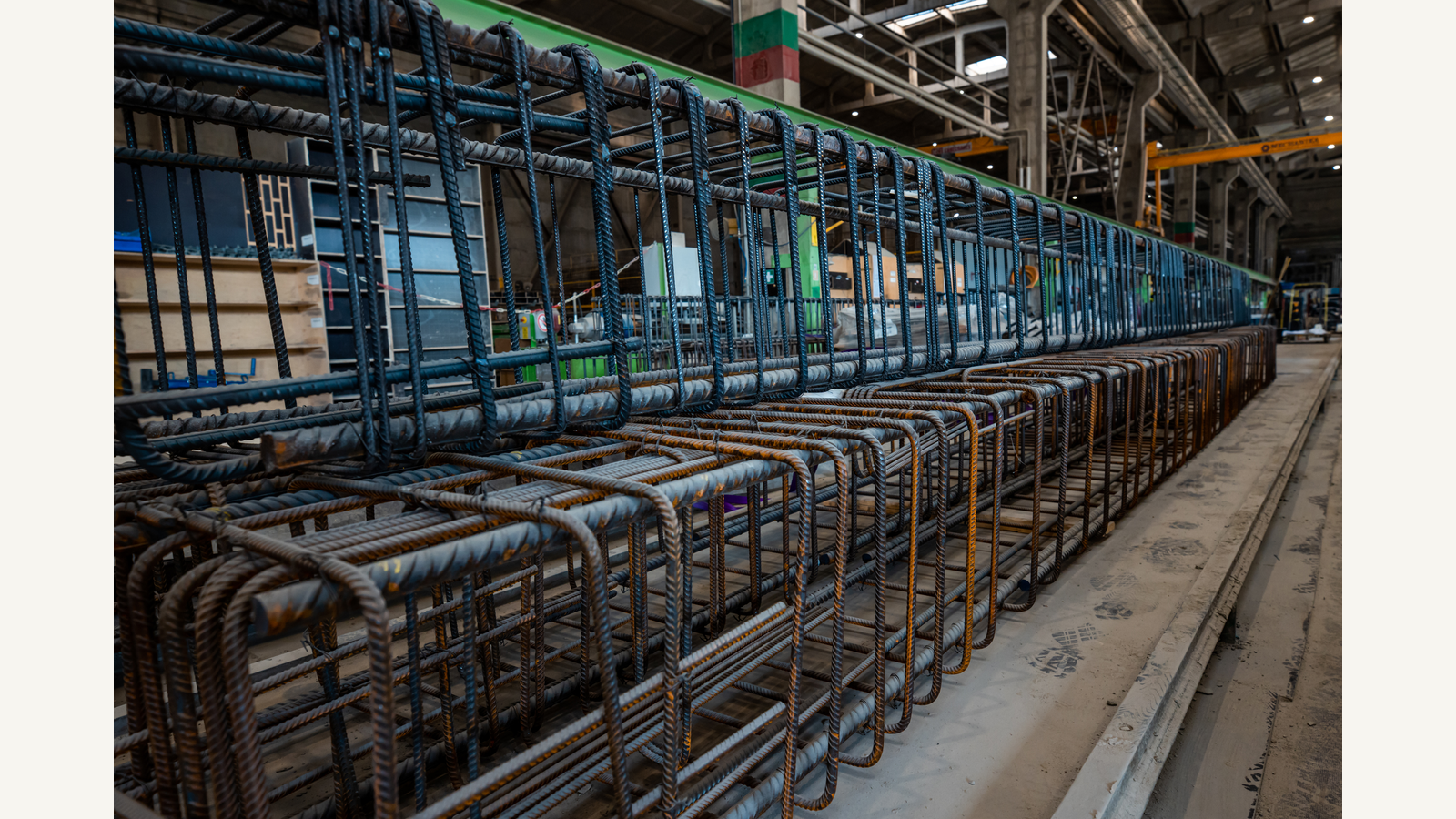
By July, Vietnamese industrial producer Hòa Phát Group had supplied more than 4,900 tonnes of steel pipe to an Asia-Pacific Economic Cooperation conference-centre project in Phú Quốc. The steel went through Đại Dũng, Fountech, Unicons and Hawee as construction sped up ahead of the 2027 summit.
The conference centre carries an investment of nearly 22 trillion Vietnamese dong (about $850 million) and covers about 57 hectares. Hòa Phát’s pipes go into the structural frames and roofing, as well as foundation-testing tubes, mechanical and electrical systems and central chillers.
These are technically demanding packages, not basic commodity sales. Pipes range from 59.9 mm to 323.8 mm in diameter. Products supplied to the conference centre and airport meet European EN 10219-1:2006 S355JR requirements, US ASTM specifications and British standards.
Hòa Phát also holds ISO 9001:2015 quality-management and ISO 14001:2015 environmental-management certification. For contractors, these credentials make it easier to qualify a domestic product for designs originally written around international specifications.
Import substitution in megaprojects hinges on regulatory and technical approval as much as on price: a domestic mill must show that its output meets the engineer’s specification, arrives with consistent documentation and reaches site on schedule. The Phú Quốc orders indicate that Hòa Phát can clear that bar across several distinct applications.
Contractors carry local steel into the projects
Hòa Phát supplied the conference-centre steel through contractors and distribution partners rather than relying on a single direct sale, placing the producer closer to fabrication, installation and project scheduling.
At Phú Quốc International Airport, the company has supplied nearly 2,000 tonnes of pipe, mainly for the terminal roof frame and foundation-testing tubes.
Hòa Phát puts its steel-pipe capacity at 1.2 million tonnes a year, which makes it Vietnam’s largest producer in the segment. That scale can reassure contractors that a domestic supplier can handle large packages without building a dedicated line for one project. It also raises the cost of delays if delivery planning fails.
Prestressed strand and the export case
The group sells more than pipe. It has supplied prestressed concrete strand (a high-strength cable used to reinforce concrete) for the conference-centre seawall and land reclamation, the airport expansion and the planned first phase of Phú Quốc’s light-rail line.
Hòa Phát makes the cable in a closed chain that starts with high-carbon wire rod from its Dung Quất steel complex. Control over feedstock can improve consistency and security of supply, and can limit exposure to imported semi-finished material when shipping rates or currencies swing.
Hòa Phát’s prestressed strand already complies with US, British and European standards, and the company has exported to the United States and Canada as well as to markets including Brazil, Mexico and Taiwan. Phú Quốc could therefore be a useful reference for further international sales, particularly where buyers demand proof of performance in major transport infrastructure.
Yet a reference project does not guarantee export orders. Overseas expansion will still depend on destination approvals, trade remedies, freight costs and how products perform once installed. The main commercial dividend from APEC 2027 may instead be a verified record that Vietnamese materials can win high-specification packages through established contractors and meet deadlines across interconnected projects.
When Binh Hung Industrial Infrastructure Investment broke ground on Tây Giang Industrial Park in Bình Khê commune, Gia Lai, on 19 August, it launched a 1.8 trillion Vietnamese dong (about $69 million) project to expand regional manufacturing. The aim is to turn 300 hectares into a green manufacturing estate by the fourth quarter of 2029.
The real deadline comes much sooner. From January 2027 the developer intends to start courting secondary investors – factory operators that lease or acquire serviced plots rather than build the master estate. That aggressive schedule gives Tây Giang mere months to demonstrate that usable plots and essential infrastructure will materialise in credible phases.
On paper, Gia Lai has momentum. Its economy grew 8.21 per cent in the first half of 2026, and industrial and construction output rose 11.68 per cent. In the same period the province recorded 165 projects with nearly 164.75 trillion dong of registered investment.
Commitments on paper do not produce factory output, however. Turning interest into working plants takes land clearance, reliable power and water, adequate road links and enough time for tenants to secure permits and build. Tây Giang’s commercial test comes well before its 2029 completion date: whether it can hand over its first parcel with dependable services.
Phasing will decide the leasing story
A progress report in March indicated that cadastral surveying was largely complete. Local residents had been invited to verify technical land records, and the developer had completed a survey of forest conditions for land-conversion procedures. The preparatory work was moving forward, but steps of this kind show why the January leasing campaign needs an explicit delivery timeline.
Binh Hung could sharpen its pitch by publishing clear targets for cleared hectarage, internal roads and utility commissioning. Wastewater capacity is critical for an estate marketed on its environmental credentials: plant managers need measurable discharge standards and confirmed treatment capacity before they can assess compliance risk.
There is a benchmark nearby. The plan for the ecological industrial park south of National Highway 19 allocates 30.47 per cent of its site to green space, transport and technical infrastructure, and specifies planned daily water supply of 4,000 cubic metres and wastewater treatment of 2,100 cubic metres. Tây Giang will need commitments as concrete as these if its eco-friendly positioning is to win over corporate tenants.
The port corridor improves the address
Transport links are fast becoming central to the pitch. In May, Gia Lai directed agencies to expedite road connections to Tây Giang and backed Binh Hung’s use of its own capital to widen about two kilometres of existing road from National Highway 19 to Nam Giang village.
The wider corridor links production areas with Quy Nhon Port, which handled 6.3 million tonnes of cargo in the first half of 2026 – a 23 per cent year-on-year increase. The port plans capacity of about 13 million tonnes by 2028, while Gia Lai is developing the Lệ Thanh–Pleiku–Quy Nhon logistics corridor.
The route offers a plausible trade path for food processors, wood-product manufacturers and supporting manufacturers suited to the region’s raw-material base, which could share warehousing, freight and treatment services. That advantage depends on last-mile links being ready when manufacturers install equipment, not merely when the wider park is finished.
Occupancy is the harder measure
To get beyond land registration, Binh Hung must sequence infrastructure around anchor tenants. Early commitments from processors could justify shared cold storage, water treatment and supplier space, and give supporting manufacturers a reason to cluster nearby.
The operational risks are plain. Land procedures can delay possession, road upgrades can lag factory schedules and sustainability pledges may stay purely promotional without disclosed performance thresholds. A January 2027 investor drive is realistic as marketing, but serviced plots under construction will count for more than signed interest.
For Gia Lai, the prize is a larger industrial base and higher value-added exports. Success will show in practical execution on the ground rather than in headline announcements: cleared acreage, commissioned utilities, functional port access and real tenant capital committed on site.
What began as a factory investigation, when Philippine authorities raided Mighty Steel Plant in Davao City, quickly became a sharp warning for the country’s construction sector. Officials reported radioactive material that the plant was not licensed to possess or handle, and steel bars that failed a national mass test. The legal case concerns one mill. The wider problem is how recycled rebar can travel from scrap yard to building site without a reliable trail of screening, certification and testing.
According to the Philippine Information Agency, testing detected uranium-238, thorium-228, thorium-232 and radium-226 in materials including finished DMS rebars, furnace material, black sand and production wastes. Authorities said Mighty Steel’s environmental certificate did not permit radioactive handling, and the Philippine Nuclear Research Institute added that the plant held no licence to possess or handle the material.
Philippine authorities reported that the raid rescued 174 workers. A later report from the Presidential Anti-Organized Crime Commission (PAOCC) said at least 14 people were arrested during the operation and 21 in all had been charged and remained under investigation, while seven others were still at large. Officials pointed to possible charges under nuclear-safety, hazardous-waste, environmental and consumer-protection laws. Mighty Steel, set up in 2012, makes new steel products from scrap metal. The findings remain allegations and regulatory findings rather than a final court judgement, but they expose a weakness in the system that buyers cannot leave mills to manage alone.
Trouble at the scrap gate
Scrap metal is a notoriously unpredictable commodity. A consignment can mix industrial equipment and demolition debris with discarded devices, and radioactive material that has slipped past regulatory controls can hide among otherwise ordinary scrap. Once such material reaches a furnace, the effects can spread beyond one rejected delivery into products, dust and waste streams.
Guidelines from the International Atomic Energy Agency stress that a supplier’s radiation declaration is useful but is no guarantee. Large recycling facilities should monitor incoming scrap themselves, keep a response plan, train staff in detection and response, and keep proper records. Overseas vendors should supply monitoring results, but the receiving mill still needs its own check at the gate.
For mills buying scrap, the checklist is straightforward. Procurement contracts should specify where the scrap came from, the shipment identifiers and the screening results. Gatehouse records should note which detector was used and how the operator responded to any alarm. A suspect load needs to be isolated, and regulators notified, before unloading or processing continues. A broker’s vague assurance is not enough.
Paperwork that follows the product
Radiation screening checks whether feedstock is safe to process; product certification checks whether finished rebar meets the specified standard. Philippine National Standard 49:2020 governs hot-rolled deformed steel bars for concrete reinforcement and sets grade markings as well as elongation and bend-test requirements. The two checks cover entirely different hazards, and one cannot stand in for the other.
The Bureau of Philippine Standards requires domestic manufacturers to hold a Philippine Standard mark licence before distributing covered steel products; importers use a Statement of Confirmation instead. Manufacturers must emboss an approved logo on the rebar itself, while licence or confirmation details go on the bundle tags. Together they form a chain of traceability that contractors and hardware stores should verify before accepting stock.
During the Davao operation, authorities tested eight rebar samples bought from retail outlets, and four failed the mass-variation requirement of Philippine National Standard 49:2020. A failed mass test does not automatically mean a building will collapse, but it shows that the nominal size and the material delivered may not match. That alone gives buyers reason to audit batches rather than trust a familiar brand or distributor.
From purchase order to poured concrete
A proper purchase order should cite the applicable standard and the accepted grade, and demand the manufacturer’s certification, the original bundle tag and the mill test certificate. Delivery dockets should carry heat or batch references, so that laboratory results on samples can be traced back to the exact lot on site.
Those records earn their keep once rebar has been cut, bent and buried in concrete. If a later alert names a mill or batch, good records let engineers isolate the affected stock quickly. Sloppy paperwork can force a far wider investigation, with the costs that follow: delays, replacements, testing and contractual disputes.
Public procurement needs the same rigour on a larger scale. Tender compliance should not end when a vendor hands over a glossy brochure, and site inspectors should match the markings on the bars against delivery tags and test sheets. Certifying engineers should record exactly why they accepted a delivery, including any independent test, and payment sign-offs should rest on verifiable evidence rather than disconnected paperwork.
Distributors, owners and the cost of thin records
Distributors are not immune from scrutiny. When authorities identify suspect products, stock registers must show what arrived and where it went. Suspect bundles should be quarantined by batch number rather than by eye, and customers deserve a prompt alert if the records show a matching delivery.
Project owners should start with an audit rather than assume every length of steel from a named mill is contaminated. Teams should cross-check supplier records, embossed logos and bundle tags to find unused stock and affected placements; qualified laboratories and regulators can then decide on the right sampling or radiation survey.
Poor records make the commercial fallout worse. Contractors may face rejected work and missed deadlines, distributors may face warranty claims and returns, and engineers and third-party certifiers may have to explain why they accepted the evidence. Insurers and lenders may also ask whether quality controls matched the project specifications.
Proof needed for both feedstock and finished bar
The Davao raid shows why environmental permission, radiation safety and product conformity must work together. A mill may present product markings while its controls at the scrap gate fall short. Equally, a passing chemical or mechanical test reveals nothing about radioactive contamination unless radiological screening is carried out.
Regulators can narrow the gap by linking plant licences, quality certification and market inspections. A serious radiation finding should prompt a traceable review of the affected production and distribution records, and a failed retail sample should trigger an examination of the linked batch and the mill’s quality system, not just the removal of a single bar.
Buyers should treat recycled rebar as a controlled material that needs two distinct assurances: safe, documented handling of feedstock and a conforming, traceable finished batch. Both depend on buyers and certifiers insisting on paperwork that reliably identifies the steel in front of them.
Cebu City is turning a flood controversy into a test of whether planning documents protect lower-lying communities from fast-growing hillside expansion. The mayor’s office has ordered 65 developers in the southern mountain barangays to submit their detention-pond blueprints and wider flood-control plans. Officials intend to inspect the sites on 27 August and compare the official drawings with the infrastructure on the ground.
A detention pond holds stormwater for a time and releases it slowly, easing pressure on the drainage network downstream. The audit follows severe flooding after heavy rain, and concern that paved slopes are sending more runoff into lower communities. Missing facilities or discrepancies will be referred to the Cebu City Legal Office rather than triggering immediate penalties.
The exercise reaches beyond a single disputed site, taking in high-end and lower-cost subdivisions alike, including Monterrazas de Cebu and Arcenas Estates. Commercially, the change is simple: paper approvals will be tested directly against physical assets.
Ponds on paper and on the ground
Development control tends to concentrate on the approval stage: engineers model runoff, consultants prepare blueprints and municipal officials sign off on drawings. Yet flood mitigation depends in the end on construction quality, usable retention capacity and maintenance long after the approvals are granted.
Cebu’s inspections could expose several distinct kinds of failure. A basin may be absent, smaller than approved or piped differently from its design drawings. Or a facility may exist but lack verifiable records of its capacity and upkeep. Each problem carries a different remedy and may leave a different party responsible.
Counting ponds will not settle the dispute. Monterrazas has claimed that it built 24 detention ponds with a combined capacity above municipal requirements. But city councillors and environmental advocates have called for independent verification, according to the local newspaper The Freeman.
A rigorous audit would match each approved basin to a specific location and an as-built record. Inspectors could then log its exact dimensions, outlet configuration and current condition, leaving an audit trail that separates design disputes from construction defects and maintenance failures.
For developers, the immediate burden centres on document management. Older projects may have records scattered across consultants, contractors and former project teams. Reassembling that paper trail can take time, particularly where the site was modified during construction.
The financial exposure goes beyond the cost of installing a missing pond. Remedial engineering on a built-out hillside can affect roads, utilities and saleable plots. It can also hold up later phases while managers check whether approvals and built assets still match.
The levers in Presidential Decree 957
The planned referral to Cebu’s legal office is significant because it makes inspection findings evidence rather than immediate sanctions. Officials must link any physical mismatch to the relevant approval, contract or legal obligation. That preserves due process, but it also means the quality of the inspection records will shape the strength of any enforcement action.
Presidential Decree 957 provides a national statutory framework for enforcing subdivision standards. It requires a performance bond guaranteeing the construction and maintenance of drainage and other core infrastructure before a licence to sell can be issued. The decree also holds developers responsible for facilities promised in sales literature or set out in approved plans.
The statute allows a licence to sell to be revoked after the required process, and a performance bond to be forfeited so the proceeds can pay for the required works. The regulator may authorise a city engineer to inspect for conformity and can have an unfinished development completed at the developer’s expense.
Those powers do not mean every finding in Cebu will follow the same path. Project age, approval terms and the status of any performance bond will all bear on the outcome. The city’s first task is to build a claim file that identifies the controlling documents and the party still carrying the legal obligation.
How that responsibility divides has real commercial weight. A developer may keep the regulatory liability while pursuing a contractor for defective work. A civil contractor may rely on completion records, while a hydrology consultant may face questions over whether the design parameters still reflect the catchment as built.
Commercial contracts will come under tighter scrutiny if Cebu demands rigorous proof of compliance. Developers may seek clearer warranties, longer record-retention duties and specific handover evidence. Contractors may price extra site testing and documentation into tenders, while consultants may narrow their technical assumptions or charge more for field verification.
Insurers and lenders will also be watching the audit. Evidence of drainage capacity and maintenance can influence how they assess flood risk, project controls and contingent remediation costs. Missing records do not in themselves prove a defect, but they make the uncertainty harder to price.
Private ponds, public drains
Private detention ponds cannot carry Cebu’s flood burden alone. The city is pursuing a one-hectare floodwater reservoir in the Tisa-Labangon area, alongside continuing waterway clearance and a review of its drainage infrastructure and its 2017 Drainage Master Plan.
These public projects and the developer audit deal with different parts of the same hydraulic network. City drainage takes water from many sites, whereas each hillside project changes runoff within its own boundaries. Oversight needs evidence at both levels, so that private compliance is not assumed to close a public capacity gap.
The city plans to report its findings publicly on 31 August. The most useful disclosure would go beyond a simple pass or fail. It would separate missing infrastructure from questions of capacity and maintenance, and make clear which files face legal review.
That degree of transparency would help compliant developers as well as the regulators. Comparable evidence can stop the wider hillside property market being treated as a single, undifferentiated flood risk. It can also show homebuyers and financiers which operators keep control of their assets after completion.
The audit’s lasting impact will depend on what Cebu asks developers to prove next. A durable regime would keep approved drawings, as-built records and maintenance logs linked throughout a project’s life. Site inspections would then check a live compliance record instead of reconstructing history after a flood.
For the real estate supply chain, the shift raises compliance costs but also clarifies responsibility. Developers who can prove capacity and upkeep should face less regulatory uncertainty. Those relying on paper approvals without the evidence to match may find that drainage is no longer a planning formality but a continuing exposure on the balance sheet.
By ordering fire-retardant netting on scaffolds at new worksites, Singapore’s manpower ministry says it will cut the risk of flames spreading. The requirement applies to projects awarded from 1 March 2027, whatever the scaffold is made of. Procurement teams should now be arranging their supplies.
Minister of state for manpower Dinesh Vasu Dash announced the rule on 24 September, in response to the Wang Fuk Court fire in Hong Kong, which killed 168 people in November 2025. Early observations from Hong Kong’s probe cited the use of non-fire-retardant safety nets and canvases as a contributor.
Until 1 March 2028, the ministry says, the Commissioner for Workplace Safety and Health will set interim specifications drawing on recognised fire test standards under British Standards, Japanese Industrial Standards and the US National Fire Protection Association. The Ministry of Manpower has not yet published the individual standard numbers. Until it does, a supplier cannot tell a customer with confidence whether current stock qualifies, and a contractor cannot buy ahead without risk. Nobody has published how much existing netting already meets those standards or what it costs against standard netting, and the premium is the figure that will drive contractor budgets.
The second step is a different test. From 1 March 2028 netting must also be certified by bodies accredited by the Singapore Accreditation Council, and the ministry has said only that details will follow ahead of implementation. Suppliers that already hold credible test records are best placed to gain, while importers of uncertified product face the sharpest squeeze. Certifier capacity is the unknown, and a queue at accredited bodies would slow every supplier at once. Contractors should ask now whether netting bought on an interim basis will be accepted later.
Manufacturers, suppliers, scaffold contractors and workplace occupiers will all be responsible for ensuring the netting meets the specifications. A contractor cannot rely on a supplier’s assurance alone, and a supplier cannot assume the buyer will carry the risk. Expect contract clauses on test evidence, labelling and replacement to harden. The ministry has advised employers and industry stakeholders to review project schedules, procurement arrangements and contractual obligations early.
The netting rule sits beside a cut in the permitted use of timber scaffolds from nine months to three months, which takes effect from January 2027 and aims to reduce combustible timber at construction sites. Together the measures push combustible material off site from two directions, and both raise cost: shorter timber use means earlier replacement, and compliant netting presumably costs more than plain mesh. Firms that have not yet priced both into tenders for late 2026 and 2027 risk absorbing the difference.
Projects awarded before 1 March 2027 fall outside the rule as announced, and the ministry has not said whether any retrofit is expected. This leaves a split market in which standard netting may stay on older awards while new awards need the compliant product. The circular, which MOM will issue, is due to set out scope, acceptable standards, labelling and certification. Its standard numbers, its treatment of earlier awards and the first list of accredited certifiers are the three things to watch.
On paper, the Land Transport Authority has spread the Tuas Road Viaduct extension across three contractors. When you judge this by parent company, there are only two winners, with the larger share sitting with China Communications Construction Company. For Singapore’s own main contractors, the question is how much LTA civil work they can keep when a large job is cut into packages of similar size and one state-owned group can win more than one of them through separate entities.
LTA announced on 30 September three civil contracts worth a combined S$1.2 billion for the second phase of the viaduct. Construction will start in early 2027 and last until 2032. Singapore company Hwa Seng Builder won the Pioneer Road Viaduct contract, valued at S$381.6 million.
The Singapore branch of CCCC, a state-owned China-based construction firm with dual listings in Shanghai and Hong Kong, took the S$430.3 million Tuas South Avenue 3 Viaduct contract. China Harbour (Singapore) Engineering Company won the S$404.4 million Tuas South Boulevard Viaduct contract. It is a subsidiary of state-owned China Harbour Engineering Company, which is itself a unit of CCCC.
Two port legs, one parent
LTA cut the job by geography, and the extension will connect to Tuas Port via Tuas South Avenue 3 and Tuas South Boulevard, and to the city via Pioneer Road. Both port-facing legs went to the CCCC group, while the local winner holds the city-facing section, which is also the smallest of the three contracts by value.
Packaging of this kind widens the field. Three mid-sized contracts let firms bid without taking on a single S$1.2 billion risk, which should suit local contractors. It also lets a group with several Singapore-registered entities compete for more than one package without any one entity stretching its balance sheet or its site teams. With adjacent sections under one parent, the CCCC group can share plant, temporary works and supervision across both port legs, an advantage a local firm holding one package cannot match.
How LTA reached its decision is less clear. It has not disclosed the number of bidders for each package, the tender prices or how it weighted price against quality, so nobody outside the process can yet say whether the CCCC entities won on price, on technical scoring or on both. LTA said only that all three contractors have established track records in delivering major transport and civil engineering infrastructure projects in Singapore. Until the tender results are published, the line about three companies overstates how widely the work has been spread.
Jurong Region Line teams head for Tuas
The three firms’ current workloads overlap heavily. Hwa Seng Builder is building Loyang Viaduct and three stations on the Jurong Region Line, and earlier worked on the viaduct from the TPE to the PIE and Upper Changi Road East and on the expansion of the KPE and TPE interchange. CCCC’s Singapore branch is building Boon Lay station and viaduct works on the Jurong Region Line, as well as viaduct and tunnel works for the Johor Bahru–Singapore Rapid Transit System Link and the Jurong East Integrated Transport Hub. China Harbour (Singapore) is building two stations on the Jurong Region Line.
On road-viaduct experience alone, Hwa Seng’s record is the closest match to the Tuas job, yet it took the smallest package. The CCCC group offers breadth instead: rail, cross-border transit and an integrated hub, delivered through two entities that can each carry a separate contract. A specialist record earns a local firm a place on LTA’s award list but does not guarantee it the larger packages. All three already have teams on the Jurong Region Line, which should keep their mobilisation costs at Tuas down and make the next round of western civil tenders just as competitive.
The works comprise new road viaducts, associated road improvements, drainage enhancements and supporting infrastructure. For suppliers, that means foundations and piers come first, then deck spans, then drainage and road works once the structure is up. LTA has not said whether the contracts are design-and-build or construct-only, nor whether the decks will be precast concrete or structural steel. Those choices decide which trades take the larger share of the subcontract value.
Concentration at parent level shapes this downstream market. Two CCCC entities on neighbouring sections can pool their buying, so local precasters, steel fabricators and piling specialists may face one procurement decision for two of the three packages. Whether the group buys through Singapore supply chains or its own will be the first test of how much of the contract value stays with local subcontractors.
The sites add work of their own. Traffic realignments and lane closures on Tuas South Avenue 3, Tuas South Boulevard and Pioneer Road will be implemented progressively, and LTA’s measures may include temporary bus stop shelters and footpaths. That is steady business for traffic management and temporary works firms, and a cost for logistics operators in Tuas South, who will have to work around live sites for several years. The payoff is a corridor that bypasses 18 surface-level junctions.
A port-driven job in a cooling market
LTA said the extension will support industrial developments in Tuas South and the consolidation of Singapore’s container port activities at Tuas over the next decade. It expects the works to be completed in phases starting in 2032. A phased handover means contractors will release sections while the port consolidation is still under way, so the job is timed to the port rather than to the construction cycle.
That cycle is turning. The Building and Construction Authority, which forecasts national construction demand, expects demand to hold at S$47–53 billion in nominal terms in 2026, then average between S$39 billion and S$46 billion a year from 2027 to 2030. It has also warned that demand could moderate after the one-off Changi T5 project, potentially reverting to pre-Covid levels. The Tuas contracts therefore lock in work for three firms through a period when the wider market is forecast to shrink, and the firms that missed out will be chasing a smaller pool.
The largest risk for local contractors is that Tuas becomes the template: big LTA civil jobs split into packages of similar size, with a well-resourced state-owned group able to take more than one through its Singapore entities. Published tender results would show whether the outcome came from lower prices or better technical scores, and each answer points local firms in a different direction, towards sharper pricing or towards joint bids that match the group’s scale.
Contract form is the other variable. BCA has been promoting collaborative contracting through more than 20 ongoing and upcoming pilot projects, and in the public sector this takes the form of Option Module clauses under the Public Sector Standard of Conditions of Contract. If LTA uses such terms at Tuas, risk and early coordination would be pushed further down the chain, which favours firms with dependable supply chains.
By bringing its Singapore and Malaysia operations under one structure, specialty insurer Markel claims it now offers brokers and clients ‘a more connected and coordinated regional platform’. Whether that platform carries extra capacity for contractors and consultants is a separate question, and the restructuring itself does not answer it.
Markel Insurance has made Kevin Leung managing director, Southeast Asia, with immediate effect. He comes from the post of chief underwriting officer for Asia Pacific, and has been with Markel for more than three years. His earlier career is weighted towards liability-type business: he spent more than six years at Swiss Re Corporate Solutions, most recently as head of casualty & finpro for Asia Pacific, and brings 28 years of industry experience. That is a sound profile for professional liability, the line consultants buy. It says nothing direct about engineering or construction risks, and Markel has not linked the appointment to them.
Earlier in September, Sucheng Chang, Markel’s managing director for Asia Pacific, outlined an ambition to nearly double its regional book within five years. Leung reports to Chang and will support local and regional teams on strategy, product offerings and broker and client relationships. In Malaysia, Markel appointed Weng Fatt Tan in July to lead casualty underwriting, adding a dedicated casualty underwriting capability in the country. Jasminder Kaur stays as country head of Malaysia and keeps day-to-day running of the business.
Growth on this scale needs underwriters as well as ambition, and Markel is recruiting a successor to Leung as Asia Pacific chief underwriting officer. Who fills that post, and whether the person comes from casualty, property or specialty lines, will say more about appetite than the unified structure does. A new casualty team in Malaysia and a casualty-trained head of Southeast Asia point to liability growth. Whether that reaches construction professional indemnity or engineering cover is unproven.
Markel has not disclosed the size of its Southeast Asian book, the baseline for the near-doubling target or the lines it will prioritise in Singapore and Malaysia. Nor has it set out capacity limits for contractors and consultants. Buyers of construction professional indemnity and engineering cover should ask their brokers whether Markel is quoting on those risks, at what limits and whether the new Malaysian casualty team will write them. A growth-minded insurer entering a line can widen choice at renewal; one that stays out leaves the market as it was.
By agreeing to sell a plot of 45.46 acres in Sepang to the local unit of Amazon, Malaysian developer Sunsuria claims it can now realise value from vacant land that earns no income. The buyer plans to use the Dengkil site to host data processing services and infrastructure.
The buyer is Amazon Data Services Malaysia, a wholly-owned unit of A100 Row, which is in turn owned by Amazon.com. It is paying 316.84 million Malaysian ringgit (about $78 million) cash for freehold commercial land of 183,973 square metres, indicating that a hyperscaler is committing capital to Dengkil. However, one transaction does not make a corridor, and neither company has disclosed the capacity planned for the plot.
The better evidence of intent is Amazon Web Services’ wider pledge. When it launched its Malaysia region in 2024, AWS said it planned to invest more than $6.2 billion (about 29.2 billion ringgit) through 2038, and it listed construction, facility maintenance and engineering among the jobs in its Malaysian supply chain. Whether Dengkil takes a meaningful share of that spend is unproven.
Independent valuer CBRE WTW Valuation & Advisory valued the plot at 307 million ringgit as at 28 August, and the transaction price is a 3.2 per cent premium over that. Sunsuria bought the land on 11 June 2015 for 145.97 million ringgit, and its audited net book value was 163.44 million ringgit as at 30 September 2025. A premium that thin points to a price anchored on the valuer’s figure rather than a bidding contest, though neither company has said whether others were in the running. Without disclosed prices from other Selangor and Johor data centre land sales, the Sepang figure cannot yet be called a benchmark for sites south of Kuala Lumpur.
The sale is conditional, and Sunsuria’s cash depends on its own work. Completion is expected by the second quarter of 2027, subject to shareholders’ approval. The buyer must also secure written confirmation from the Ministry of Economy’s Equity Development Division that the transaction does not require its approval, written consent from the Selangor State Authority if applicable, and written endorsement from the Malaysian Data Centre Task Force for its development. The buyer pays a 10 per cent deposit within 10 working days of the agreement. The 90 per cent balance goes to its lawyers once conditions are met or waived, then to Sunsuria City in stages against milestones that include title transfer and infrastructure works for which Sunsuria City is responsible.
Sunsuria estimates land development costs at 79.31 million ringgit, including infrastructure and site clearance, and took those costs into account in estimating an expected one-off pro forma net gain of 50.34 million ringgit. Those works are the first contract opportunity, and the milestone payments give Sunsuria a reason to let them quickly. Its balance sheet adds pressure: at end-June it held cash and bank balances of 189.6 million ringgit against total borrowings of 797.01 million ringgit, and it has earmarked proceeds for infrastructure works, working capital, repayment of bank borrowings and transaction expenses.
Data centre construction and MEP packages are a later prospect. Amazon has not disclosed capacity, timing or procurement, and orders look unlikely before the approvals clear. Nothing disclosed shows grid capacity or water allocation at Dengkil. Contractors should look for the scope and timing of the site works in the shareholder circular, and ask utilities about connection lead times before pricing any bid tied to a 2027 completion.
Thailand’s planned Chai Nat–Pa Sak–Gulf of Thailand canal is designed to stem flooding across 3.48 million rai and store roughly 1.555 billion cubic metres of water for the dry season — yet the defining metric for the infrastructure sector remains an overarching budget rather than a detailed tender schedule.
The cabinet approved the scheme on 29 September with an estimated investment of 160 billion Thai baht (about $4.8 billion), with construction scheduled to run from 2027 to 2034. For contractors, this offers a distant perspective but limited immediate visibility. Packaging, earthworks, concrete volumes and tender dates remain undisclosed. The only firm timeline is that initial capital has been allocated for work in Chai Nat in 2027, with government spokesman Ekkapob Pianpises noting that extensive site preparation will be required.
A canal network designed to store roughly 1.555 billion cubic metres implies earthmoving, embankments and control structures on a vast scale. Equipment demand will follow: excavators, haul trucks and compaction fleets deployed over years rather than months. Aggregates, cement and steel suppliers should view the announcement as directional rather than a concrete forecast, given that precise quantities depend on a feasibility study that has yet to be published. Fleet operators also face sequencing risks: while initial funding has been set aside for the Chai Nat start in 2027, subsequent phases are not anchored to any disclosed year.
Prime minister Anutin Charnvirakul indicated that financing will combine budgetary allocations and borrowing, with the Agriculture and Cooperatives Ministry, the National Economic and Social Development Council, the Budget Bureau and the Finance Ministry still to settle the mechanics. Contractors should treat the structure as open. The split determines payment risk and the annual disbursement profile, neither of which has been established. A regional report puts the canal system at 165 billion baht against the 160 billion baht approved – another reason for market participants to await formal budget documents. The project also competes for capital and capacity: Thailand is allocating 95 billion baht to improve irrigation in the eastern downstream Chao Phraya River region, while more than 700 flood-control projects in the south are planned with a budget of 30–40 billion baht.
The administration says the canal will avert an estimated 16.93 billion baht in damage annually, with Ekkapob stating that an economic assessment found the project worthwhile. Measured against the 160 billion baht outlay, annual avoided damage represents a modest fraction of the total. The economic rationale relies on that estimate holding for many years and on dry-season storage generating additional value. However, because the underlying assessment has not been published, the figure remains a government estimate that external analysts cannot verify.
A more immediate benchmark is the unfinished Bang Ban–Bang Sai flood-diversion canal. Ekkapob noted that the original contracts provided for completion in 2026–2027, but site handover delays prompted a request to push the timetable to 2029. The Royal Irrigation Department indicated it could finish the work in 2028, and the cabinet opposed further extensions.
Two indicators will signal whether the eight-year programme translates into active contracts: the identification of a lead agency alongside its package structure, and the annual disbursement profile once the budget-and-borrowing split is finalised. Until then, equipment and materials suppliers should prepare for a phased rollout rather than a continuous surge through 2034, viewing the initial Chai Nat tender as the true barometer of progress.
By placing 12 third-generation Yeoh family members on three listed boards, Malaysian utilities and cement group YTL appears to be preparing the next generation for leadership, mostly through alternate seats beside their parents. The structure suggests a handover designed to be staged and shared rather than a single coronation.
The 12, aged between 25 and 41, are all grandchildren of the late patriarch Yeoh Tiong Lay, who had seven children, and every one of those seven branches is represented. Spreading the seats this way points to a balance among family lines, not the early selection of one heir. The eldest of the second generation, Francis Yeoh Sock Ping, 72, is executive chairman of all three listed entities. His son Yeoh Keong Yeow, 41, joins YTL Corp and YTL Power as his executive alternate director, so the chairmanship has a visible successor in the room but no named one.
The clearest step up is Yeoh Keong Hann, 40, who is elevated to a full executive director at YTL Power and made an executive alternate director at YTL Corp. His father, Yeoh Seok Hong, 67, is managing director of YTL Power. Of the appointees in the filings, he is the one given a seat that does not hang on a parent’s. An alternate seat rests on the parent’s directorship, so for the other eleven the second generation keeps the decisions until the family chooses to change that.
Cement gets lighter touches
The pattern differs at Malayan Cement, where Yeoh Keong Junn and Yeoh Pei Yen are among those joining as alternate directors, as is Choy Yuin Quan. Yeoh Pei Yen’s twin, Yeoh Pei Jen, 29, goes instead to YTL Corp and YTL Power as an executive alternate. Their father, Michael Yeoh Sock Siong, 66, is managing director of Malayan Cement. The executive alternate titles cluster at the holding company and the utility, which suggests the family sees those as the training ground, with the building materials arm a step behind. It is not clear what each appointee currently runs, so it isn’t possible to separate a development plan from board-seat symbolism.
YTL Corp owns 52.46 per cent of YTL Power, valued at 50.7 billion Malaysian ringgit (about $12 billion), and 59.25 per cent of Malayan Cement, valued at 9.40 billion ringgit, while YTL Corp itself has a market capitalisation of 27.43 billion ringgit. The market therefore values the utility above its parent, and a seat at YTL Corp gives a family member sight of everything below it. Shares reacted without a clear verdict, as YTL Corp fell 3.7 per cent to 2.34 ringgit and YTL Power lost 1.86 per cent while Malayan Cement gained 1.44 per cent.
The family concentration is the governance issue. Twelve more family members on boards where the executive chairman and most executive directors are already second-generation Yeohs does little for board independence, however capable the appointees are. Minority shareholders should look for the independent-director ratio at each company before and after the changes, the pay and disclosed duties of the alternates and whether the group names a timetable for the executive chairmanship. The first sign of a deliberate plan will be an appointee moving from alternate to full director with a stated remit, as Yeoh Keong Hann has at YTL Power. Until then, the filings show intent, not a transfer of power.