Vietnam tests cheaper land and capped profits for middle-market housing

Illustration of a paper-model apartment tower supported by a folded ruled-paper plinth beneath a segmented translucent gauge, with a wooden gavel and model city blocks on a studio table.

Vietnam’s Ministry of Construction wants to mend a broken property ladder. It is drafting an ‘affordable commercial housing’ category to plug the gap in the country’s urban apartment market, with a target average price of 40–50 million Vietnamese dong (about $1,500–$1,900) per square metre.

The category sits between conventional social housing and the wider commercial market. The state offers cheaper land and recovery of eligible construction costs in return for a profit cap of roughly 15 per cent. The test is whether such a bureaucratic compromise can win over private developers while preserving construction quality and public value.

The core of the scheme is land allocation. Instead of making builders compete through auctions or competitive bidding, eligible plots would be allocated using provincial land price tables. This could take a hefty dose of guesswork out of the spreadsheet before the first spade hits the soil.

When auction prices soar, developers are pushed towards premium apartments because each sale must carry more of the land cost. Administered land charges give them room to target buyers without deep pockets, so they need not chase aggressive prices simply to recoup the site.

Swapping the auction block for official discretion moves the battle line. Winning a site will depend less on the highest bid than on which developer the authority picks. Provinces will therefore need clear tests of financial stamina, track record and design standards, along with explicit milestones and clawbacks for land left to gather weeds.

The gap between administered values and a possible open-market auction amounts to a public contribution, so open books and strict scrutiny are essential. They would help show that the state’s generosity reached homebuyers rather than related contractors.

A 15 per cent ceiling

A 15 per cent profit ceiling sounds tight, but it is generous next to the 10 per cent allowed for social housing. In a 2025 account, the Ministry of Construction noted that one seasoned firm had made a return of around 2 per cent after five years. It linked weak participation to low profitability and cited an industry call for a margin near 13 per cent.

In theory, 15 per cent could be enough to coax capable firms in, provided approvals are fast and eligible costs are drawn broadly. A single headline margin on development costs is fragile, though: administrative delays, interest payments and sluggish sales can erode it sharply.

The ministry’s promise to recognise actual construction expenses is reassuring. Rigid price caps invite corner-cutting on concrete and steel when raw material prices spike; a cost-recovery clause lets builders preserve structural integrity without breaching the price ceilings.

The danger of cost-plus accounting is that it can weaken the incentive to economise. Developers may shift earnings through affiliated contractors, architectural advisers or procurement arms. Keeping everyone honest will take independent cost audits and benchmark prices, along with public disclosure of related-party deals.

Regulators would do better to judge quality by outcome, with enforceable standards for structural performance, energy efficiency and after-sales warranties. This would give developers room to standardise layouts and buy materials in bulk without rewarding cheap fittings that push up maintenance costs later.
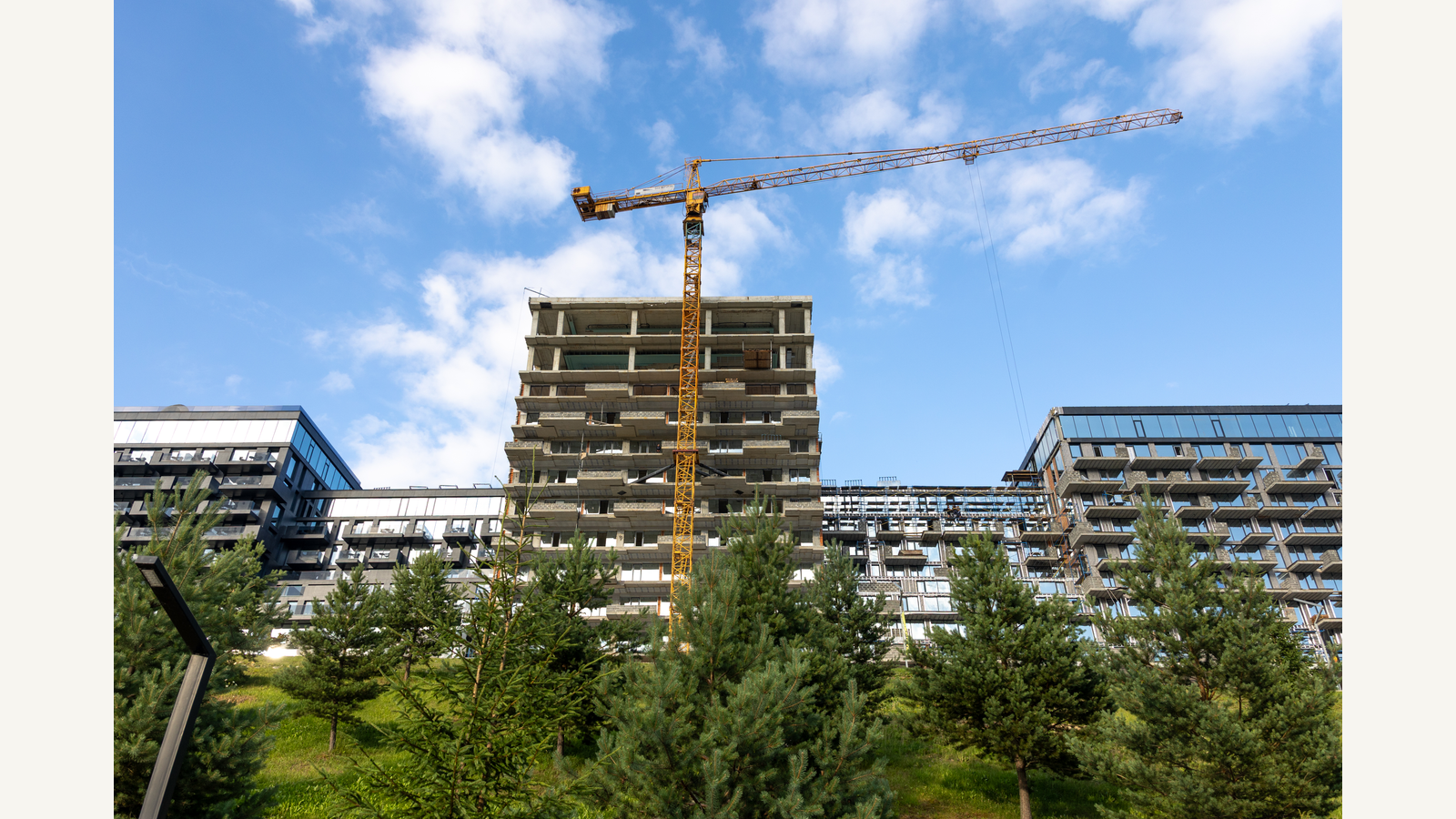
Illustration of a wide construction site with a tower crane and modern apartment buildings, showing active urban residential development.

The mortgage bottleneck

The ministry’s target is ambitious and would halve prevailing prices. CBRE, a property consultancy, put average primary prices in Hanoi at roughly 95 million dong per square metre in the second quarter; JLL recorded 98.1 million dong in Ho Chi Minh City.

Recent supply has been concentrated at the expensive end. About 16,600 new apartments came onto the Hanoi market in the first half of the year, yet for two consecutive quarters not a single newly launched project was priced below 60 million dong per square metre.

At the same time, buyers are feeling the pinch. CBRE noted that more than 5,800 Hanoi apartments sold in the second quarter, equal to 68 per cent of new supply, while secondary asking prices fell for the first time since late 2022. It linked the outlook to interest rates and buyer confidence.

Cutting sticker prices solves only part of the affordability puzzle, as a family still needs a deposit and a mortgage it can manage, and the new land and margin rules do nothing on their own to create long-term buyer finance.

Vietnam’s commercial banks rely mainly on short-term deposits, while housing needs long-term capital, which limits how many long-duration home loans they can extend. Affordable projects may therefore need stable mortgage programmes or a housing fund if discounted flats are to be manageable on monthly payments.

The draft rules would open purchases to people eligible for social-housing support, as well as to businesses, cooperatives and public agencies. To deter flipping, resales would be banned for at least five years after full payment, a safeguard against speculation but potentially an unhelpful leash on households that need to move.

Standard designs and compact floor plans

To make the maths work under price caps, builders are likely to seek repeatable designs, simpler finishes and faster construction. Standard windows, precast components and common mechanical systems could cut waste and building times while giving suppliers larger orders.

Floor plans will need similar discipline. The new category would allow more flexibility in project scale than social housing, including larger homes, but generous floor areas can wreck total affordability even when the price per square metre looks reasonable on paper.

The best developments are likely to pair compact private quarters with well-designed shared spaces near jobs, schools and transport. Cheap land on the urban fringe creates little public value if daily commuting costs swallow a household’s savings.

A regulated middle tier could ripple through the wider market. Some developers may redesign planned mid-market schemes to qualify; others may shun capped margins and stay in premium segments. Landowners, meanwhile, could see fewer auction windfalls where provinces reserve plots for the programme.

For developers, the sums add up if land costs are predictable, permits quick and infrastructure reliable. Provincial authorities have the harder task of keeping prices low while thwarting cost padding, shoddy workmanship and covert profit-shifting.

Vietnam’s blueprint is sensible in principle because it tackles land costs and developer margins together. Its success will hinge on execution more than on the headline 15 per cent. If provinces allocate good sites transparently and buyers can obtain durable financing, Vietnam may yet rebuild a working middle rung on its housing ladder.

Malaysia’s builders face a scale test beyond the tender

Illustration of a tall layered paper construction tower standing on a large open blank ledger, with a dense foreground of unfinished paper blocks, palms, cranes, hills and a low tropical skyline.

Malaysia’s government presents Budget 2027 on 9 October, and its development spending will again set much of the work available to the country’s builders. Whether those builders can deliver it is a separate question. On 18 August Ahmad Maslan, Malaysia’s deputy works minister, gave a blunt answer: an estimated 75 per cent of delayed or ‘sick’ projects, he said, stem from weak management, poor operational oversight and financial shortfalls, while technical problems on site account for the remaining 25 per cent.

Delivered at a contractor convention in Seberang Perai, the minister’s warning cuts deeper than late handovers. A builder that cannot manage cash, personnel and information passes that risk along the supply chain. Subcontractors wait for payment, suppliers tighten terms and clients face higher completion costs. The ministry says 36 of the projects it oversees with the Public Works Department, or 4.13 per cent, were classed as sick in August, down from 53 in June 2025, and it wants the share down to 3 per cent by November.

Ahmad’s diagnosis exposes a structural problem. Malaysia has many businesses at the entry level of contracting, but far fewer at the highest grade. Sustainable expansion demands more than winning a bigger contract; it requires the financial resilience and delivery systems to complete it.

Cash flow turns weakness into delay

Construction firms often spend before they collect. They mobilise labour, order materials and hire machinery while progress claims move through approval. A profitable contract can thus become a liquidity crisis when payment timing slips.

A 2021 study of Malaysian construction identified withheld payment by approval parties as the industry’s critical financial issue. It found delay, postponement or termination to be the main project impact. This underlines Ahmad’s focus on cash flow, even if his 75 per cent estimate encompasses broader management failures.

The commercial spiral is unforgiving. A cash-strapped contractor may reduce purchases or defer hiring. Delayed progress then stalls subsequent billing, compounding the shortage. Suppliers may demand cash in advance, while lenders may grow more cautious.

Rigorous cash management is an operational imperative, not a mere accounting chore. Firms need realistic project-level forecasts, strict billing routines and adequate capital buffers. Tender pricing, too, must reflect actual execution risks rather than hopeful assumptions.

Governance is crucial because financial weakness is often inseparable from poor internal oversight. Managers must track who approved variations, verify completed work and monitor when invoices become collectible. Without such visibility, revenue on paper can conceal a site running out of money.

Ahmad also called for an end to proxy bidding and contract pass-through arrangements, which can separate bid success from delivery capability. These practices can undermine accountability, as nominal contract holders may not control site workers, suppliers or daily operations.

For public procurement, the lesson is clear. Pre-qualification should assess working capital, delivery records and management systems alongside technical merit. Contract supervision should monitor who actually does the work. Awarding tenders to the lowest compliant bidder offers cold comfort if the firm cannot finance completion.

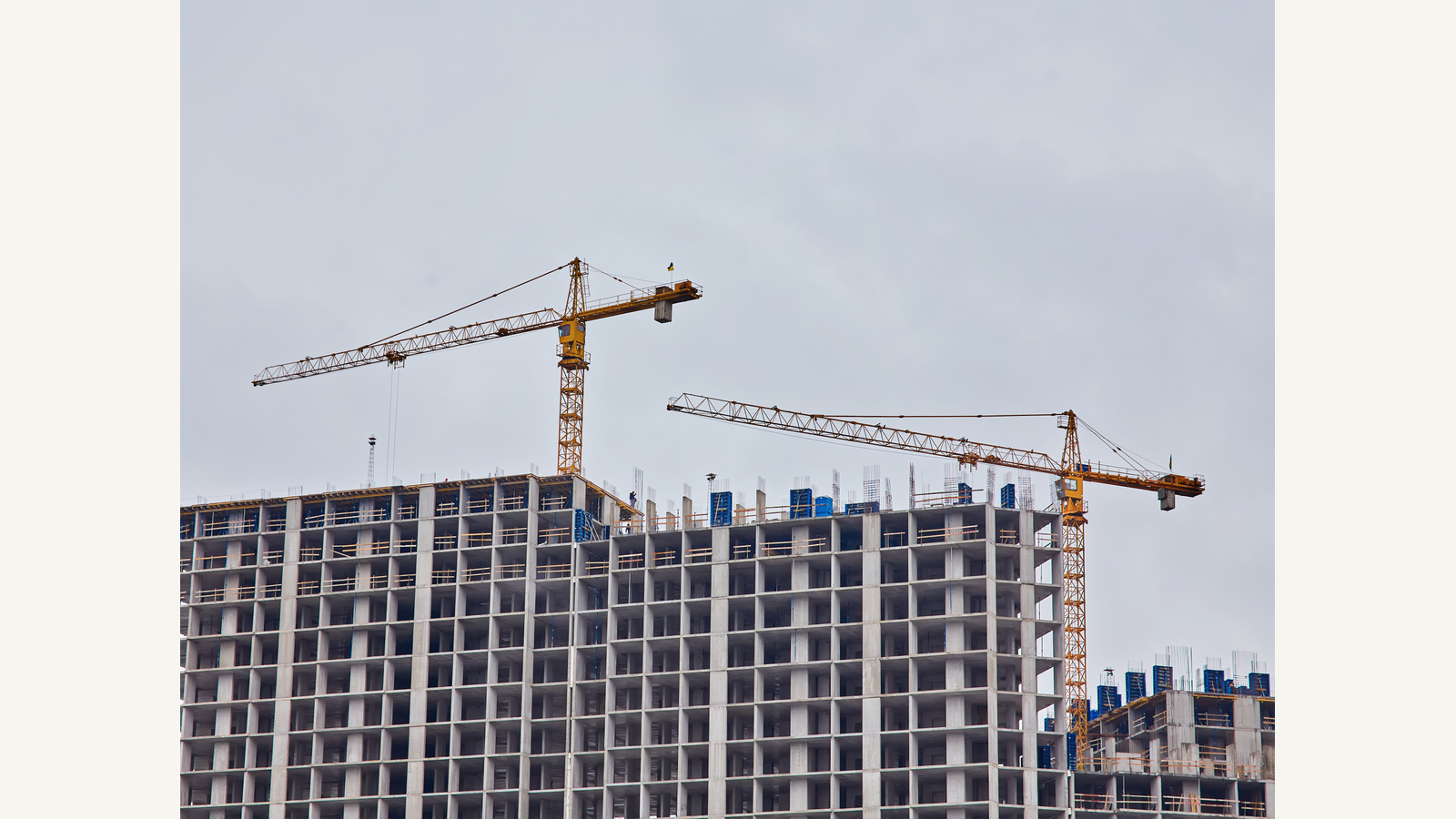
Illustration of cranes rising above a construction site with unfinished building structures against an open sky.

The missing rungs in the contractor ladder

Data from the Construction Industry Development Board cited by Ahmad highlight a stark disparity across contractor tiers. Bumiputera businesses make up 47,064 of Malaysia’s 65,446 registered Grade G1 contractors (72 per cent), but 3,097 of its 10,837 registered Grade G7 contractors (28 per cent).

Though a static snapshot rather than proof of individual failure to progress, the concentration illustrates a steep scaling hurdle. Entry-level registration creates access, but a higher classification cannot substitute for operational competence.

Moving up the ladder is not a simple sprint for status. Larger projects expose weak controls quickly as payroll, material bills and subcontractor claims rise before each payment milestone. A single mispriced contract can consume the cash generated by several successful ones.

Scaling requires patient accumulation, and a contractor must build an established track record, retain skilled personnel and refine internal controls. These assets bolster creditworthiness and trade terms, helping clients separate genuine capacity from aggressive bidding.

Federal development spending offers scale, but no panacea. Ahmad cited federal development expenditure of 90 billion Malaysian ringgit (about $22 billion) in 2024, 86 billion ringgit in 2025 and a target of 81 billion ringgit in 2026. Yet a deep order book can exacerbate vulnerability if contractors take on more work than their balance sheets can support.

Procurement reform can encourage sound growth. Authorities should apply proportionate financial tests, enforce prompt certification and penalise undisclosed contract pass-through. Builders, for their part, should decline contracts whose funding profiles exceed their capacity. Revenue expansion without financial discipline often merely accumulates risk.

Digital control and income after handover

Building Information Modelling offers a method to tighten project control. By preparing, using and sharing data-rich 3D models across a project, the process can reduce costs, raise quality and shorten delivery times, according to the Construction Industry Development Board.

Shared digital models can support schedule tracking and give teams a common record. They can improve coordination, provided staff use the software consistently and management heeds what they reveal.

For smaller builders, adoption must be measured. Software introduced without trained staff or sound processes can become an added overhead. A sensible strategy builds digital competence around core activities, then uses the resulting evidence to compete for more complex ventures.

Facility management provides a second avenue for stability. Ahmad launched CIS 33:2026, a good-practice guide intended to provide a more standardised reference for asset and facility management. According to CIDB figures he cited, Malaysia recorded 1,541 facility-management and maintenance projects worth 39.59 billion ringgit (about $9.7 billion) between 2023 and 2025.

A total of 468 contractors were registered in the F01 and F02 facility-management specialisations. While these figures point to a substantial market, they reveal little about contract duration, profit margins or how value is distributed. Entrants should not mistake aggregate spend for revenue readily available to each of them.

The principal draw is the revenue pattern. Unlike lumpy, project-based construction, maintenance work can foster longer-term client relationships and more regular post-handover income. Builders familiar with a structure’s systems may be well placed to operate them efficiently.

Diversification, however, will not rescue poorly managed firms. Facility management demands service response, lifecycle planning and sustained performance, extending operational responsibility beyond practical completion. It requires the same cash control and governance as building, applied over a longer period.

Malaysia’s contractor sector lacks not tenders or registrations but durable execution. Builders that combine financial control, accountable procurement and digital delivery can scale more safely. Adding credible facility-management services can then turn finished projects into a base for recurring income.

Davao raid puts recycled rebar traceability under scrutiny

Illustration of a graphite-gray rebar bundle on a pale measuring cradle, framed by an amber circular collar, against a paper-cut tropical industrial horizon.

What began as a factory investigation, when Philippine authorities raided Mighty Steel Plant in Davao City, quickly became a sharp warning for the country’s construction sector. Officials reported radioactive material that the plant was not licensed to possess or handle, and steel bars that failed a national mass test. The legal case concerns one mill. The wider problem is how recycled rebar can travel from scrap yard to building site without a reliable trail of screening, certification and testing.

According to the Philippine Information Agency, testing detected uranium-238, thorium-228, thorium-232 and radium-226 in materials including finished DMS rebars, furnace material, black sand and production wastes. Authorities said Mighty Steel’s environmental certificate did not permit radioactive handling, and the Philippine Nuclear Research Institute added that the plant held no licence to possess or handle the material.

Philippine authorities reported that the raid rescued 174 workers. A later report from the Presidential Anti-Organized Crime Commission (PAOCC) said at least 14 people were arrested during the operation and 21 in all had been charged and remained under investigation, while seven others were still at large. Officials pointed to possible charges under nuclear-safety, hazardous-waste, environmental and consumer-protection laws. Mighty Steel, set up in 2012, makes new steel products from scrap metal. The findings remain allegations and regulatory findings rather than a final court judgement, but they expose a weakness in the system that buyers cannot leave mills to manage alone.

Trouble at the scrap gate

Scrap metal is a notoriously unpredictable commodity. A consignment can mix industrial equipment and demolition debris with discarded devices, and radioactive material that has slipped past regulatory controls can hide among otherwise ordinary scrap. Once such material reaches a furnace, the effects can spread beyond one rejected delivery into products, dust and waste streams.

Guidelines from the International Atomic Energy Agency stress that a supplier’s radiation declaration is useful but is no guarantee. Large recycling facilities should monitor incoming scrap themselves, keep a response plan, train staff in detection and response, and keep proper records. Overseas vendors should supply monitoring results, but the receiving mill still needs its own check at the gate.

For mills buying scrap, the checklist is straightforward. Procurement contracts should specify where the scrap came from, the shipment identifiers and the screening results. Gatehouse records should note which detector was used and how the operator responded to any alarm. A suspect load needs to be isolated, and regulators notified, before unloading or processing continues. A broker’s vague assurance is not enough.

Paperwork that follows the product

Radiation screening checks whether feedstock is safe to process; product certification checks whether finished rebar meets the specified standard. Philippine National Standard 49:2020 governs hot-rolled deformed steel bars for concrete reinforcement and sets grade markings as well as elongation and bend-test requirements. The two checks cover entirely different hazards, and one cannot stand in for the other.

The Bureau of Philippine Standards requires domestic manufacturers to hold a Philippine Standard mark licence before distributing covered steel products; importers use a Statement of Confirmation instead. Manufacturers must emboss an approved logo on the rebar itself, while licence or confirmation details go on the bundle tags. Together they form a chain of traceability that contractors and hardware stores should verify before accepting stock.

During the Davao operation, authorities tested eight rebar samples bought from retail outlets, and four failed the mass-variation requirement of Philippine National Standard 49:2020. A failed mass test does not automatically mean a building will collapse, but it shows that the nominal size and the material delivered may not match. That alone gives buyers reason to audit batches rather than trust a familiar brand or distributor.

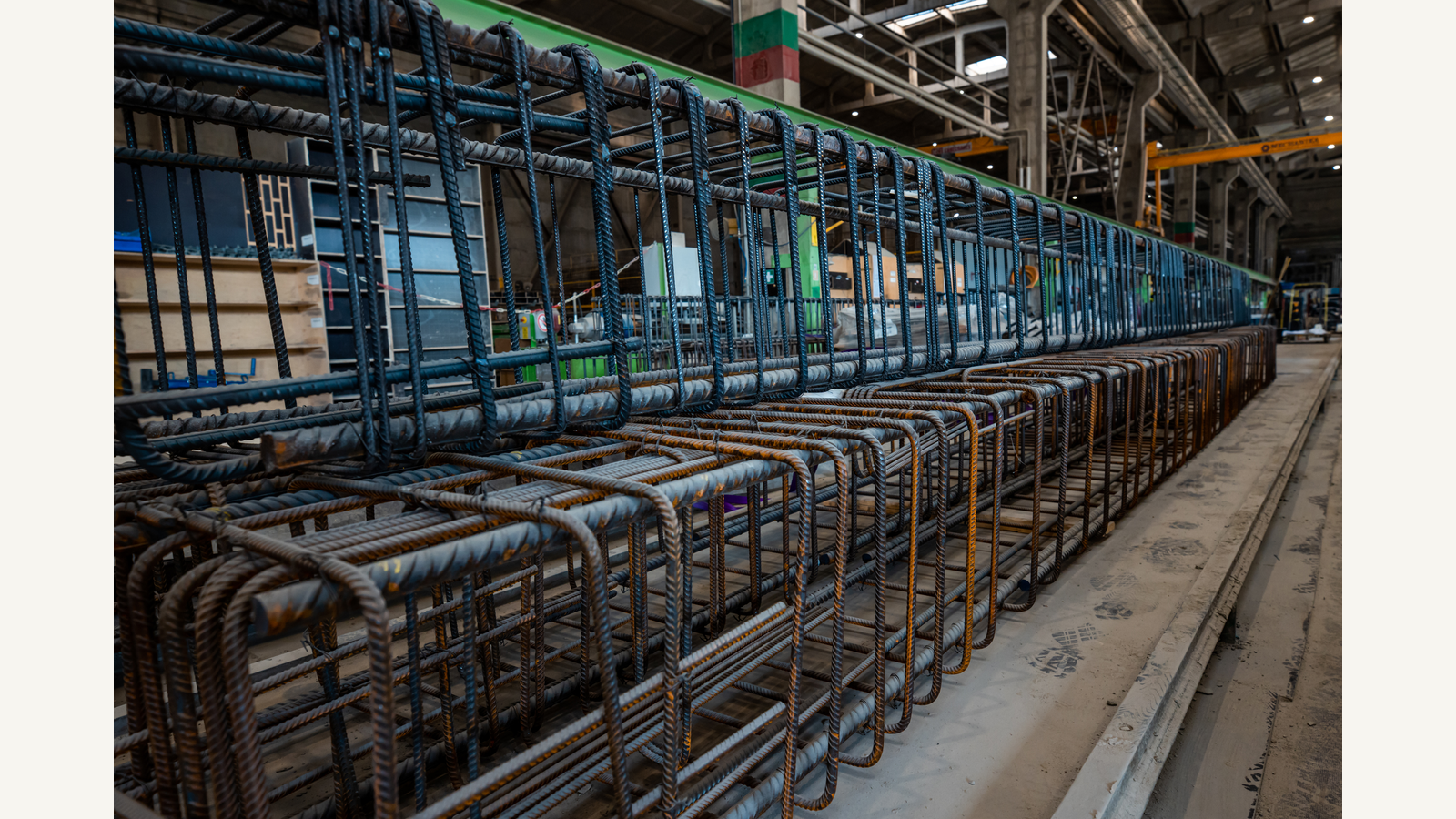
Illustration of steel reinforcement bars stored inside an industrial warehouse.

From purchase order to poured concrete

A proper purchase order should cite the applicable standard and the accepted grade, and demand the manufacturer’s certification, the original bundle tag and the mill test certificate. Delivery dockets should carry heat or batch references, so that laboratory results on samples can be traced back to the exact lot on site.

Those records earn their keep once rebar has been cut, bent and buried in concrete. If a later alert names a mill or batch, good records let engineers isolate the affected stock quickly. Sloppy paperwork can force a far wider investigation, with the costs that follow: delays, replacements, testing and contractual disputes.

Public procurement needs the same rigour on a larger scale. Tender compliance should not end when a vendor hands over a glossy brochure, and site inspectors should match the markings on the bars against delivery tags and test sheets. Certifying engineers should record exactly why they accepted a delivery, including any independent test, and payment sign-offs should rest on verifiable evidence rather than disconnected paperwork.

Distributors, owners and the cost of thin records

Distributors are not immune from scrutiny. When authorities identify suspect products, stock registers must show what arrived and where it went. Suspect bundles should be quarantined by batch number rather than by eye, and customers deserve a prompt alert if the records show a matching delivery.

Project owners should start with an audit rather than assume every length of steel from a named mill is contaminated. Teams should cross-check supplier records, embossed logos and bundle tags to find unused stock and affected placements; qualified laboratories and regulators can then decide on the right sampling or radiation survey.

Poor records make the commercial fallout worse. Contractors may face rejected work and missed deadlines, distributors may face warranty claims and returns, and engineers and third-party certifiers may have to explain why they accepted the evidence. Insurers and lenders may also ask whether quality controls matched the project specifications.

Proof needed for both feedstock and finished bar

The Davao raid shows why environmental permission, radiation safety and product conformity must work together. A mill may present product markings while its controls at the scrap gate fall short. Equally, a passing chemical or mechanical test reveals nothing about radioactive contamination unless radiological screening is carried out.

Regulators can narrow the gap by linking plant licences, quality certification and market inspections. A serious radiation finding should prompt a traceable review of the affected production and distribution records, and a failed retail sample should trigger an examination of the linked batch and the mill’s quality system, not just the removal of a single bar.

Buyers should treat recycled rebar as a controlled material that needs two distinct assurances: safe, documented handling of feedstock and a conforming, traceable finished batch. Both depend on buyers and certifiers insisting on paperwork that reliably identifies the steel in front of them.