Thai flood losses of 25.3 billion baht shift to repairs and insurers

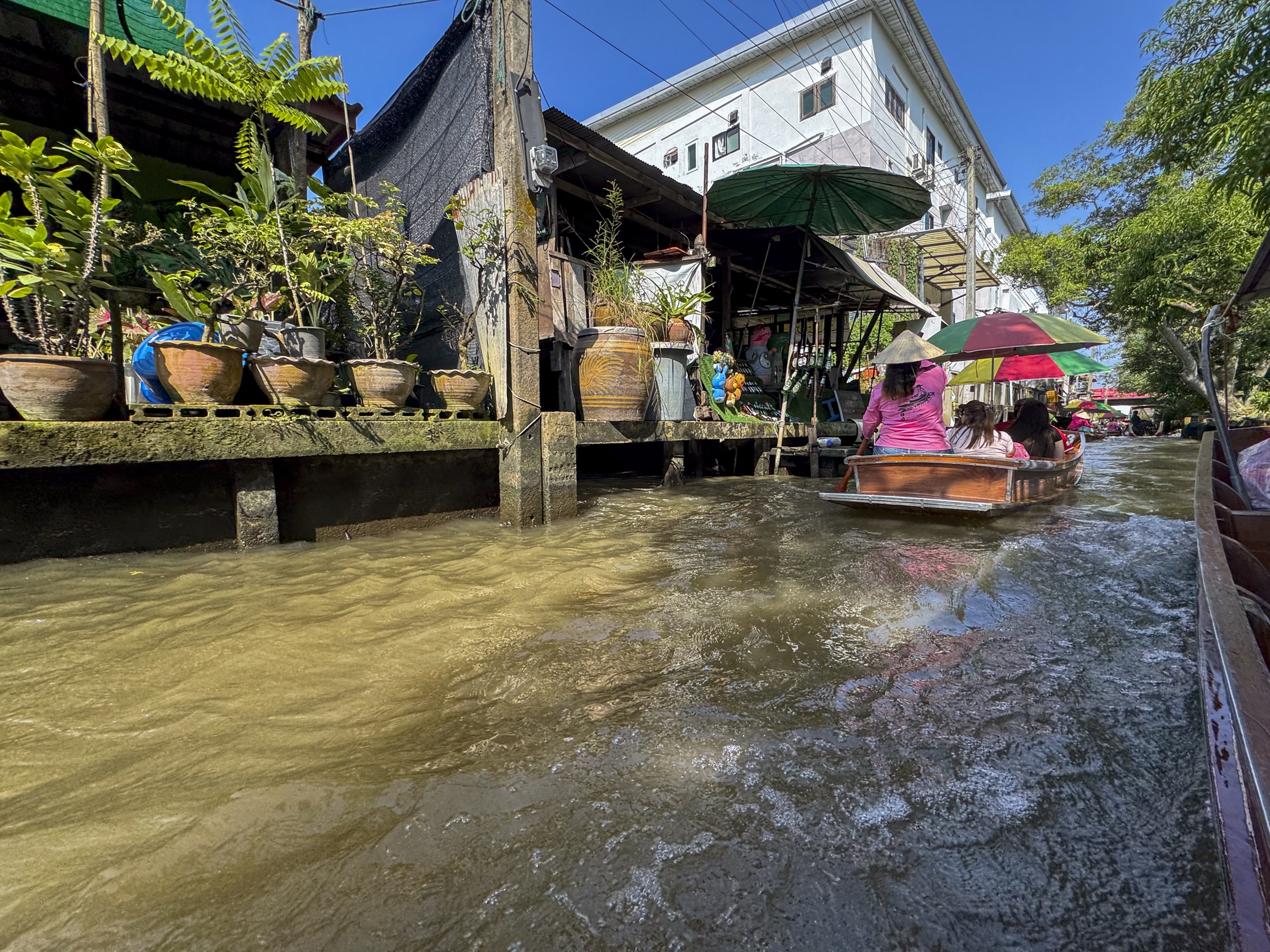
Brown canal water rises near a wooden platform of potted plants, with a boat and umbrellas in the distance.

Thailand’s September floods have been priced at 10–33.8 billion Thai baht (about $300 million to $1 billion), yet no published figure says how much of that lands on insurers. That gap decides who pays for the clean-up, and the answer looks harsher for businesses than for households.

Aat Pisanwanich, an associate professor and economist at Rangsit University, puts nationwide losses from the 24–27 September floods at 25.3 billion baht in a moderate-damage scenario, with the low and high cases spanning 16.9–33.8 billion baht. Bangkok bears the most, at 10.586 billion baht, because of disruption to commerce, services and travel. Within the capital, wholesale and retail account for 23.4 per cent of estimated losses, finance and insurance 14.9 per cent and public administration 10.3 per cent. Those shares describe Bangkok only, so they cannot be scaled up into a national split between commerce, services and manufacturing.

The lower figure from the University of the Thai Chamber of Commerce is not a rival answer to the same question. Its president, Thanavath Phonvichai, put nationwide losses at 10 billion baht over three days, with GDP down 0.05 per cent, on the assumption that Bangkok and surrounding provinces recover within three days while flooding elsewhere lasts three to seven days. Rangsit modelled four days across 48 provinces; Thanavath’s preliminary checks found flooding in 21. Neither is a single agreed loss figure.

A separate tally from the university’s forecasting centre, for 25–29 September, reached 12.28 billion baht, with Bangkok at 7.01 billion baht. It counts disrupted economic activity only and leaves out property damage, vehicle losses, inventories and agricultural output.

Thailand’s Cabinet approved a 15.5 billion baht national disaster insurance scheme on 17 September, days before the floods hit. From 1 October it covers roughly 30 million homes, with initial flood payouts of 10,000 baht per household and compensation capped at 100,000 baht. It covers residential property only, and it shifts catastrophic risk above basic government limits onto private insurers. Factories, warehouses and retailers get nothing from it.

Commercial cover carries the larger doubt. Law firm Wotton Kearney has documented that many Thai commercial policies write contingent business interruption extensions, which cover a supplier’s or customer’s premises, on a limited perils basis covering only fire, lightning and explosion. When flood disrupted supply chains in 2011, those extensions did not respond, and many capped cover at 30 days while floodwater stayed more than 90 days in places. Swiss Re puts insured losses from that event at $15 billion against economic losses of $46 billion. Wotton Kearney concludes that ‘fundamental policy structures remain largely unchanged’. A manufacturer insured for its own flooded plant may therefore be uninsured when a flooded supplier stops delivering. The full extent of insured losses was not yet available, so any repricing of flood cover is a judgement call, not a fact.

Repair demand is real but uneven. Kitpon Praipaisarnkit, deputy managing director of UOB Kay Hian Securities (Thailand), expects home-repair and renovation businesses to gain from cleaning, refurbishment and repairs once water recedes, though he says insurance payouts could fall below market expectations. CIMB Thai Bank’s Dr Amonthep Chawla says weaker purchasing power and confidence may limit the recovery from repairs, and calls for clearly allocated flood-prevention investment, water-retention areas and local jobs rather than cash payments alone.

The Federation of Thai Industries’ warning is the best guide to further losses. Chair Pimjai Leeissaranukul said forecasts of heavy rain had not been turned into adequate preparations, and that disruption could run through raw-material procurement, workers’ journeys, transport and deliveries. Industrial damage has so far been contained: as of 28 September no estates in the Eastern Economic Corridor had halted production. Kitpon notes that water in the four main dams is considerably lower than in 2011, leaving capacity for further inflows, yet the Thai Meteorological Service forecast continued heavy rain through the coming week.

Businesses should ask whether contingent cover names flood as a peril, whether prevention-of-access wording reaches beyond physical damage and whether the indemnity period outlasts a long event. They should also line up the alternative routes and service providers the federation urges. A second wave would test the insurance market as much as the clean-up.

Philippine launch pause thins contractors’ pipeline as public work dries up

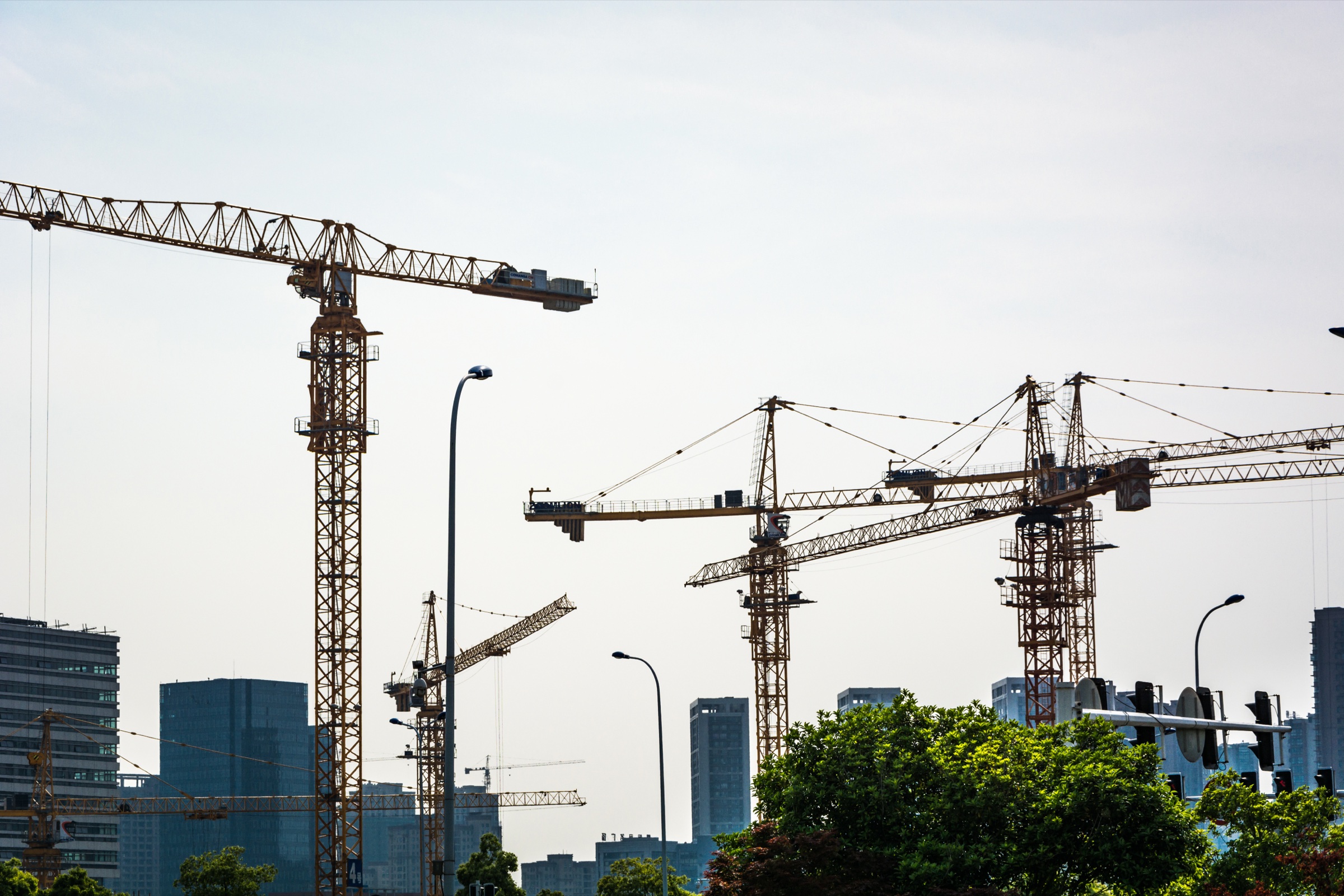
Tower cranes standing above trees and distant glass buildings under a hazy sky.

Philippine developers have chosen to sit on new launches, and in an ordinary year contractors could treat that as a pause between cycles. This year the timing is poor. Government spending on construction contracted 32.4 per cent in the second quarter, and the country’s cement makers said in May that they were not seeing much demand from the bigger property developers. A thinner private pipeline now leaves the construction trade with neither of its main customers buying at full strength.

Property consultancy Colliers Philippines said in its latest report that residential launches and take-up slowed in the first half as developers became more cautious about adding supply. It blamed weaker economic growth, elevated borrowing costs and geopolitical uncertainty. Office leasing softened too, as occupiers delayed expansion and investment decisions. Joey Roi Bondoc, research director at Colliers Philippines, described the tempered office and residential launches as ‘a much needed and strategic pause’.

The growth figures behind that caution are stark. The economy grew 2.3 per cent in the second quarter, according to Philippine Statistics Authority data published on 7 August, down from 2.8 per cent in the first quarter and 5.4 per cent a year earlier. Outside the pandemic, it was the weakest quarter in more than 16 years. First-half growth averaged 2.6 per cent, below the government’s revised target of 3.5–4.5 per cent for 2026.

A gap that reaches the site later

For contractors, a deferred launch turns into a missing construction start only after a delay. Where a project depends on pre-selling, work on site trails the sales campaign, so this year’s order books still carry projects launched earlier. The shortfall lands later, in the very period when contractors had hoped public works would be recovering. Developers have not disclosed how many launches they have shelved, which makes the size of that hole hard to price.

Where the shortfall will fall is clearer. Colliers said new supply in Metro Manila remained limited because of a still-sizeable number of unsold units, particularly in the Bay Area and areas surrounding Makati, and cited condominium oversupply in some submarkets, elevated vacancy levels and regulatory bottlenecks. Developers are unlikely to start new towers in districts where their existing units remain unsold. That points to a lull in high-rise work in the capital that ends only when the inventory clears, whatever happens to rates or growth.

Demand that does exist sits at the cheaper end. Units priced between 1.8 million and 3.6 million Philippine pesos (about $29,000–$58,000) accounted for about two-thirds of Metro Manila condominium take-up in the first half, Colliers said, with the economic and affordable segments strongest. Bondoc said fewer launches in Metro Manila were being offset by continued launches outside the capital region, particularly horizontal developments in Luzon, the Visayas and Mindanao.

That changes the shape of the work as well as its volume. Horizontal estates call for different crews and a more scattered pattern of deliveries than towers, and lower-priced units leave thinner margins for the builders and suppliers that serve them. A contractor organised around Metro Manila high-rises gains little from a subdivision in Mindanao unless it already has a regional presence, whereas a materials distributor with provincial depots is better placed.

Rates are the driver that has to turn

Of the drivers Colliers names, borrowing costs look the stickiest. The Bangko Sentral ng Pilipinas (BSP) raised its target reverse repurchase rate by 25 basis points to 5 per cent in August, its third consecutive increase of the year and a cumulative 75 basis points since April. Headline inflation eased to 6.1 per cent in August from 6.2 per cent in July but remained above the central bank’s 3 per cent target and its 2–4 per cent tolerance band.

Bondoc also traced the slowdown to the Middle East conflict, which he said pushed up fuel prices, ‘subsequently increasing the cost of construction materials in the Philippines’. Dearer inputs squeeze the margin on any new project and give developers a further reason to wait.

With inflation this far above the band, the BSP has little room to cut soon, and a mortgage-financed buyer feels the rate directly. Growth could turn first, but a better GDP print does not clear unsold units in the Bay Area. Launches in the capital need lower rates to revive take-up and enough take-up to absorb existing stock. Provincial horizontal launches are likely to recover first, and that is the part of the pipeline contractors should plan around.

Suppliers felt the squeeze early. John Reinier Dizon, president of the Cement Manufacturers Association of the Philippines (CeMAP), said in May that manufacturers expected demand to be flat or post a single-digit decline this year because of weak government spending amid the flood control controversy. He said government accounts for about 40 per cent of demand for cement and construction materials, that procurement had become stricter and the budget reduced, and that higher prices had also hurt demand. Individual home builders were still buying.

Construction as a whole declined 14.8 per cent in the second quarter, pulling gross capital formation down 9.2 per cent, while industry declined 2.4 per cent. In scale, the public slump is the larger blow to contractors. The residential deferral removes the private work that might otherwise have cushioned it.

Offices thin the pipeline, factories partly refill it

Commercial building offers little relief, with Metro Manila office transactions falling 24 per cent quarter on quarter in the second quarter as occupiers deferred leasing decisions, and office transactions outside the capital posting their weakest first half since 2022. Slower leasing feeds through to fewer office launches and less fit-out work, compounding the residential gap for contractors that work across both.

Industrial property is the exception. Colliers said demand stayed strong in the first half, citing semiconductor, food and beverage, fast-moving consumer goods, electric-vehicle and fibre-cement manufacturers, and expects Central Luzon to be a major contributor to new industrial space beyond 2026. For contractors with the capability, factory and warehouse work is the most dependable private pipeline in the near term.

Arsenio Balisacan, secretary of the Department of Economy, Planning, and Development (DEPDev), indicated that relief is coming. The Department of Budget and Management began releasing mobilisation funds for 2026 infrastructure projects to the Department of Public Works and Highways (DPWH) towards the end of June, he said, and the DPWH started awarding contracts in June and July. He expects public construction to begin picking up in the third quarter and called the slowdown ‘transitory, temporary’.

The arithmetic is demanding, and Balisacan said the economy needs to grow 4.4 per cent in the second half to meet the 2026 target. If awards gather pace, contractors regain their biggest customer while developers wait. If the catch-up stalls under tighter procurement, the private pause and the public slump overlap for longer, and suppliers carry the heavier loss of volume.

The signals to track are Colliers’ take-up in the 1.8–3.6 million pesos band, sales of unsold stock in the Bay Area and around Makati and DPWH contract awards. Rates will decide when Metro Manila towers return, and inventory will decide where.

Vietnam’s expressway pipeline leans on private money that tolls must repay

Illustration of a stack of coins, unrolled highway plans and a hard hat on a site table overlooking rice fields and low hills.

Vietnam is asking private investors to carry most of its next expressway programme, and whether they will depends on a distinction that the headline total blurs. At the heart of the list are two widenings of the eastern North-South Expressway, where 966 km of sections built with public money would be folded into two build-operate-transfer (BOT) contracts worth a combined 150.41 trillion Vietnamese dong (about $5.8 billion). Roads that already carry traffic are a far easier sell to lenders than new routes through the Mekong Delta and the Central Highlands.

The Ministry of Construction set out the pipeline at an investment promotion conference in Hanoi on 29 September: 29 priority projects for public-private partnership (PPP) financing, with preliminary total investment estimated at about 923 trillion dong. Its briefing ahead of the conference put the count at 28 projects worth approximately 922,812 billion dong, yet listed 15 projects in priority group 1 and 14 in group 2. The groups add up to 29. Investors should treat the total as a preliminary estimate, not a committed figure.

The list sits inside a larger bill. Over the next five years Vietnam is expected to build 2,829 km of new expressways and expand or complete 1,187 km of existing ones, requiring total investment of about 1,269 trillion dong, of which roughly 846 trillion dong must come from outside the state budget. Another 1,252 km is under construction today, alongside 3,345 km in operation.

The ministry’s case for private appetite rests on the last cycle. Since 2021, PPPs have raised 444.57 trillion dong for 17 BOT projects. Construction minister Tran Hong Minh, who says expressway investment is moving away from a model in which the state carries the full burden, said the result showed ‘the practical appeal of transport infrastructure to investors when projects are implemented within an appropriate institutional and policy framework’. The new list is far larger than that five-year total, and the non-budget requirement larger again. The record shows BOT can work in Vietnam; it says much less about whether it works at this scale.

North-South widenings carry the bankable traffic

Le Thang, director of the ministry’s Project Management Unit 2, said 15 component projects on the eastern North-South Expressway, covering 966 km, have completed public investment. Mai Son-Cam Lo in the north would span 415 km at 72.19 trillion dong, with a 20-year toll collection period and a targeted opening in 2030. Quang Ngai-Dau Giay in the south would stretch 551 km at 78.22 trillion dong, with a 15-year capital recovery period and the same target date.

These are the most financeable assets on the list. The roads exist and carry traffic, so an investor is underwriting a capacity upgrade and a tariff rather than betting on whether drivers will turn up. Expanding Ho Chi Minh City’s Ring Road 3 from 4 lanes to 8 lanes over 76 km, at 38,000 billion dong, belongs in the same category. A study presented at the conference projected traffic volumes rising by 55–90 per cent between 2030 and 2050, which supports adding capacity on established corridors.

The weak point is pricing. The southern project must recover more capital over a shorter period than the northern one, which assumes higher tolls or denser traffic south of Quang Ngai. The ministry has published neither the toll rates nor the traffic forecasts behind those periods, and those numbers will decide whether either contract reaches financial close.

Aerial view of a wide river at sunset with green forest on both banks and a narrow road beside the water.

New routes in the Delta and Highlands need the state

Group 2’s 14 projects are mainly new routes and expressway expansions, led by Can Tho-Ca Mau at 70 trillion dong, with Ho Chi Minh City-Vinh Long and Phu Yen-Buon Ho at 35 trillion dong each. Group 1 also carries four-lane routes such as Ha Tien-Rach Gia in An Giang province, 87 km at nearly 56,000 billion dong. Where a route is new, there is no toll history for a lender to test, and demand risk sits squarely with whoever holds the concession.

Ho Minh Hoang, chairman of Deo Ca Group, a major contractor in the southern region, said the state and businesses should design each project together from the outset, classifying every section by traffic volume, revenue and capacity to recover investment. ‘For routes with strong traffic volumes and revenues, private resources can be mobilised to the maximum extent. For projects with lower traffic volumes, the state needs to participate at an appropriate level to ensure feasibility,’ he said.

That is the right structure, and it means the private share of the pipeline will be smaller than the headline implies. The last of the ministry’s seven priority criteria favours routes that can attract resources outside the state budget, or where local authorities proactively supplement them from local budgets. In practice, the weakest routes may advance only where a province is willing to pay. The ministry has not disclosed a state capital share for any project.

Minh called for revenue risk-sharing mechanisms under the PPP Law to be implemented effectively. Lenders want more than the statute. Tran Hoai Nam, deputy director of VietinBank’s Corporate Banking Division, proposed faster determination of revenue shortfalls, audited revenue and timely budget allocations wherever the state is required to meet obligations under PPP contracts.

His proposals point to where a guarantee can fail: in the gap between a shortfall arising and the state paying for it. Until shortfall payments are seen to arrive on schedule, banks will price that delay into their loans, and the marginal routes in group 2 will struggle to clear.

Banks and builders face a crowded order book

Nam set out what lenders watch before a road opens: ‘During construction, banks pay particular attention to site clearance, delays, increases in total investment, the capacity of EPC contractors and their ability to fully contribute the required equity.’ The ministry has asked financial institutions to consider medium- and long-term credit packages suited to PPP projects.

Bonds offer limited relief. Nguyen Viet Long, deputy general director of consulting at Ernst & Young Vietnam, said corporate bonds account for around 10–11 per cent of GDP, well below South Korea and Malaysia. ‘However, bonds cannot replace bank credit. During the initial stage of a project, credit remains important; once a project is completed, operates stably and has a verified cash flow, bonds can become an appropriate refinancing channel,’ he said. Construction risk on the new list will therefore sit with domestic banks for years, while they also finance the 1,252 km already being built.

Hoang’s ‘PPP++’ proposal would bring construction companies, financial investors and suppliers of materials, equipment and technology into the project value chain alongside the state, investors and banks. That widens the pool of equity, but it also means the same contractors that must deliver the roads could end up funding them. Local authorities have been asked to accelerate land clearance and secure construction materials.

Three things would sharpen the picture: a published state share and toll assumption for each project, a financial close on Mai Son-Cam Lo or Quang Ngai-Dau Giay, and evidence that revenue-shortfall payments are made on time. The widenings should find backers. The new routes will be built at the pace the budget, not the private market, sets.

Linesight’s insider CEO bets on sustaining double-digit data-centre growth

Illustration of a hard hat resting on rolled site plans on a table, in front of a large data centre under construction with a single crane at dusk.

By promoting John Butler, a 25-year company veteran, to chief executive, global construction consultancy Linesight claims it can sustain double-digit growth in the data-centre, life-sciences and high-tech work that sets its pace. The company says its revenue has risen year-on-year by between 15 per cent and 24 per cent since 2021 and it is forecasting continued double-digit growth over the next three years. However, the company’s forecast appears to rest on clients’ capital spending more than on who runs the firm.

The expansion has been rapid. Under Paul Boylan, who leads its parent group, Linesight grew from 20 offices and 700 people in 2021 to 44 offices across 30 countries and more than 2,500 people. It sells cost, project controls, programme and project management services across data centres, life sciences, high-tech industrial and commercial sectors. Linesight has not said how its revenue divides between the sectors, which leaves the forecast hard to test.

Butler takes over on 1 January 2027, and his case rests on Asia. Over the past fifteen years he has built Linesight’s APAC and Middle East business from a small team to over 600 people across 10 offices and eight markets. Linesight says the region supports its largest global clients, including four of the top 10 technology companies in the Fortune Global 500, and has delivered more than 200 data centre projects across 15 countries. This is a credible template for the growth Linesight wants elsewhere.

Scott Halyday will succeed Butler as managing director for APAC and the GCC on the same date and join Linesight’s global executive team. Based in Singapore, he joined the firm in 2018 and has more than 20 years’ experience leading complex programmes and client relationships across APAC and international markets. Promoting from within at both levels keeps client relationships stable when they are most exposed to change. Asian clients can expect continuity of contacts, and hiring is more likely to follow project wins than any change of strategy.

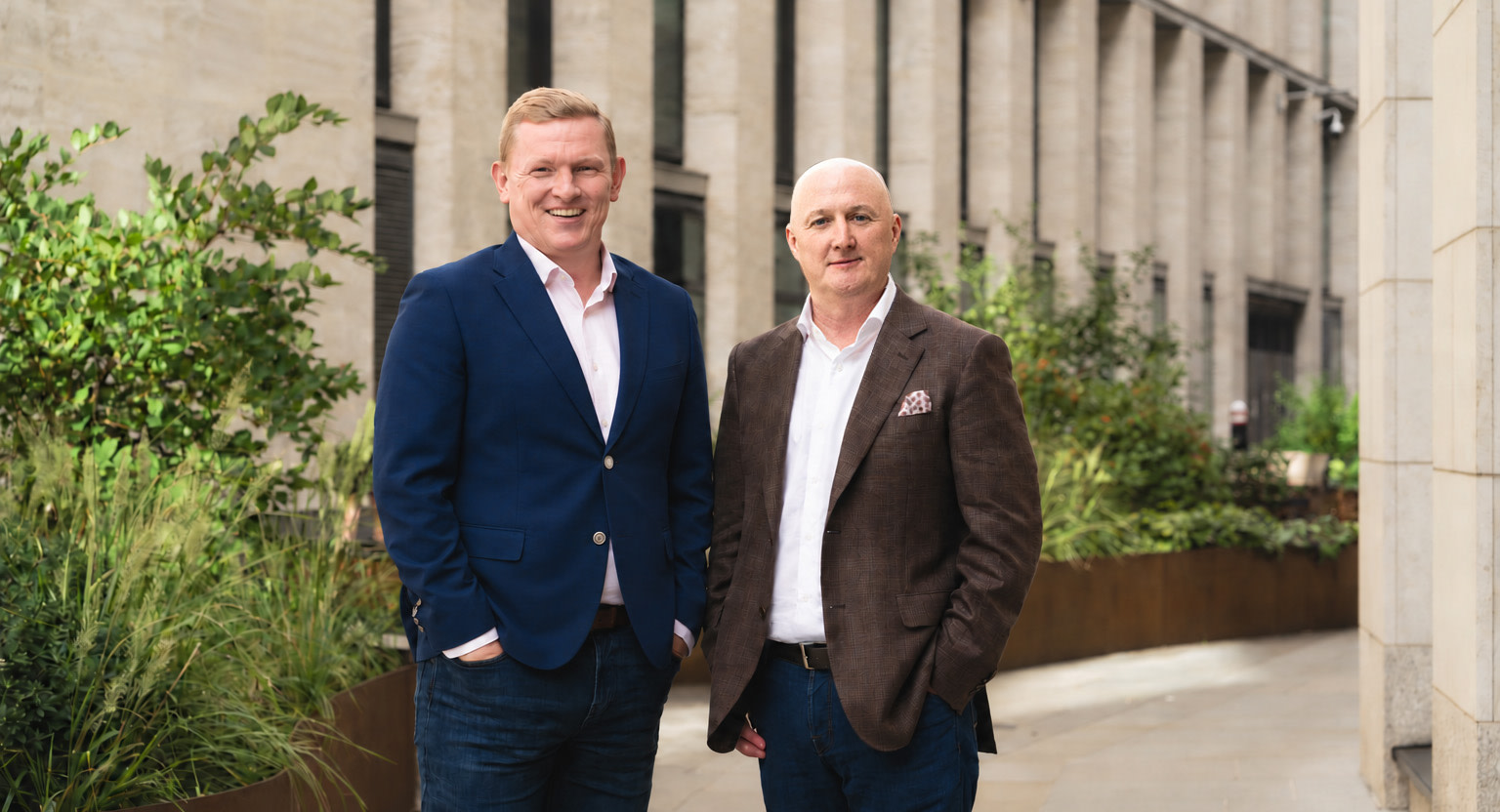
John Butler, in a blue jacket, stands beside Paul Boylan, in a brown jacket
John Butler (left), incoming chief executive of Linesight, with Paul Boylan, group chief executive of IPS Photo: Linesight

Cushman & Wakefield, a global real estate services firm, reports that construction costs across Asia Pacific rose by an average of 10 per cent year-on-year in 2025 as demand intensified and supply chains remained under pressure. Where consultancy fees follow project value, part of Linesight’s growth may reflect higher prices rather than more projects. If cost growth eases, volume will have to carry the forecast. Linesight has not split the two.

Linesight’s forecast is not the group’s. IPS-Integrated Project Services is part of the Berkshire Hathaway group of companies and comprises IPS, Linesight and Springtide. It has more than 4,500 people, operates across 40 countries and generates approximately $2 billion in net revenue. Boylan stays as group chief executive and, the company says, will remain closely involved with Linesight and its clients. Springtide, led by Michael Riordan, specialises in PMC and EPCM services for data centre and advanced technology environments. Group headcount and revenue therefore say little about Linesight alone, and Springtide works in overlapping sectors. For a client, the question is whether the two brands are offered together or compete for the same scope.

Butler has said he wants to extend Linesight’s reach ‘in the markets where our clients are investing and growing’. That ties the plan to client spending, so the signals are practical: whether Linesight discloses revenue by sector, whether the Asia-Pacific team keeps growing beyond 600 people, and whether it keeps winning data-centre work at the pace of the 200 projects already delivered.

SIG’s 400-tonne daily rice-husk diet tests whether farm waste cuts cement costs

A hand in a red sleeve touching ripe rice stalks in a field.

By burning 400 tonnes of rice husk a day at its Tuban plant in East Java, Indonesian state-owned cement group Semen Indonesia (SIG) claims it now has an alternative fuel that makes its operations more reliable and strengthens its low-emission green cement. Husk dominates the biomass mix there, according to president director Indrieffouny Indra, ahead of fine coconut-husk powder, corn cobs, sawdust and bagasse.

Indra said on 25 September that biomass gives the company an alternative energy source to improve operating reliability – although this indicates continuity of supply, not savings. SIG has not published a thermal substitution rate for Tuban, the calorific value of the husk, the coal it displaces or the price it pays per tonne, so 400 tonnes cannot yet be turned into a cost figure. The only substitution rate on the record is for the group: 9.77 per cent in 2025, short of a 20 per cent roadmap ambition. Husk may lead the biomass at one plant, but a group rate at that level suggests a useful addition to the fuel bill rather than a change in kiln economics.

SIG reports a 5.2 per cent reduction in Scope 1 and Scope 2 emissions in 2025 against a 2019 baseline, set against a commitment to cut them by 33.7 per cent per tonne of cementitious material by 2032 from that baseline.

The husk comes from local farmers and 10 rice-milling companies in Tuban, Lamongan, Bojonegoro and Rembang. One supplier, Pionir Nusantara Sukses, sends about 2,500–3,000 tonnes a month, according to director Irsan Yanuardi, mostly bought from collectors in Tuban, Lamongan and Bojonegoro and partly direct from farmers. It has delivered 20,000 tonnes since early 2025. Yanuardi says weather affects husk quality and stock, though his revenue has kept rising. SIG has not disclosed contract terms or any buffer stock, so until it does, the weather risk he describes is a kiln risk.

Husk is also a power-sector fuel. A report on 1 June was headlined as PLN EPI teaming up with BWI to supply rice-husk biomass for the Indramayu power plant. Neither SIG nor PLN EPI has said whether the two draw on the same collectors. If power generators scale up co-firing, collectors gain a second buyer, and a fuel bought partly from farmers and middlemen will go to whoever pays more. A cost advantage that rests on a waste stream is only as secure as the price of that waste.

SIG’s case for demand rests on its product mix. Sustainable solutions generated 62 per cent of revenue in 2025, above the 2030 roadmap target of 49 per cent, and eco-friendly or green products reached 22.456 million tonnes against 21.836 million tonnes in 2024. Those figures show SIG labelling more of its output green. They do not show that public or private buyers specify certified low-carbon cement or pay more for it, and SIG has not said whether the Tuban product carries third-party certification or a price premium. Husk gives the product a story; buyers’ specifications decide whether it earns a margin.

Suppliers and buyers should watch Tuban’s thermal substitution rate and coal displaced, the delivered husk price against coal, the terms SIG offers its mills, and whether power-sector biomass buying reaches the same collectors. A cement buyer should ask for product-level emissions data before paying for a green label, and a husk seller should seek terms that survive a rise in competing demand.

Sungrow’s Kandal battery tests whether Cambodia’s EDC is building a storage pipeline

Rice paddies with sugar palms and a small thatched hut under an orange dusk sky.

By grid-connecting a 108.4 MW/215.6 MWh battery at Takmao in Kandal Province and showing it can energise a plant from zero voltage, inverter and storage supplier Sungrow claims it now offers grid-forming storage that can anchor part of Cambodia’s network.

The project is the EDC Kandal Stueng station (GS79), and Sungrow says it uses grid-forming technology for voltage and frequency stability, black-start capability and coordination with hydro and thermal generation.

The acceptance tests were built around rebuilding a network rather than shifting energy. The 516 grid-forming PCS units energised the plant from zero voltage and supported restoration of about 240 km of transmission lines and five substations. The battery then supported the start-up and synchronisation of the 60 MW Kamchay Hydropower Plant, and the restored network was operated with the 135 MW CIIDG coal-fired power plant and connected loads. It also operated independently for 3.5 hours, and three transitions between grid-connected and islanded modes kept voltage deviation below 2 per cent and transient frequency fluctuation within 0.15 hertz.

That is the profile of a system-security asset for coordinating hydro and thermal plants. The tests show no role in absorbing distributed solar, so any link to rooftop solar policy is an inference the evidence does not support.

The site sits at a key point in Cambodia’s central grid, including transmission corridors that import electricity from Vietnam, which gives a utility a clear reason to want stability there. It is not evidence of a programme. Neither Sungrow nor EDC has disclosed who owns the battery, who financed it, what it cost or whether further storage tenders are planned. Sungrow lists storage and monitoring system design, equipment design, commissioning, EPC-related support and operations and maintenance in its scope, but has named no local civil or electrical partners.

For contractors, repeat projects would create repeat packages; a single site would create one. Until EDC publishes a tender schedule, the sensible reading is a single grid-support project with pipeline potential.

Sungrow says it completed hot commissioning and three rounds of performance testing within 20 days, in rainy-season conditions with ambient temperatures reaching 40 °C. The battery also remained stable through five transformer energisation events, one involving a transformer rated at up to 100 MVA. These are the supplier’s own figures, and an owner’s tender team will want them confirmed. If they hold, rival integrators bidding for later storage packages will be measured against them.

Three markers will settle the question: a published EDC storage tender, a financing disclosure that names the owner and price of Kandal Stueng, and later specifications that demand black-start and islanded operation as this one was tested for. Contractors should also watch for the local partners on this job. Where they surface, they are the likeliest first bidders for repeat work.

Krakatau chief’s IISIA agenda ties steel prices to import curbs and SNI

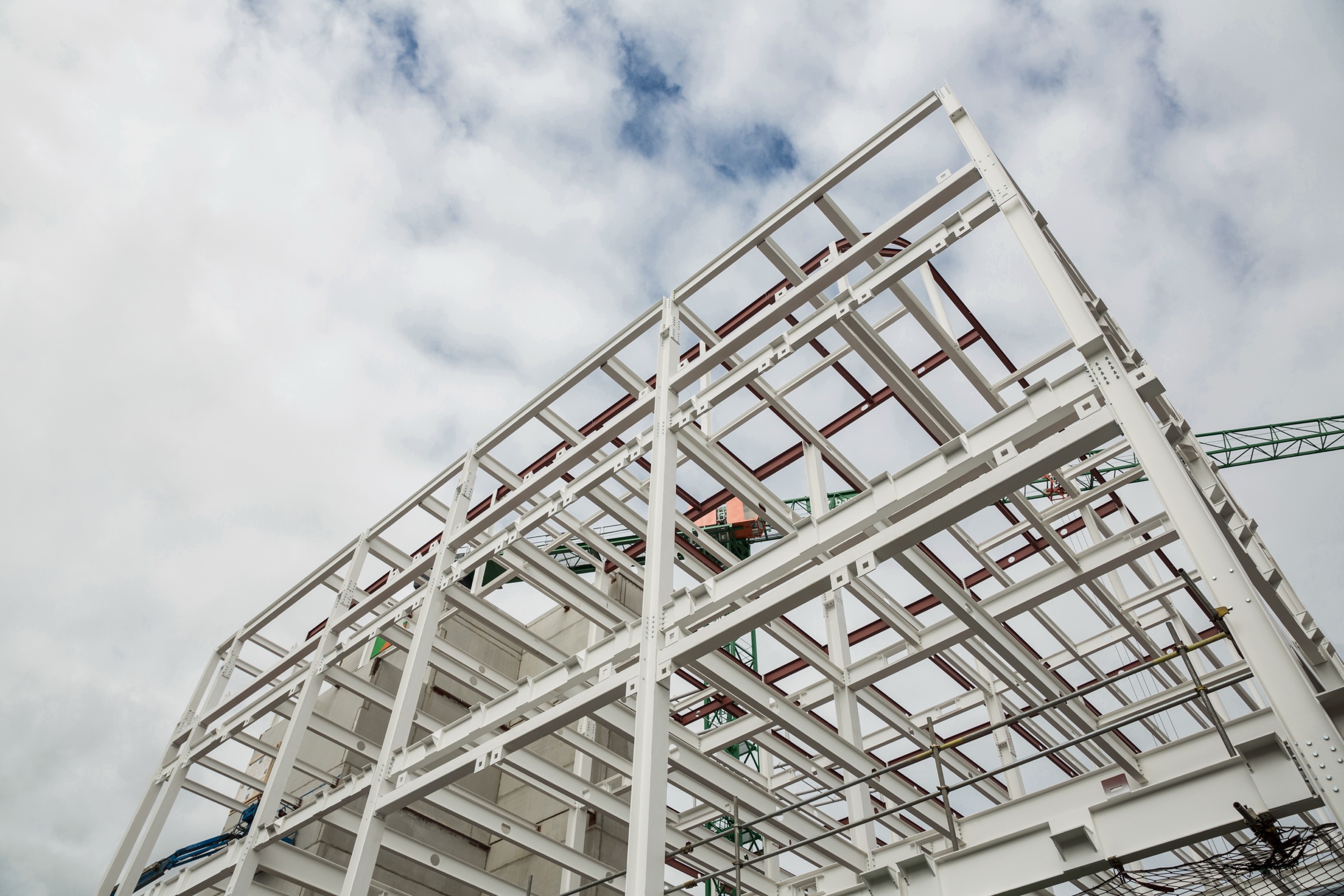
A white steel building frame under construction seen from below against a cloudy sky.

By leading a six-point agenda with trade remedies, import control and mandatory SNI, new Indonesian Iron & Steel Industry Association (IISIA) chairman Willgo Zainar says the industry can win stronger protection. He is also president director of Krakatau Steel, so the association’s lobbying line and a producer’s commercial interest now share a leader. He replaces Akbar Djohan for 2026–2030.

The remaining items are local-content effectiveness under TKDN and P3DN, energy supply capacity and competitiveness, long-term raw-material availability and fiscal and investment incentives. Energy, raw materials and incentives lower what it costs a mill to make steel. These are producer requests of government and reach buyers only if savings are passed on. Trade remedies and mandatory SNI work the other way, by limiting what can be bought, and they are the levers a contractor will feel first.

Local-content rules sit between the two groups. Greater use of domestic products helps mills, but where such rules apply to a project they narrow a contractor’s sourcing choice and weaken its hand in price talks. Zainar has not said which products or projects would be covered, or how far mandatory SNI would be widened, so the cost to buyers cannot yet be sized. His call for cohesion across the industry is aimed at steel players, and contractors who buy the steel are not obviously among the interests the agenda weighs.

The one live case covers galvanised steel

The only trade-remedy case on the table shows both the logic and the limits. Indonesia’s Anti-Dumping Committee (KADI) opened an antidumping investigation into galvanised steel imports from China on 15 September, on an application from domestic producers Tata Metal Lestari and ArcelorMittal Nippon Steel Indonesia, not Krakatau. It covers 9 HS codes.

The evidence for protection is real on its face. During 2023–2025 Indonesia imported 2.56 million tonnes of the products concerned, of which 2.08 million tonnes, approximately 81 per cent, came from China, and by 2025 Chinese products had accounted for approximately 52 per cent of domestic consumption. Over the same period the petitioners’ selling prices fell by a cumulative 21 per cent while cost of goods sold declined by only 14 per cent, and Chinese prices were lower than theirs in every year. The applicant and supporting enterprises together account for approximately 76 per cent of domestic production, and no producer opposed the application.

That is a case for galvanised steel, not for the whole agenda. The product is a standard construction material, widely used in roof trusses, roofing and wall cladding, but the case does not test rebar or other long products, or how far infrastructure demand absorbs domestic output. The agenda is not shown to be a general driver of construction steel prices. What a duty would do is narrower and easier to forecast: fabricators and contractors in roofing and cladding would face a higher entry price for the cheapest supply, in a product where price is the primary purchasing consideration.

No duties have been imposed. The investigation runs up to 12 months, extendable to 18 months, and provisional measures may come no earlier than around 14 November. Buyers of galvanised steel should price that window into quotations and contract adjustment clauses, and ask suppliers how much of their stock is Chinese. The next signals are whether IISIA sponsors cases on long products, which products come under mandatory SNI, and whether Krakatau’s interests diverge from those of rival mills when remedy requests multiply. Until those show, the agenda is a statement of producer priorities, and the price effect is evidenced only for galvanised flats.

Hafary buyout returns tile distributor to founders as Hap Seng cuts debt

Illustration of a ring of keys on a stack of ceramic tile samples on a showroom counter beside a signed sale agreement, with tile shelves behind.

By accepting a cash offer of S$0.64 per share for its 50.82 per cent stake in Hafary Holdings, Malaysian building-materials group Hap Seng Consolidated claims it now has cash ‘at an attractive valuation’ and a stronger financial position. The buyer is 23 Capital, a vehicle owned by the Hafary founding family, so the business passes back to the people who run it rather than to a rival consolidator.

Hap Seng has earmarked the proceeds of the sale, put at about S$140 million, or 447 million Malaysian ringgit (about $110 million), for partial repayment of borrowings that totalled 6.9 billion ringgit at the end of 2025. It expects a gross gain of about 187.3 million ringgit, with completion before the year ends. Hafary will cease to be a subsidiary, so the 48.4 million ringgit it contributed to Hap Seng’s profit and the 19.85 million ringgit in dividends will stop flowing.

Hap Seng is giving up a steady earner to ease a large debt pile, and the debt-repayment plan may limit its negotiating leverage compared with a seller choosing its moment. The sale also closes the logic of 2015, when Hap Seng bought in as a stepping stone to expand in the region. It was then mainly upstream in building materials while Hafary was strong downstream.

Hafary chief executive Low Kok Ann controls 23 Capital with his son Low See Ching and daughter Low Bee Lan. He started the business from a single ceramic tile shop in 1980. A founder-led buyer is already inside the channel, so it has no overlapping business to rationalise and no synergy target to justify with tougher supplier terms, as a trade buyer might.

The more probable change is in who pays for growth. Hafary manufactures and trades tiles, stone, mosaic, wood-flooring, quartz tops and sanitary ware, a broad range to fund. The regional expansion that Hap Seng’s 2015 purchase was meant to support now rests on the family’s own capital and bank lines, and neither side has said whether it will continue.

Hap Seng says the price is above market and historical trading prices and at a premium to its initial cost of S$0.24 per share. It has not given the margin, nor Hafary’s earnings, net assets or share count, so the offer cannot yet be set against peer distributors. The remaining shareholders must judge whether that is enough.

Singapore’s Building and Construction Authority projects construction demand of S$47–53 billion in 2026, similar to 2025, when preliminary actual demand reached S$50.5 billion. It expects an average of between S$39 billion and S$46 billion a year from 2027 to 2030, and says demand could moderate after the one-off Changi T5 development, potentially reverting to pre-COVID levels.

For a distributor serving projects, a lower base from 2027 is the largest risk. Hap Seng banks cash before it arrives, while the family takes it on without a public parent. Delisting may make patient, counter-cyclical investment easier to defend, but it also removes a listed currency for acquisitions, and Hafary’s split between project and retail customers will decide how exposed it is.

Four things will show the deal’s real shape: the premium and whether minority shareholders accept, Hafary’s revenue split between project and retail buyers, any change in payment terms for suppliers and any investment or regional plan from the family. Contractors and suppliers should seek clarity on credit and pricing terms before relying on current arrangements. The founders’ willingness to buy suggests they value Hafary above what the listing gave it, and the published premium will show by how much.

KKB’s awards now exceed twice its market value, testing Sarawak yard capacity

Picture of a crane on a quayside surrounded by the text “A yard filling up”.

By winning an offshore structures contract from Sarawak Shell and two supply orders, Malaysian steel fabricator KKB Engineering says it now has 462 million Malaysian ringgit (about $110 million) of work that will add to its earnings and net assets.

The package involves two kinds of business. KKB’s OceanMight unit holds the letter of award for engineering, procurement and construction of fixed offshore structures for the SK408 Teja & Populus and Temu & Inai field development project. The supply orders from Hock Seng Lee and Bumia are a different animal. The Shell work runs from 28 August to December 2027, while the supply orders are due for delivery within 4Q2026. The supply orders will have cleared before the year ends, so they lift one quarter. The EPC job fills the yard into 2027 and is the part that supports the order book. KKB has not said how the 462 million ringgit divides between the two, so the size of the durable portion cannot be read from the announcement.

KKB counts this as its fourth job of the year. Earlier it landed two contracts worth around 19 million ringgit for pipe and steel pole supplies and a 212 million ringgit EPC contract from Petronas Carigali, then six further contracts worth a combined 80 million ringgit for steel pipes, fittings and poles. Add the new package and the disclosed awards come to more than twice the group’s market capitalisation of 330 million ringgit, which the market priced on Monday with a six sen rise to 1.14 ringgit.

Two offshore EPC awards from two different operators in a single year is more than a one-client fluke, but it is not yet a cycle. A cycle shows in repeat awards, and the only visible repeat so far is small supply tickets. Investors should read the year as a rebuild with an unproven second leg until further offshore fabrication awards arrive in 2027.

The largest tickets come from Sarawak Shell and Petronas Carigali, so the group’s earnings now rest on upstream capital spending decisions it does not control. Pipe and pole supply gives a second line of revenue, but it is the lower-value work. Neither company has disclosed OceanMight’s tonnage capacity or current utilisation. If the Petronas Carigali job is still in progress, the Shell job and the 4Q2026 supply deliveries will be competing for the same labour and steelwork, and extra shifts or subcontracted fabrication would cost margin.

KKB has not disclosed its pricing terms or how far steel cost increases pass through to clients. For an EPC job running to December 2027, a fixed price with steel bought late would carry most of the risk. Supply orders due within a quarter carry far less. Steel plate and pipe suppliers should expect KKB’s procurement to ramp as the Shell work starts, and should ask for payment terms in step with it. Contractors bidding against KKB for offshore fabrication should watch whether it takes on subcontractors, which would show the yard is full.

MRCB’s Makkah study tests if Malaysian transit skills can win Saudi work

A picture of construction blueprints by a window looking out into the desert, with a crane in the distance.

By signing an agreement to explore a transport-led mixed-use scheme at King Salman Gate in Makkah, Malaysian property and construction group MRCB claims it now brings its transit-oriented development experience to one of Saudi Arabia’s most closely watched pilgrim-area projects.

MRCB International signed with RUA AlHaram AlMakki, a Public Investment Fund company and master developer of King Salman Gate. The two will explore a development with an indicative gross development value of approximately 21 billion Saudi riyals (about $5.6 billion; 22.86 billion Malaysian ringgit), subject to due diligence, approvals, financing, phasing and definitive agreements. The scheme would include a public bus terminal with residential, commercial and retail components. Until those conditions are met, there is no contractor package to bid for. MRCB told Bursa Malaysia the collaboration would focus on a framework covering development, funding and execution, which means the funding model is the thing under study, not a settled fact. Neither company has disclosed MRCB’s role, any capital it must commit or how long the study will run.

MRCB’s strongest card is KL Sentral. It developed the 18 billion ringgit KL Sentral CBD, pioneered transit-oriented development in Malaysia and points to the site as the country’s largest integrated transport hub. That is a genuine record in tying a station to offices, homes and retail. It is less proof of handling a bus terminal for pilgrims and visitors, whose arrivals follow religious calendars rather than commuter rhythms. Neither side has published pilgrim volumes or terminal capacity, so the test of MRCB’s design and operating skill lies ahead. Its record in property is the part Riyadh can verify today.

RUA is lining up more than one foreign partner. On the same occasion it signed a Brunei agreement with Perbadanan Tabung Amanah Islam Brunei to explore a joint venture on land plots within King Salman Gate, with an indicative gross development value of approximately 9.7 billion riyals and the same kind of conditions. Malaysian firms therefore cannot assume MRCB is their exclusive route in, and RUA’s search for outside investment suggests MRCB may be asked to bring capital as well as skills. MRCB’s own land bank, with an estimated gross development value of 33 billion ringgit, competes for the same balance sheet. How much of it MRCB can commit abroad is undisclosed.

The nearest followers are the services that travel with a developer: transport planning and design consultants, and facilities managers. Prime minister Anwar Ibrahim named construction, infrastructure and facilities management among the sectors for closer cooperation. MRCB’s engineering arm lists work in highways, rail infrastructure and high-voltage transmission, which suggests where a contractor role could fall if it is appointed. Materials suppliers sit furthest from the money, because procurement rules and local sourcing preferences are unknown. Payment risk is the practical worry in Makkah because a developer’s cash flow depends on financing that is not yet arranged, so any Malaysian firm should treat work before a definitive agreement as unpaid risk.

First, a definitive agreement that names MRCB’s role, since a minority investor and a design-and-build contractor face very different risks. Second, a stated procurement route, showing whether Malaysian firms would be appointed or must bid against Saudi and international rivals. Third, a funding structure that shows who carries construction cost and on what payment terms. Without all three, 21 billion riyals remains a planning number.