Vietnam’s domestic cement demand rebounds 33 per cent in July

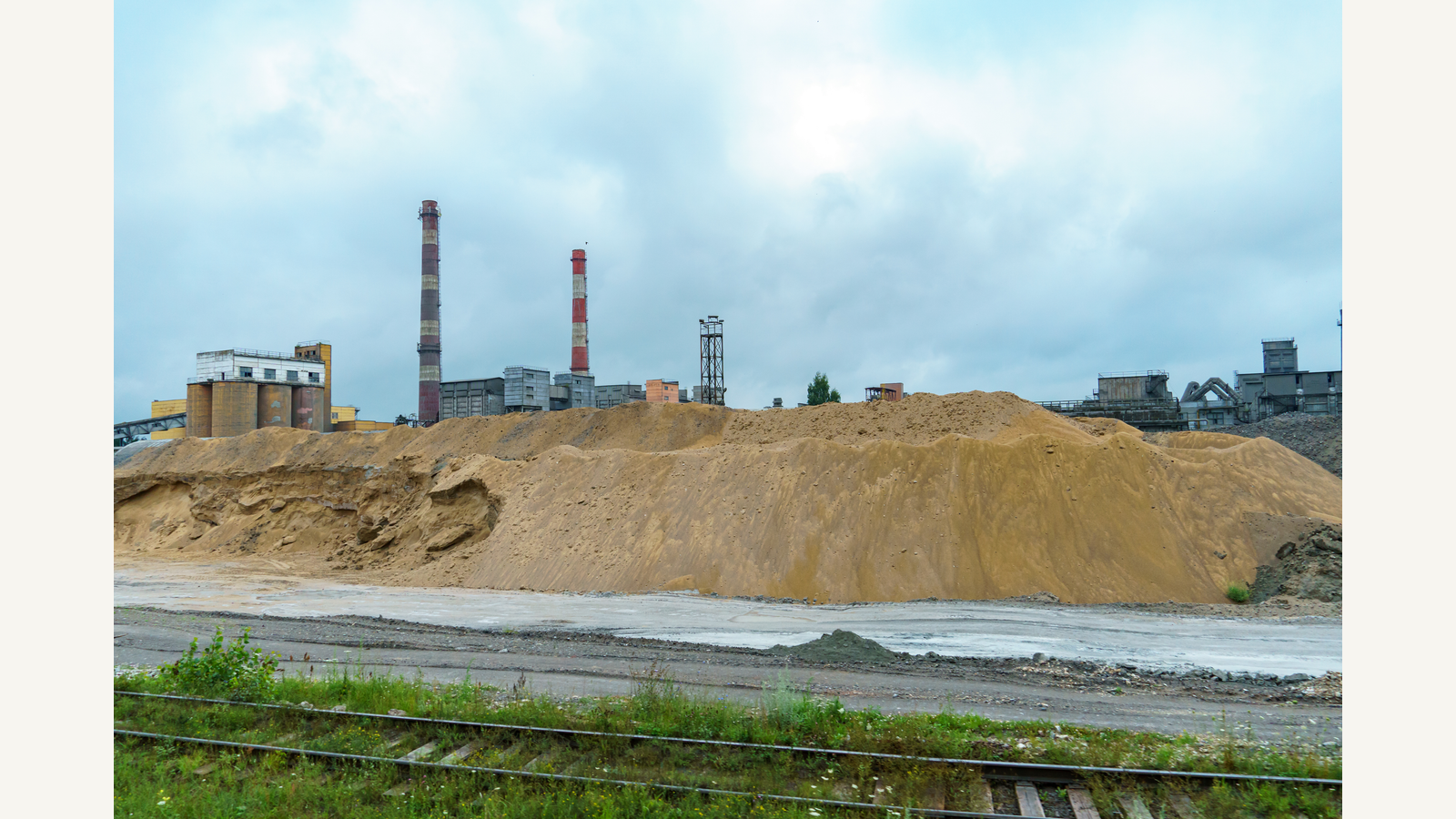
Illustration of a cement and concrete production plant with pipes and large storage tanks for sand and gravel, photographed in daylight.

Vietnam’s cement industry recorded a sharp domestic demand rebound in July as faster public-investment spending and major construction work lifted volumes. The monthly figures point to better plant and distribution activity, though not yet to a settled recovery in housing.

Industry production reached 12.11 million tonnes, up 14 per cent from June and 25 per cent from a year earlier, according to the Cement Information and Data Center. Total consumption of cement and semi-finished material was almost 11.30 million tonnes, up 8 per cent on the month and 23 per cent on the year.

Domestic consumption gave the clearest signal. It exceeded 8.17 million tonnes, up 9 per cent from June and 33 per cent year on year, outpacing both production and total sales and tilting the July mix towards the home market.

Southern Vietnam consumed more than 3.07 million tonnes, the largest regional volume, up 38 per cent from a year earlier. Central demand approached 2.33 million tonnes and the north reached 2.78 million tonnes.

The pattern fits an infrastructure-led recovery. Stronger demand has been attributed to faster disbursement of public investment and quicker work on major transport and industrial projects. Large projects typically create concentrated orders that can move quickly through ready-mix concrete suppliers and building-material distributors.

For producers, stronger southern demand raises the value of kiln capacity, grinding plants and depots close to active projects. It also puts more pressure on road and coastal distribution networks to get stock to where contractors need it. Procurement teams may need firmer delivery schedules, especially when several public works draw cement at once.

Yet national production exceeded reported consumption by about 810,000 tonnes in July, so higher output does not automatically mean tighter inventories or firmer pricing. Producers still need disciplined production planning in case project timetables slip or wet weather delays pouring and building work.

Housing remains the weaker test

Infrastructure can lift bulk deliveries without proving that private residential construction has recovered evenly. Vietnam’s Ministry of Construction expected broader property supply and demand to improve in 2026 as delayed projects resumed, but warned that the market remained sensitive to interest rates, capital costs and other economic conditions.

The distinction shapes the sales mix. Public works support large, scheduled orders, while housing produces a broader stream of bagged cement demand through retailers and small contractors. A durable cycle would need both channels to strengthen, rather than resting on government project execution.

The July rise follows a stronger 2025, when Vietnam sold a record 112 million tonnes of cement products, up 16 per cent, according to Ministry of Construction data reported by financial-data provider S&P Global. Domestic demand rose 13 per cent to 75 million tonnes on the back of public investment and major infrastructure work.

Exports still take more than a quarter of sales

July exports reached 3.13 million tonnes and generated $120.48 million, up 7 per cent from June. Finished cement made up 61 per cent of the volume and semi-finished material 39 per cent. Exports were therefore about 28 per cent of July sales, leaving producers materially exposed to overseas demand and freight conditions.

In the first seven months, production totalled 70.25 million tonnes. Domestic consumption reached 49.74 million tonnes, while exports were 22.53 million tonnes worth $840.96 million.

A stronger domestic mix can make better use of local distribution assets and trim reliance on export outlets at the margin. But exports remain important for absorbing capacity. Producers must balance domestic project orders against overseas commitments without building up inventory if either market softens.

July therefore gives a strong operating signal but falls short of confirming a full cycle. The next test is whether public spending turns into steady site-level demand and whether housing activity spreads beyond selected projects.

Myanmar and Russia push to revive Dawei port, but commercial hurdles linger

Illustration of a large weathered ship anchor pressing into a stack of blank papers beside a small wharf and cargo vessel on a painted tropical coast.

Myanmar’s Ministry of Information announced on 6 July that procedures to resume work on Dawei were under way under the 2014 Myanmar Special Economic Zone Law, with the formal definition and approval of the deep-sea port limits in its final stage. This followed a February 2025 Myanmar-Russia memorandum of intent on investment cooperation. On 5 June, Russian power company Inter RAO and Myanmar’s Launglon Economic Development signed a separate memorandum for development of a power plant at the port.

These steps give the project official backing and a prospective energy partner, but no committed financing, concrete engineering designs or construction schedules for the wider zone. What has been made public on the full development goes no further than approvals, intent and planning.

Dawei’s troubled record raises the bar for investors. Myanmar ended its project agreement with the previous investor, Italian-Thai Development, in 2020, according to the Ministry of Information, and the authorities say they are now coordinating with a project developer to restart work. Financiers will need clarity on who owns the concession, where the asset boundaries lie and how earlier obligations are settled, while contractors need a clear employer with land rights, payment security and the authority to issue packages.

The proposed power station is a possible way in, since heavy industry needs a steady supply of electricity. But a memorandum is not an engineering, procurement and construction contract, and the official announcements leave out the essentials: generation capacity, fuel source, exact site, project cost, financing and who will buy the power.

Power generation and industrial development are mutually dependent, with a plant needing credible customers, and factories needing confidence that power will arrive. Breaking that circle usually takes phased demand commitments, bankable supply agreements or sovereign support. Feasibility studies, environmental approvals and an off-take structure would be useful next signals, though a financing mandate or tender notice would carry more commercial weight than another signing ceremony.

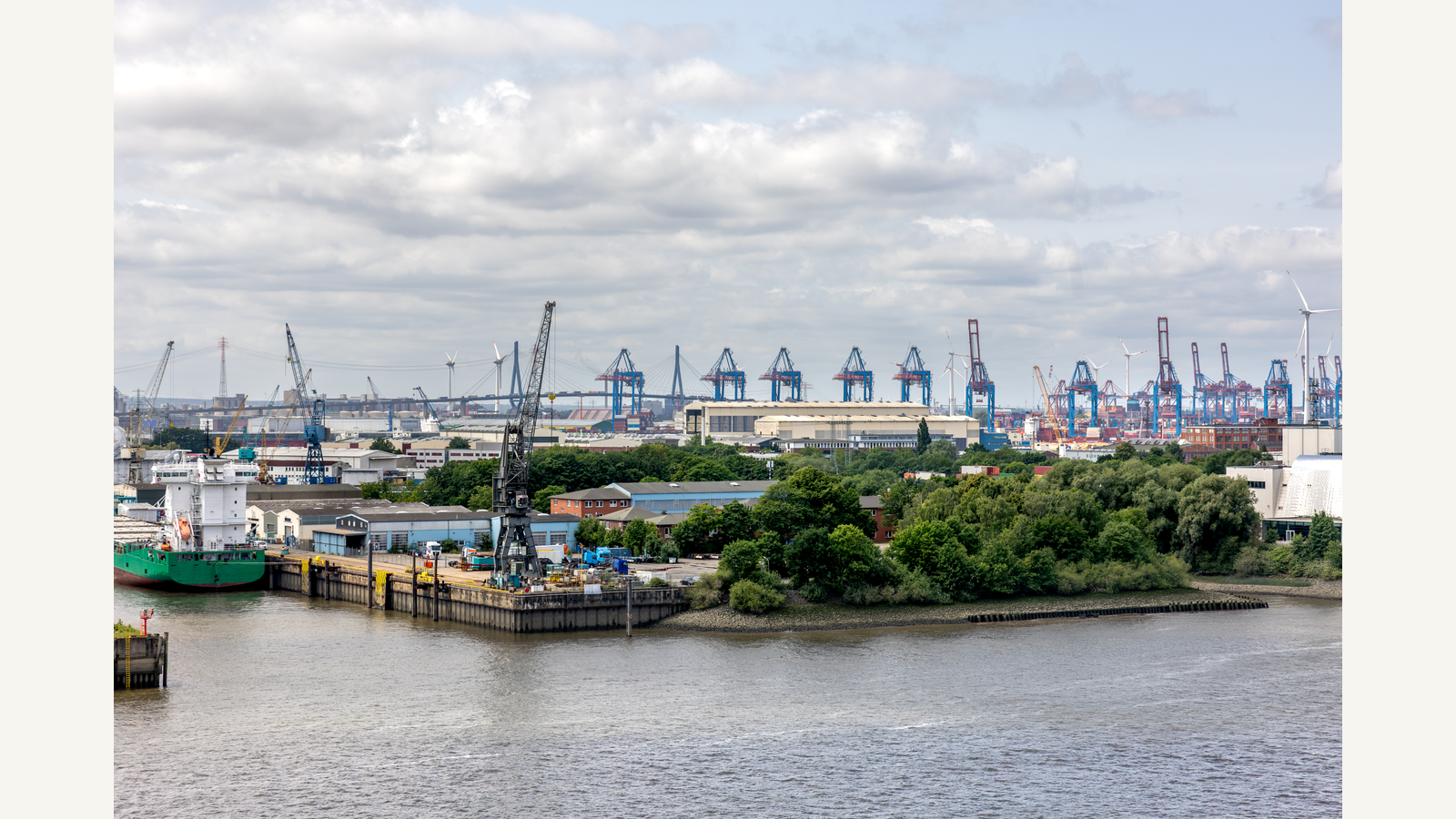
Illustration of port cranes and industrial waterfront infrastructure beside open water.

A feeder berth, not yet a deep-sea gateway

Final approval of the port limits would be a necessary administrative step. It would define the water and shore area controlled for port development, which in turn affects surveys, dredging plans, navigation design and the location of marine works. Yet the gap between what Dawei is now and a deep-sea gateway is still vast. A Ministry of Commerce logistics page describes one berth intended for feeder vessels after dredging to 7.5 metres.

That falls far short of a major deep-sea port, which the government page presents as planned development. Marine contractors should look for hydrographic surveys, geotechnical investigations and an approved dredging strategy before treating the project as ready for tender. Above all, the port’s business case rests on committed industrial tenants or on cargo forecasts backed by users; without them, capacity risks becoming a stranded asset.

The Dawei Special Economic Zone Management Committee presents the site as the western end of an overland corridor connecting Bangkok, Phnom Penh and Ho Chi Minh City, with a link to Thailand’s Eastern Seaboard. But Thailand’s National Economic and Social Development Council notes that economic corridors need policy alignment and regulatory integration as well as hardware. Paved roads alone do not make a working trade corridor.

A corridor Myanmar cannot deliver alone

Cross-border capacity, customs procedures and vehicle rules will shape trade flows as much as physical infrastructure, and a Myanmar port concession cannot settle them on its own. Contractors should separate work inside the economic zone from broader claims about cross-border logistics. Local marine or power packages could go ahead before the whole corridor works commercially, while weak border arrangements would shrink the port’s addressable cargo even if construction advanced. A bankable programme would also show formal Thai participation where cross-border assets or rules require it, and say who will pay for connecting roads and border facilities.

Security adds further commercial risk. The Irrawaddy reported on 14 July that Myanmar military operations had intensified near the project area in Yebyu Township, citing local and resistance sources. Although these claims are not independently verified, they point to risks to site access, workforce movement, insurance, equipment protection and political-risk pricing that commercial parties cannot ignore.

Where security conditions affect site access, international lenders and contractors may judge the underlying risks uninsurable, which would thin the field of bidders and push up capital costs. Procurement would need transparent access arrangements and credible safeguards for workers and residents, as well as environmental and social studies that reflect current conditions.

Dawei’s location on the Indian Ocean keeps its strategic appeal, and its political backing has strengthened. But administrative intent has to become documents that allocate risk before the project means much commercially. A disclosed concession structure and an updated masterplan would be important early steps, followed by funded procurement packages with a defined scope. Power capacity, fuel arrangements and the offtaker must be disclosed, and marine tenders should follow current surveys and environmental approvals. Financiers will also want evidence of equity, debt and any state guarantees. Contractors should test payment currency, dispute resolution and termination protection, and suppliers need realistic customs routes and security plans before committing people or inventory.

For now, the revival is one of negotiations and approvals rather than full-scale construction. Dawei is moving faster through government channels than through the machinery of a bankable project.

Hòa Phát turns Phú Quốc’s APEC build-out into an import-substitution test

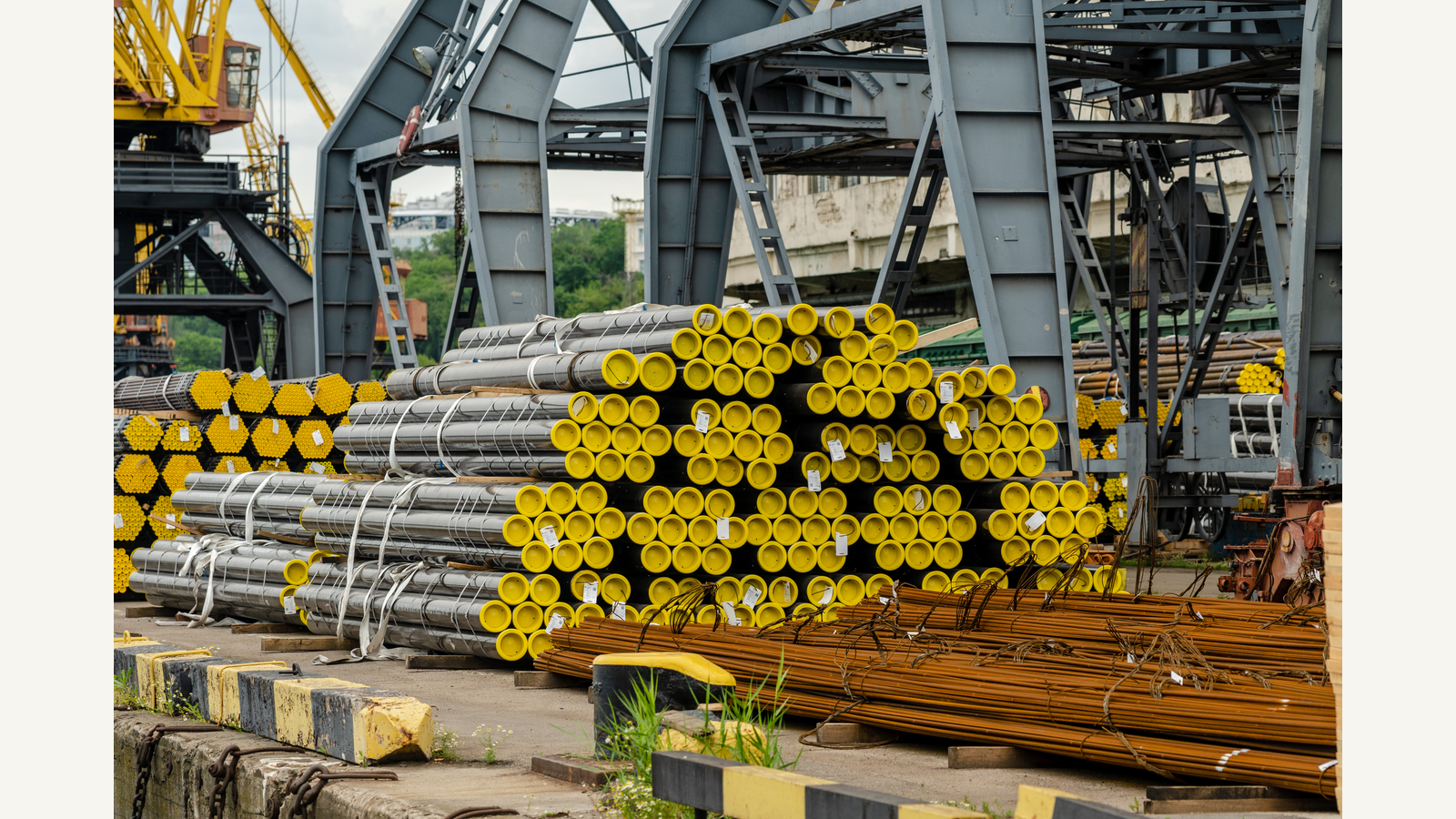
Illustration of large cylindrical metal pipes stacked for shipment at a seaport, with industrial handling equipment and open sky.

By July, Vietnamese industrial producer Hòa Phát Group had supplied more than 4,900 tonnes of steel pipe to an Asia-Pacific Economic Cooperation conference-centre project in Phú Quốc. The steel went through Đại Dũng, Fountech, Unicons and Hawee as construction sped up ahead of the 2027 summit.

The conference centre carries an investment of nearly 22 trillion Vietnamese dong (about $850 million) and covers about 57 hectares. Hòa Phát’s pipes go into the structural frames and roofing, as well as foundation-testing tubes, mechanical and electrical systems and central chillers.

These are technically demanding packages, not basic commodity sales. Pipes range from 59.9 mm to 323.8 mm in diameter. Products supplied to the conference centre and airport meet European EN 10219-1:2006 S355JR requirements, US ASTM specifications and British standards.

Hòa Phát also holds ISO 9001:2015 quality-management and ISO 14001:2015 environmental-management certification. For contractors, these credentials make it easier to qualify a domestic product for designs originally written around international specifications.

Import substitution in megaprojects hinges on regulatory and technical approval as much as on price: a domestic mill must show that its output meets the engineer’s specification, arrives with consistent documentation and reaches site on schedule. The Phú Quốc orders indicate that Hòa Phát can clear that bar across several distinct applications.

Contractors carry local steel into the projects

Hòa Phát supplied the conference-centre steel through contractors and distribution partners rather than relying on a single direct sale, placing the producer closer to fabrication, installation and project scheduling.

At Phú Quốc International Airport, the company has supplied nearly 2,000 tonnes of pipe, mainly for the terminal roof frame and foundation-testing tubes.

Hòa Phát puts its steel-pipe capacity at 1.2 million tonnes a year, which makes it Vietnam’s largest producer in the segment. That scale can reassure contractors that a domestic supplier can handle large packages without building a dedicated line for one project. It also raises the cost of delays if delivery planning fails.

Prestressed strand and the export case

The group sells more than pipe. It has supplied prestressed concrete strand (a high-strength cable used to reinforce concrete) for the conference-centre seawall and land reclamation, the airport expansion and the planned first phase of Phú Quốc’s light-rail line.

Hòa Phát makes the cable in a closed chain that starts with high-carbon wire rod from its Dung Quất steel complex. Control over feedstock can improve consistency and security of supply, and can limit exposure to imported semi-finished material when shipping rates or currencies swing.

Hòa Phát’s prestressed strand already complies with US, British and European standards, and the company has exported to the United States and Canada as well as to markets including Brazil, Mexico and Taiwan. Phú Quốc could therefore be a useful reference for further international sales, particularly where buyers demand proof of performance in major transport infrastructure.

Yet a reference project does not guarantee export orders. Overseas expansion will still depend on destination approvals, trade remedies, freight costs and how products perform once installed. The main commercial dividend from APEC 2027 may instead be a verified record that Vietnamese materials can win high-specification packages through established contractors and meet deadlines across interconnected projects.

Cebu’s flood audit turns drainage promises into a balance-sheet test

Illustration of a translucent blue engineering site plan with three drawn detention-pond outlines lifted above a stylised green hillside; two outlines align with rainwater-filled detention basins, while the third sits over an empty concrete basin-shaped cavity beside pooled water.

Cebu City is turning a flood controversy into a test of whether planning documents protect lower-lying communities from fast-growing hillside expansion. The mayor’s office has ordered 65 developers in the southern mountain barangays to submit their detention-pond blueprints and wider flood-control plans. Officials intend to inspect the sites on 27 August and compare the official drawings with the infrastructure on the ground.

A detention pond holds stormwater for a time and releases it slowly, easing pressure on the drainage network downstream. The audit follows severe flooding after heavy rain, and concern that paved slopes are sending more runoff into lower communities. Missing facilities or discrepancies will be referred to the Cebu City Legal Office rather than triggering immediate penalties.

The exercise reaches beyond a single disputed site, taking in high-end and lower-cost subdivisions alike, including Monterrazas de Cebu and Arcenas Estates. Commercially, the change is simple: paper approvals will be tested directly against physical assets.

Ponds on paper and on the ground

Development control tends to concentrate on the approval stage: engineers model runoff, consultants prepare blueprints and municipal officials sign off on drawings. Yet flood mitigation depends in the end on construction quality, usable retention capacity and maintenance long after the approvals are granted.

Cebu’s inspections could expose several distinct kinds of failure. A basin may be absent, smaller than approved or piped differently from its design drawings. Or a facility may exist but lack verifiable records of its capacity and upkeep. Each problem carries a different remedy and may leave a different party responsible.

Counting ponds will not settle the dispute. Monterrazas has claimed that it built 24 detention ponds with a combined capacity above municipal requirements. But city councillors and environmental advocates have called for independent verification, according to the local newspaper The Freeman.

A rigorous audit would match each approved basin to a specific location and an as-built record. Inspectors could then log its exact dimensions, outlet configuration and current condition, leaving an audit trail that separates design disputes from construction defects and maintenance failures.

For developers, the immediate burden centres on document management. Older projects may have records scattered across consultants, contractors and former project teams. Reassembling that paper trail can take time, particularly where the site was modified during construction.

The financial exposure goes beyond the cost of installing a missing pond. Remedial engineering on a built-out hillside can affect roads, utilities and saleable plots. It can also hold up later phases while managers check whether approvals and built assets still match.

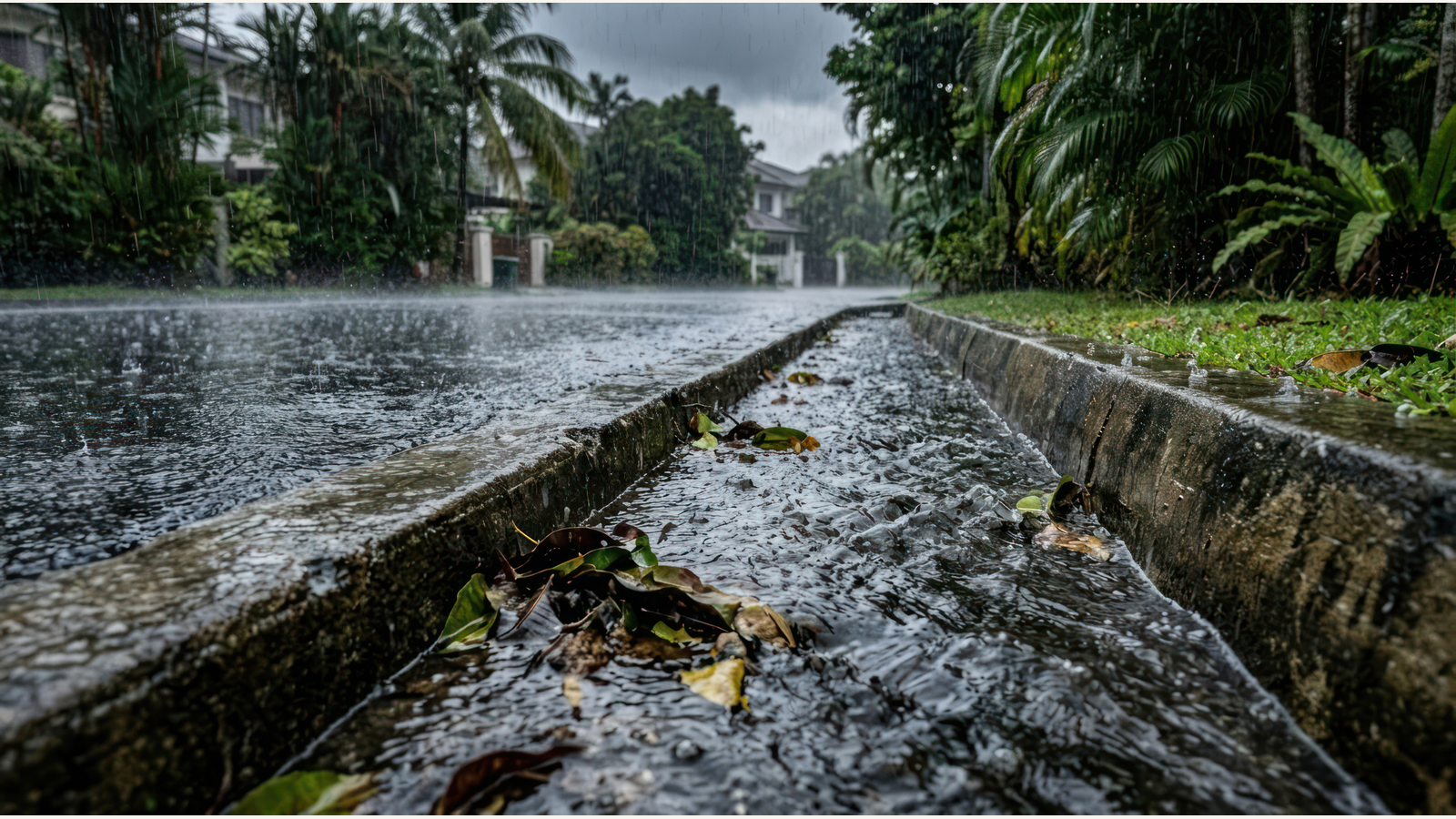
Illustration of a rain-filled engineered drainage channel with flowing water, lush green vegetation and a gray downpour.

The levers in Presidential Decree 957

The planned referral to Cebu’s legal office is significant because it makes inspection findings evidence rather than immediate sanctions. Officials must link any physical mismatch to the relevant approval, contract or legal obligation. That preserves due process, but it also means the quality of the inspection records will shape the strength of any enforcement action.

Presidential Decree 957 provides a national statutory framework for enforcing subdivision standards. It requires a performance bond guaranteeing the construction and maintenance of drainage and other core infrastructure before a licence to sell can be issued. The decree also holds developers responsible for facilities promised in sales literature or set out in approved plans.

The statute allows a licence to sell to be revoked after the required process, and a performance bond to be forfeited so the proceeds can pay for the required works. The regulator may authorise a city engineer to inspect for conformity and can have an unfinished development completed at the developer’s expense.

Those powers do not mean every finding in Cebu will follow the same path. Project age, approval terms and the status of any performance bond will all bear on the outcome. The city’s first task is to build a claim file that identifies the controlling documents and the party still carrying the legal obligation.

How that responsibility divides has real commercial weight. A developer may keep the regulatory liability while pursuing a contractor for defective work. A civil contractor may rely on completion records, while a hydrology consultant may face questions over whether the design parameters still reflect the catchment as built.

Commercial contracts will come under tighter scrutiny if Cebu demands rigorous proof of compliance. Developers may seek clearer warranties, longer record-retention duties and specific handover evidence. Contractors may price extra site testing and documentation into tenders, while consultants may narrow their technical assumptions or charge more for field verification.

Insurers and lenders will also be watching the audit. Evidence of drainage capacity and maintenance can influence how they assess flood risk, project controls and contingent remediation costs. Missing records do not in themselves prove a defect, but they make the uncertainty harder to price.

Private ponds, public drains

Private detention ponds cannot carry Cebu’s flood burden alone. The city is pursuing a one-hectare floodwater reservoir in the Tisa-Labangon area, alongside continuing waterway clearance and a review of its drainage infrastructure and its 2017 Drainage Master Plan.

These public projects and the developer audit deal with different parts of the same hydraulic network. City drainage takes water from many sites, whereas each hillside project changes runoff within its own boundaries. Oversight needs evidence at both levels, so that private compliance is not assumed to close a public capacity gap.

The city plans to report its findings publicly on 31 August. The most useful disclosure would go beyond a simple pass or fail. It would separate missing infrastructure from questions of capacity and maintenance, and make clear which files face legal review.

That degree of transparency would help compliant developers as well as the regulators. Comparable evidence can stop the wider hillside property market being treated as a single, undifferentiated flood risk. It can also show homebuyers and financiers which operators keep control of their assets after completion.

The audit’s lasting impact will depend on what Cebu asks developers to prove next. A durable regime would keep approved drawings, as-built records and maintenance logs linked throughout a project’s life. Site inspections would then check a live compliance record instead of reconstructing history after a flood.

For the real estate supply chain, the shift raises compliance costs but also clarifies responsibility. Developers who can prove capacity and upkeep should face less regulatory uncertainty. Those relying on paper approvals without the evidence to match may find that drainage is no longer a planning formality but a continuing exposure on the balance sheet.