Vietnam’s steel surge raises the stakes on trade and carbon

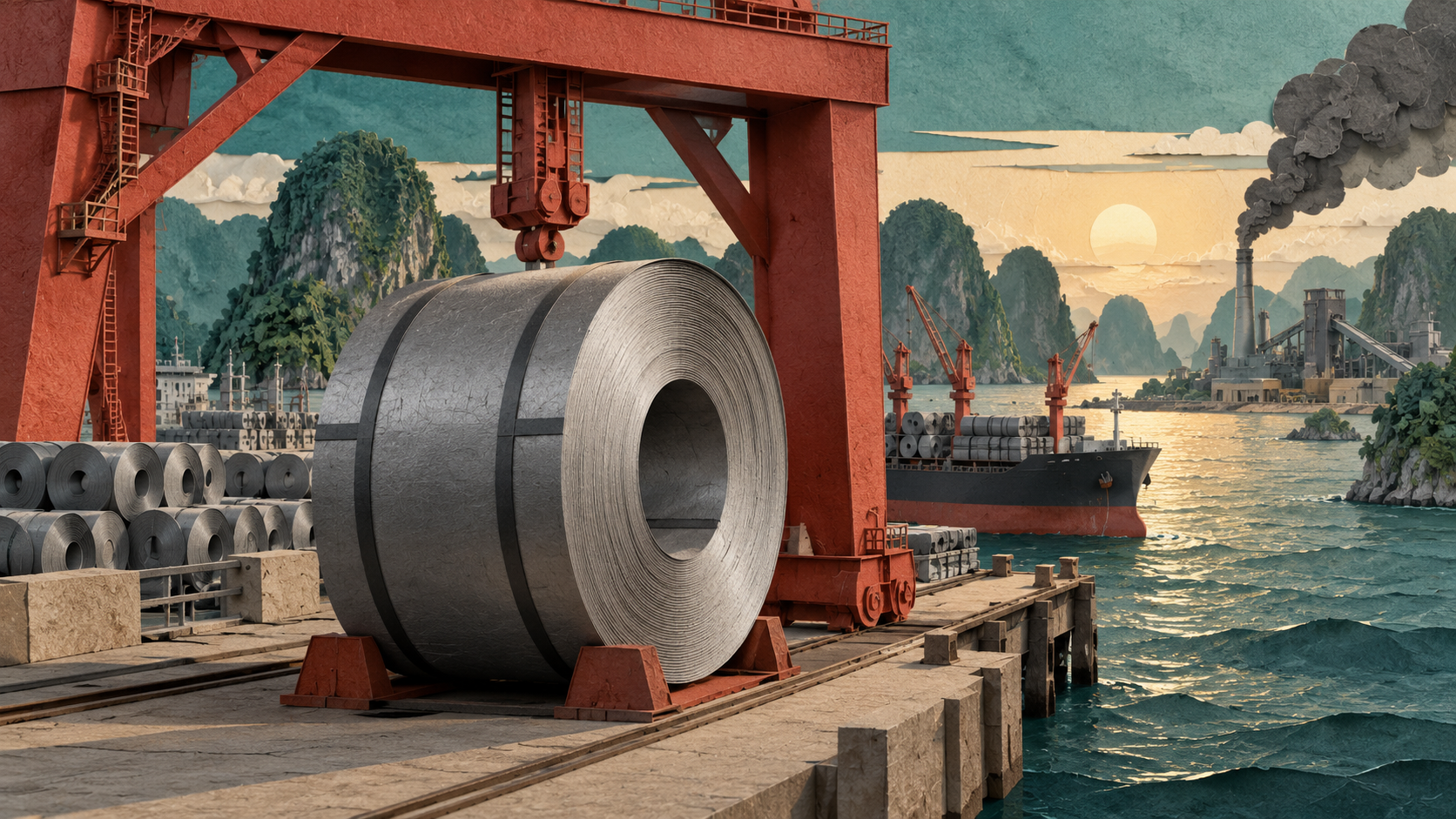
Illustration of a steel coil beneath a red port gantry, with a cargo vessel and an industrial plume against a layered Vietnamese coastal setting.

Vietnam’s steel industry has moved from recovery to rapid expansion. It produced 17.92 million tonnes of crude steel in the first seven months of 2026, up 28 per cent from a year earlier. Finished-steel output reached 21.4 million tonnes and sales rose to 21.186 million tonnes, both up by more than 15 per cent.

That is a strong industrial signal, though tonnage alone is not a simple measure of competitiveness. A durable steel industry has to sell the right grades at viable margins, and it has to withstand volatile input costs, trade barriers and demands for verified emissions data. Vietnam’s latest figures show progress on scale but leave each of those tests open.

The Organisation for Economic Co-operation and Development (OECD) puts Vietnam’s annual steelmaking capacity at 29 million tonnes. A government plan announced in February targets crude-steel production of 33–36 million tonnes by 2035, and 65–70 million tonnes by 2050.

Domestic demand is doing the heavy lifting

Construction steel and hot-rolled coil led the stronger product groups over the seven months, and they point to two different sources of demand. Construction steel goes into buildings and infrastructure, while hot-rolled coil feeds manufacturers that turn flat steel into machinery, vehicles and other products.

Volume alone can hide weakness in the product mix: coated sheet and cold-rolled steel both recorded lower production and sales. These are downstream products, where finish, consistency and customer qualification can count for as much as tonnage.

The contrast suggests that Vietnam’s near-term strength rests on basic construction demand and growing domestic supply of flat steel. It does not yet show that every processor is gaining pricing power. Producers adding capacity therefore need committed domestic buyers and a broader range of higher-value grades, rather than merely fuller furnaces.

Imports expose the limits of self-sufficiency

Vietnam imported almost 9 million tonnes of steel worth more than $6.68 billion during the seven months. It exported 6.69 million tonnes worth $4.54 billion. The resulting steel trade deficit was $2.13 billion, despite exports growing slightly faster by volume than imports.

A deficit is not in itself a sign of industrial failure. Imports may fill specifications, dimensions or delivery needs that domestic mills cannot meet economically, and they can supply processors whose finished goods create value elsewhere in the economy. Yet persistent imports alongside fast capacity growth raise a harder question about whether the new plants are closing product gaps.

Upstream, there is a further dependency. The Vietnam Steel Association says the industry still relies on imported iron ore, scrap and coking coal. More domestic crude-steel capacity can cut reliance on imported finished products, but it leaves mills exposed to freight, foreign exchange and disruption in raw-material markets.

For operators, that turns procurement from a support function into a strategic defence. Mills need a spread of suppliers, sensible inventories and contracts that share price risk. They also need flexibility in production, because a plant tied to one input route can become expensive when the cost of energy or seaborne materials moves sharply.
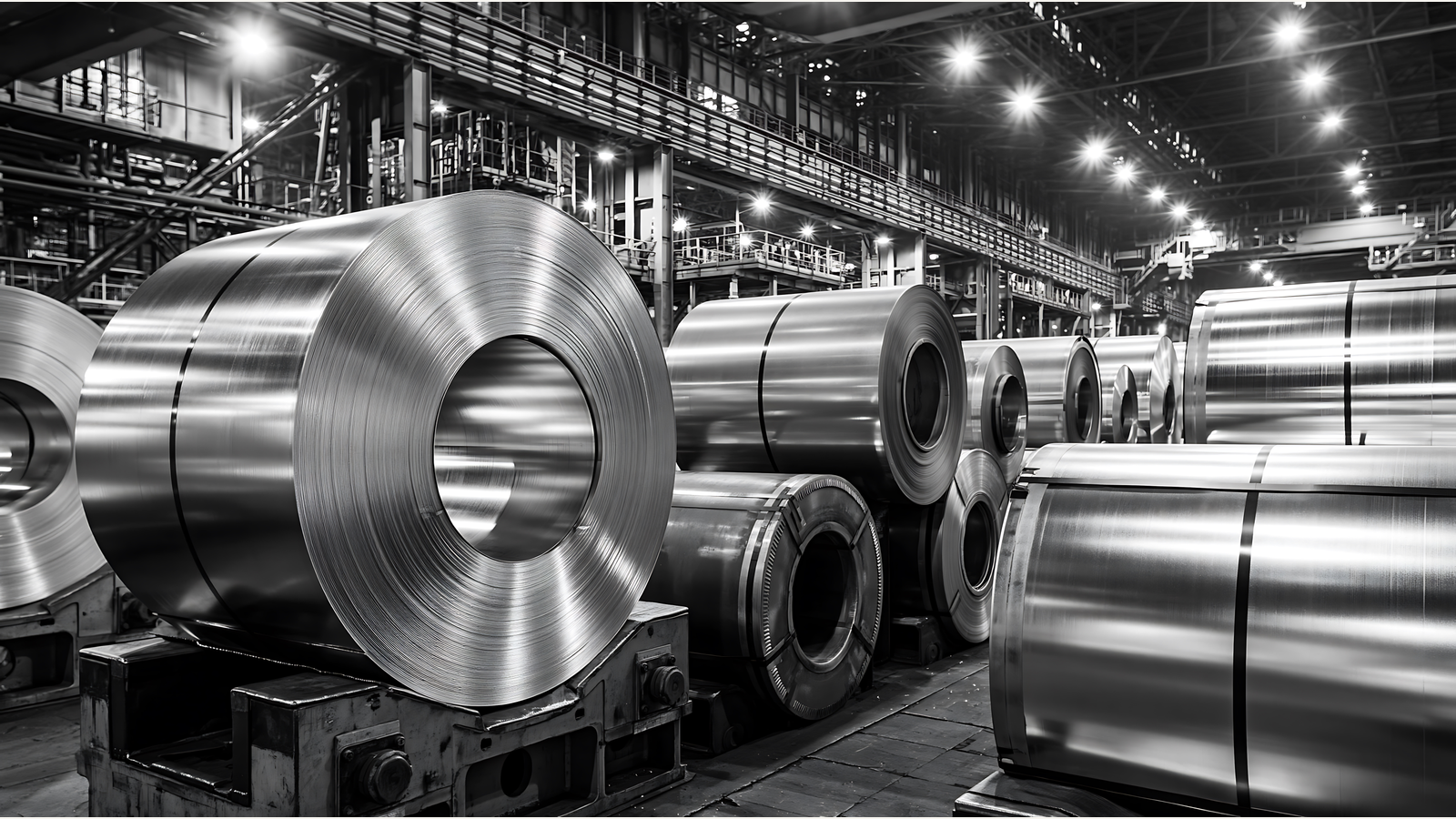
Illustration of steel coils arranged inside an industrial manufacturing factory.

ASEAN offers scale but concentrates risk

The Association of Southeast Asian Nations (ASEAN) absorbed 31.33 per cent of Vietnam’s steel exports and was the largest regional destination. The European Union took 17.5 per cent. ASEAN gives Vietnamese mills a nearby market, with shorter shipping distances and familiar commercial links.

That proximity can deepen regional supply chains. Vietnamese hot-rolled coil can supply fabricators elsewhere in Southeast Asia, while specialised imports flow the other way. The result can be a more connected production base rather than a set of national markets each trying to make every grade.

Concentration also leaves exporters vulnerable to a regional slowdown or a policy response. The OECD says Southeast Asian capacity is still growing. It also found patterns consistent with trade diversion after measures against Chinese steel, including rising flows through ASEAN. That brings closer scrutiny of origin and processing, even for legitimate regional suppliers.

The wider market is unforgiving. The OECD expects global excess capacity to reach 745 million tonnes by 2028, and it recorded 75 new anti-dumping and countervailing-duty investigations in 2025. More supply chasing slow demand tends to weaken prices, and governments answer import surges with broader barriers.

Carbon data become a commercial requirement

The European Union’s Carbon Border Adjustment Mechanism, which covers iron and steel, entered its definitive regime on 1 January. European importers must declare embedded emissions and surrender certificates linked to the price in the European Union Emissions Trading System. That pushes a practical data burden back through the supply chain.

For Vietnamese mills, the immediate issue is more than paying a carbon charge. Customers need reliable plant-level emissions information to calculate their obligations. Producers that cannot provide it risk slower customs clearance, conservative default values or weaker bids against suppliers with auditable records.

Europe takes less Vietnamese steel than ASEAN does, but it can set demanding commercial standards. Investment in energy efficiency, cleaner electricity and scrap-based production can lower a mill’s exposure. Measurement systems, product-level accounting and independent verification count just as much.

Turning tonnage into resilience

Vietnam’s surge is building real industrial capability. Strong demand for construction steel and hot-rolled coil can support larger, more integrated mills. Regional exports can widen their customer base, and domestic capacity can replace selected imports.

The test is whether that scale strengthens the whole system. Success would mean fewer critical product gaps, stronger downstream sales and less fragile sourcing, along with traceable emissions and export growth that survives trade scrutiny.

If capacity rises faster than these capabilities, Vietnam could swap one dependence for another, importing more raw materials, carrying more fixed costs and competing harder in protected markets. The strongest strategy is therefore selective expansion: add capacity where domestic or regional customers need it, and treat product quality, resilient procurement and carbon records as core assets.
Hòa Phát turns Phú Quốc’s APEC build-out into an import-substitution test

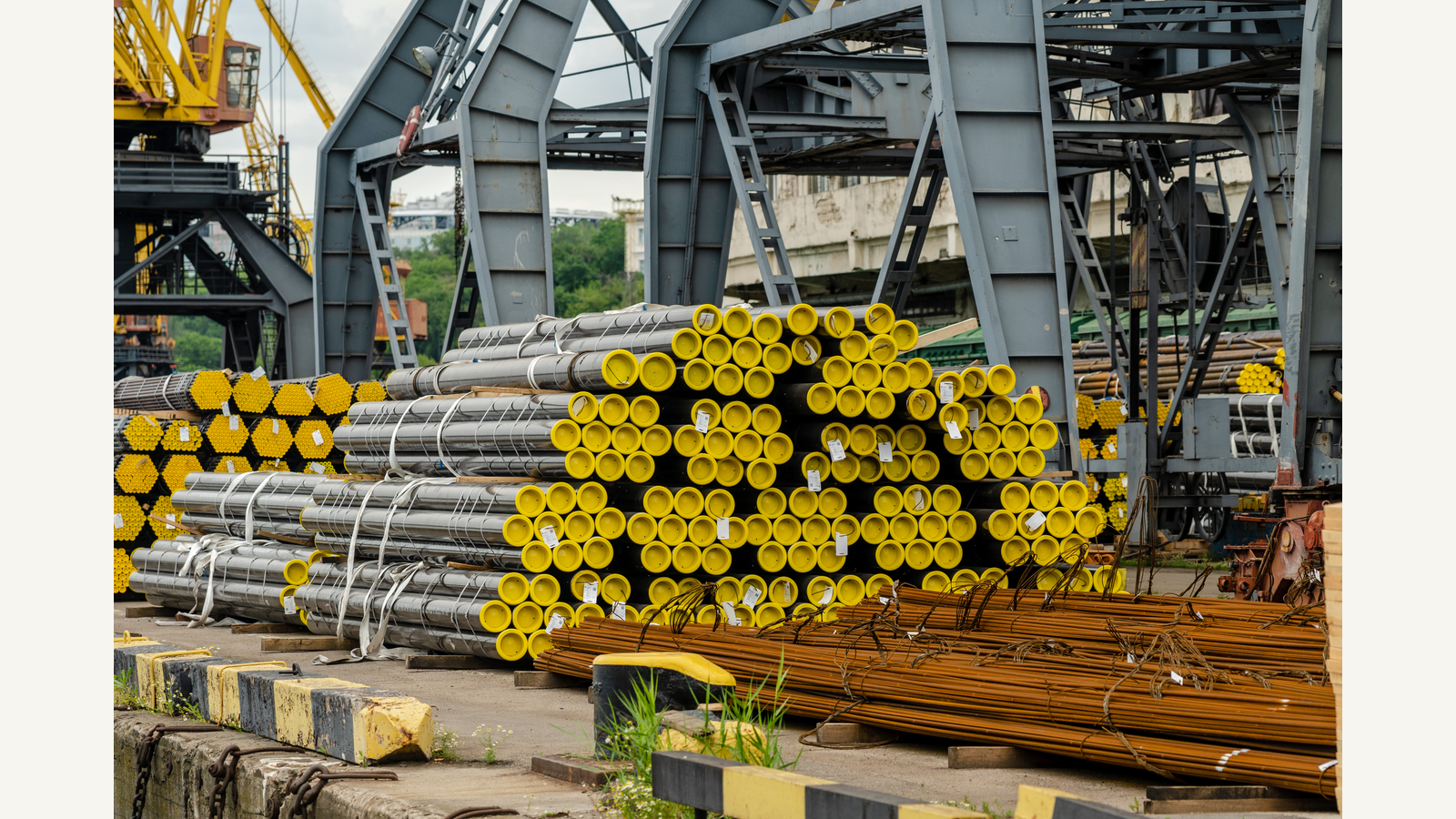
Illustration of large cylindrical metal pipes stacked for shipment at a seaport, with industrial handling equipment and open sky.

By July, Vietnamese industrial producer Hòa Phát Group had supplied more than 4,900 tonnes of steel pipe to an Asia-Pacific Economic Cooperation conference-centre project in Phú Quốc. The steel went through Đại Dũng, Fountech, Unicons and Hawee as construction sped up ahead of the 2027 summit.

The conference centre carries an investment of nearly 22 trillion Vietnamese dong (about $850 million) and covers about 57 hectares. Hòa Phát’s pipes go into the structural frames and roofing, as well as foundation-testing tubes, mechanical and electrical systems and central chillers.

These are technically demanding packages, not basic commodity sales. Pipes range from 59.9 mm to 323.8 mm in diameter. Products supplied to the conference centre and airport meet European EN 10219-1:2006 S355JR requirements, US ASTM specifications and British standards.

Hòa Phát also holds ISO 9001:2015 quality-management and ISO 14001:2015 environmental-management certification. For contractors, these credentials make it easier to qualify a domestic product for designs originally written around international specifications.

Import substitution in megaprojects hinges on regulatory and technical approval as much as on price: a domestic mill must show that its output meets the engineer’s specification, arrives with consistent documentation and reaches site on schedule. The Phú Quốc orders indicate that Hòa Phát can clear that bar across several distinct applications.

Contractors carry local steel into the projects

Hòa Phát supplied the conference-centre steel through contractors and distribution partners rather than relying on a single direct sale, placing the producer closer to fabrication, installation and project scheduling.

At Phú Quốc International Airport, the company has supplied nearly 2,000 tonnes of pipe, mainly for the terminal roof frame and foundation-testing tubes.

Hòa Phát puts its steel-pipe capacity at 1.2 million tonnes a year, which makes it Vietnam’s largest producer in the segment. That scale can reassure contractors that a domestic supplier can handle large packages without building a dedicated line for one project. It also raises the cost of delays if delivery planning fails.

Prestressed strand and the export case

The group sells more than pipe. It has supplied prestressed concrete strand (a high-strength cable used to reinforce concrete) for the conference-centre seawall and land reclamation, the airport expansion and the planned first phase of Phú Quốc’s light-rail line.

Hòa Phát makes the cable in a closed chain that starts with high-carbon wire rod from its Dung Quất steel complex. Control over feedstock can improve consistency and security of supply, and can limit exposure to imported semi-finished material when shipping rates or currencies swing.

Hòa Phát’s prestressed strand already complies with US, British and European standards, and the company has exported to the United States and Canada as well as to markets including Brazil, Mexico and Taiwan. Phú Quốc could therefore be a useful reference for further international sales, particularly where buyers demand proof of performance in major transport infrastructure.

Yet a reference project does not guarantee export orders. Overseas expansion will still depend on destination approvals, trade remedies, freight costs and how products perform once installed. The main commercial dividend from APEC 2027 may instead be a verified record that Vietnamese materials can win high-specification packages through established contractors and meet deadlines across interconnected projects.

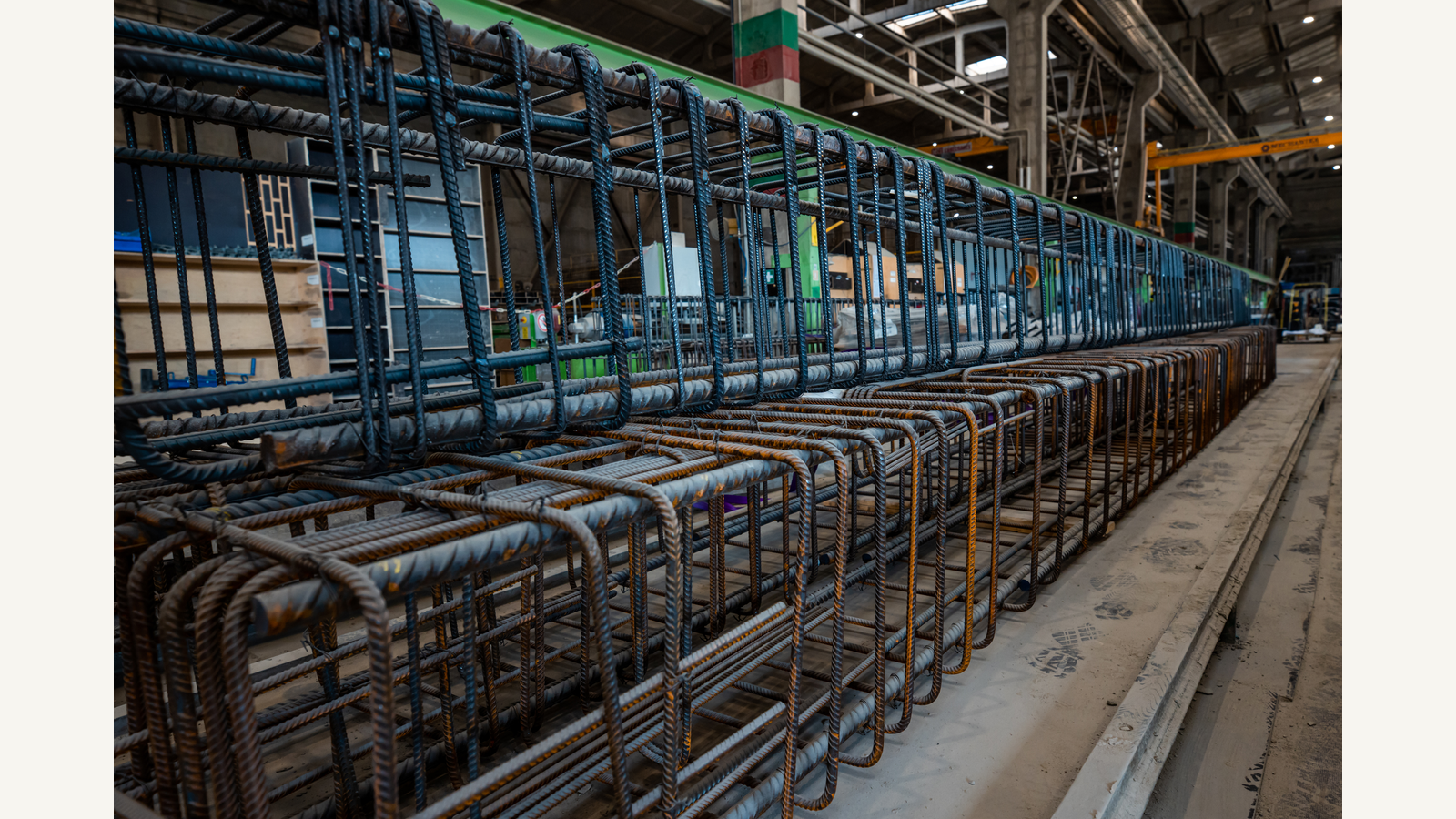
Davao raid puts recycled rebar traceability under scrutiny

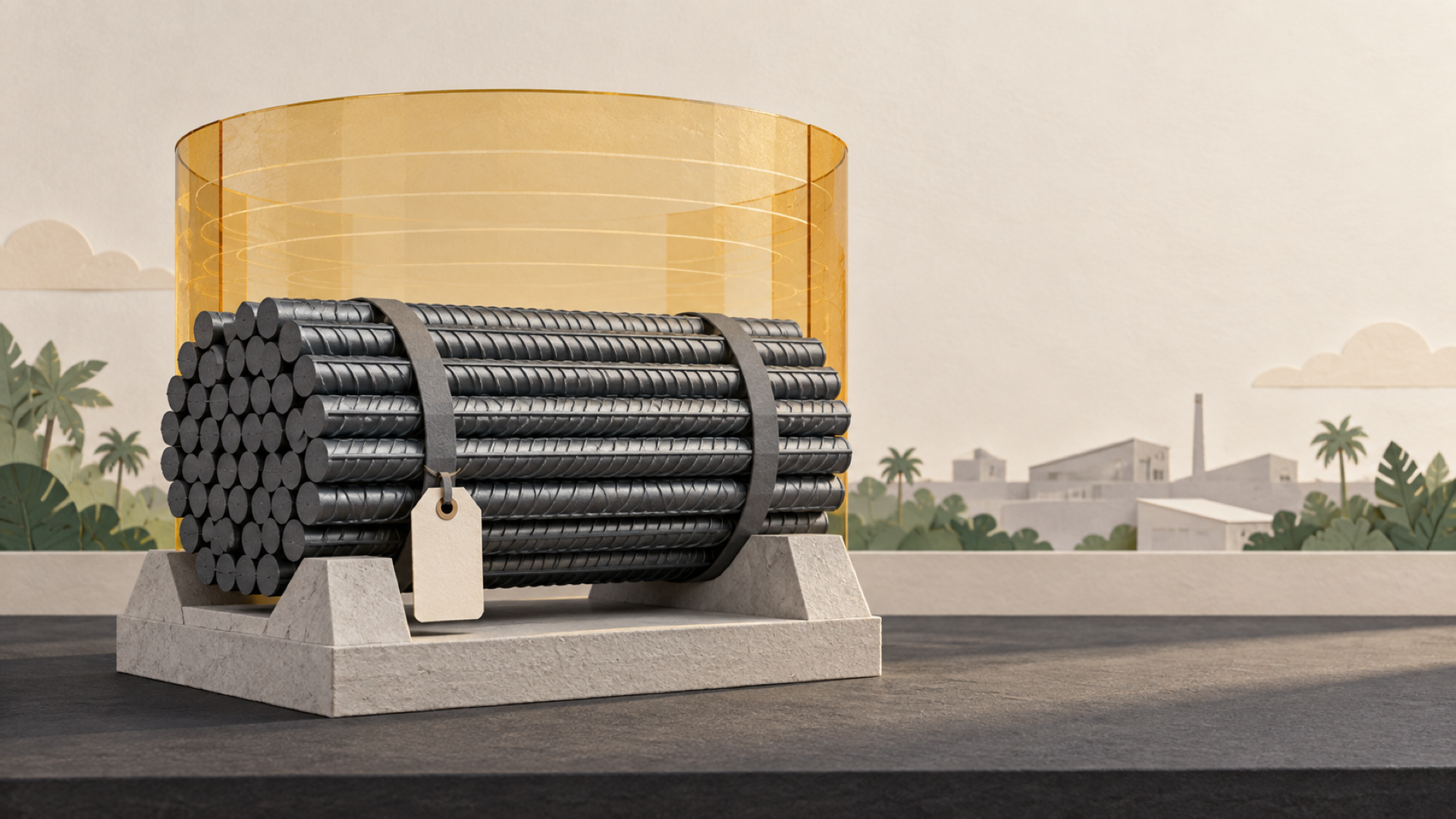
Illustration of a graphite-gray rebar bundle on a pale measuring cradle, framed by an amber circular collar, against a paper-cut tropical industrial horizon.

What began as a factory investigation, when Philippine authorities raided Mighty Steel Plant in Davao City, quickly became a sharp warning for the country’s construction sector. Officials reported radioactive material that the plant was not licensed to possess or handle, and steel bars that failed a national mass test. The legal case concerns one mill. The wider problem is how recycled rebar can travel from scrap yard to building site without a reliable trail of screening, certification and testing.

According to the Philippine Information Agency, testing detected uranium-238, thorium-228, thorium-232 and radium-226 in materials including finished DMS rebars, furnace material, black sand and production wastes. Authorities said Mighty Steel’s environmental certificate did not permit radioactive handling, and the Philippine Nuclear Research Institute added that the plant held no licence to possess or handle the material.

Philippine authorities reported that the raid rescued 174 workers. A later report from the Presidential Anti-Organized Crime Commission (PAOCC) said at least 14 people were arrested during the operation and 21 in all had been charged and remained under investigation, while seven others were still at large. Officials pointed to possible charges under nuclear-safety, hazardous-waste, environmental and consumer-protection laws. Mighty Steel, set up in 2012, makes new steel products from scrap metal. The findings remain allegations and regulatory findings rather than a final court judgement, but they expose a weakness in the system that buyers cannot leave mills to manage alone.

Trouble at the scrap gate

Scrap metal is a notoriously unpredictable commodity. A consignment can mix industrial equipment and demolition debris with discarded devices, and radioactive material that has slipped past regulatory controls can hide among otherwise ordinary scrap. Once such material reaches a furnace, the effects can spread beyond one rejected delivery into products, dust and waste streams.

Guidelines from the International Atomic Energy Agency stress that a supplier’s radiation declaration is useful but is no guarantee. Large recycling facilities should monitor incoming scrap themselves, keep a response plan, train staff in detection and response, and keep proper records. Overseas vendors should supply monitoring results, but the receiving mill still needs its own check at the gate.

For mills buying scrap, the checklist is straightforward. Procurement contracts should specify where the scrap came from, the shipment identifiers and the screening results. Gatehouse records should note which detector was used and how the operator responded to any alarm. A suspect load needs to be isolated, and regulators notified, before unloading or processing continues. A broker’s vague assurance is not enough.

Paperwork that follows the product

Radiation screening checks whether feedstock is safe to process; product certification checks whether finished rebar meets the specified standard. Philippine National Standard 49:2020 governs hot-rolled deformed steel bars for concrete reinforcement and sets grade markings as well as elongation and bend-test requirements. The two checks cover entirely different hazards, and one cannot stand in for the other.

The Bureau of Philippine Standards requires domestic manufacturers to hold a Philippine Standard mark licence before distributing covered steel products; importers use a Statement of Confirmation instead. Manufacturers must emboss an approved logo on the rebar itself, while licence or confirmation details go on the bundle tags. Together they form a chain of traceability that contractors and hardware stores should verify before accepting stock.

During the Davao operation, authorities tested eight rebar samples bought from retail outlets, and four failed the mass-variation requirement of Philippine National Standard 49:2020. A failed mass test does not automatically mean a building will collapse, but it shows that the nominal size and the material delivered may not match. That alone gives buyers reason to audit batches rather than trust a familiar brand or distributor.

Illustration of steel reinforcement bars stored inside an industrial warehouse.

From purchase order to poured concrete

A proper purchase order should cite the applicable standard and the accepted grade, and demand the manufacturer’s certification, the original bundle tag and the mill test certificate. Delivery dockets should carry heat or batch references, so that laboratory results on samples can be traced back to the exact lot on site.

Those records earn their keep once rebar has been cut, bent and buried in concrete. If a later alert names a mill or batch, good records let engineers isolate the affected stock quickly. Sloppy paperwork can force a far wider investigation, with the costs that follow: delays, replacements, testing and contractual disputes.

Public procurement needs the same rigour on a larger scale. Tender compliance should not end when a vendor hands over a glossy brochure, and site inspectors should match the markings on the bars against delivery tags and test sheets. Certifying engineers should record exactly why they accepted a delivery, including any independent test, and payment sign-offs should rest on verifiable evidence rather than disconnected paperwork.

Distributors, owners and the cost of thin records

Distributors are not immune from scrutiny. When authorities identify suspect products, stock registers must show what arrived and where it went. Suspect bundles should be quarantined by batch number rather than by eye, and customers deserve a prompt alert if the records show a matching delivery.

Project owners should start with an audit rather than assume every length of steel from a named mill is contaminated. Teams should cross-check supplier records, embossed logos and bundle tags to find unused stock and affected placements; qualified laboratories and regulators can then decide on the right sampling or radiation survey.

Poor records make the commercial fallout worse. Contractors may face rejected work and missed deadlines, distributors may face warranty claims and returns, and engineers and third-party certifiers may have to explain why they accepted the evidence. Insurers and lenders may also ask whether quality controls matched the project specifications.

Proof needed for both feedstock and finished bar

The Davao raid shows why environmental permission, radiation safety and product conformity must work together. A mill may present product markings while its controls at the scrap gate fall short. Equally, a passing chemical or mechanical test reveals nothing about radioactive contamination unless radiological screening is carried out.

Regulators can narrow the gap by linking plant licences, quality certification and market inspections. A serious radiation finding should prompt a traceable review of the affected production and distribution records, and a failed retail sample should trigger an examination of the linked batch and the mill’s quality system, not just the removal of a single bar.

Buyers should treat recycled rebar as a controlled material that needs two distinct assurances: safe, documented handling of feedstock and a conforming, traceable finished batch. Both depend on buyers and certifiers insisting on paperwork that reliably identifies the steel in front of them.