US quartz safeguard forces a four-year reset for Vietnamese exporters

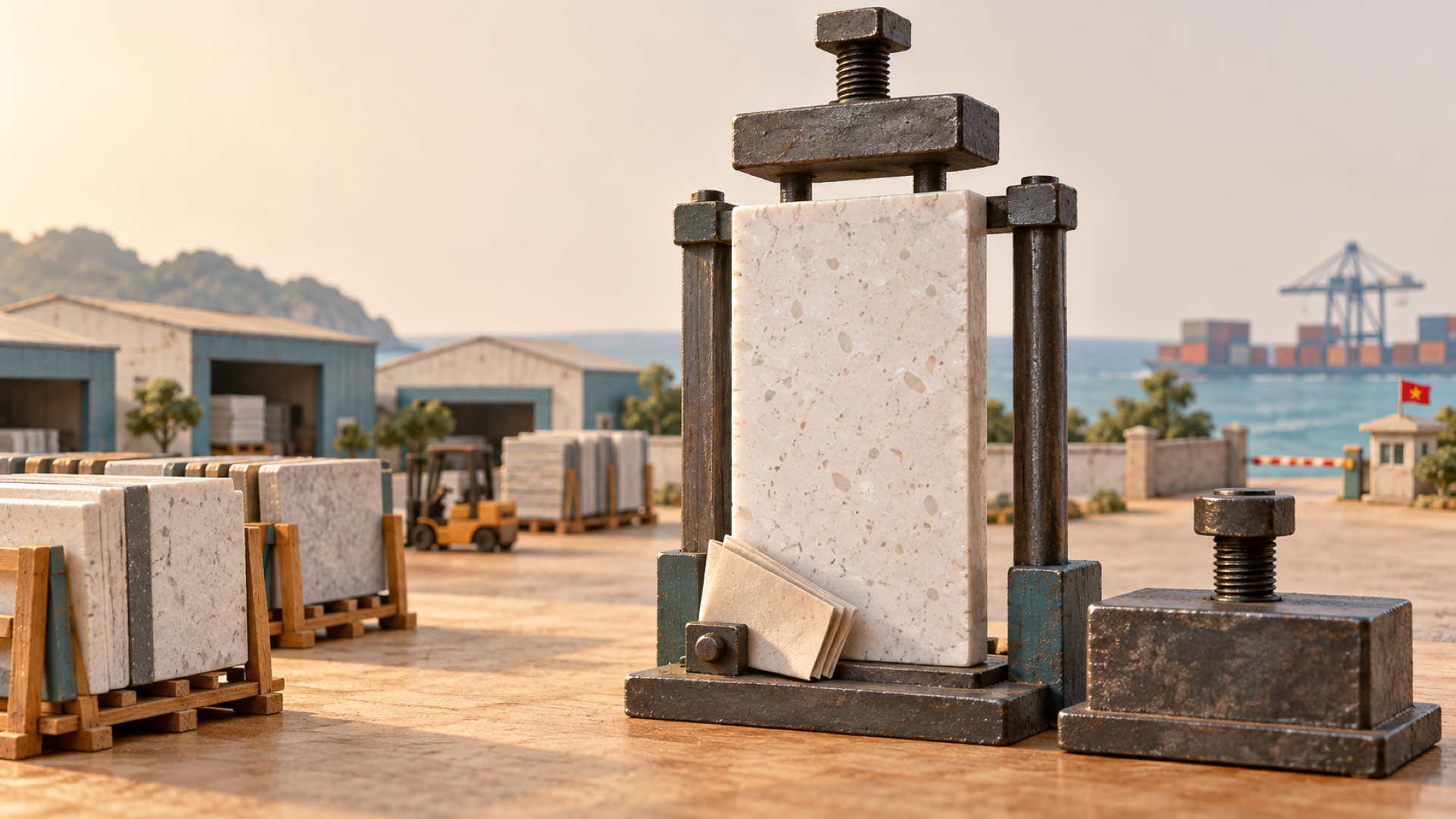
Illustration of a handmade tabletop miniature with a pale stone slab held in a dark press, a folded unprinted paper dossier at its base, and small factory and container silhouettes in the background.

The United States has redrawn the economics of Vietnamese engineered stone. From 15 August, covered quartz surfaces from Vietnam face a four-year tariff-rate quota. Imports within the global quota pay an extra 25 per cent in year one; shipments above it pay 50 per cent.

The measure goes beyond raw slabs. It covers fabricated surfaces such as countertops, backsplashes, vanity tops and tiles whenever silica is the largest material by weight. Natural quarried stone, including granite and marble, falls outside the scope, so product composition and the records that prove it have become commercial weapons overnight.

Vietnam is heavily exposed. In the first nine months of 2025, the United States imported 29.766 million square feet from Vietnam, worth $258 million. That was 17.9 per cent of import volume and 21.2 per cent of value, too large a share for the developing-country exemption available to smaller suppliers.

The safeguard followed a 73.4 per cent leap in total US import volume, from 135 million square feet in 2020 to 234 million in 2024. The United States International Trade Commission concluded that increased imports were a substantial cause of serious injury to domestic producers.

One quota, shared by every non-exempt supplier

The first-year global quota is 13.006 million square metres, or about 140 million square feet, split into four quarterly limits of roughly 35 million square feet. Unused allocation can roll over into the following quarter, but any entries beyond the cap pay the higher tariff.

Vietnam’s nine-month volume in 2025 was equal to about 21.3 per cent of the entire first-year global pool. That is a comparison, not an assigned allocation, but it shows how heavily Vietnamese suppliers depend on capacity they must share with every other non-exempt source.

Quota timing will therefore shape margins as much as factory efficiency. Exporters need to track each shipment from production booking to US customs entry, because a delay near a quarterly deadline could push a consignment into a costlier duty band.

Contracts must also set firm rules on quota risk. Suppliers, importers and distributors have to settle who pays the higher duty if quota space closes before clearance; loose delivered-price promises could leave exporters financing costs they cannot control.

Landed costs jump from the first shipment

Trade data from 2025 point to an average customs value of about $8.67 per square foot for Vietnamese shipments. At that level, the first-year safeguard adds roughly $2.17 per square foot in-quota, and $4.33 above it.

On a shipment of 1,000 square feet at that average valuation, the safeguard alone adds about $2,167 within quota or $4,335 above it, a landed-cost gap of $2,167. Freight, standard customs duties and additional trade remedies come on top of this basic model.

Relief will be slow. In-quota tariffs taper to 23 per cent, 21 per cent and 19 per cent over the following three years, while above-quota rates fall only to 49 per cent, 48 per cent and 47 per cent. Exporters face a planning horizon of several years rather than a brief bump in the road.

The safeguard is cumulative, so existing anti-dumping, countervailing and other duties still apply where relevant. Vietnamese manufacturers must calculate costs product by product and origin by origin, rather than treating 25 per cent as the whole of their border bill.
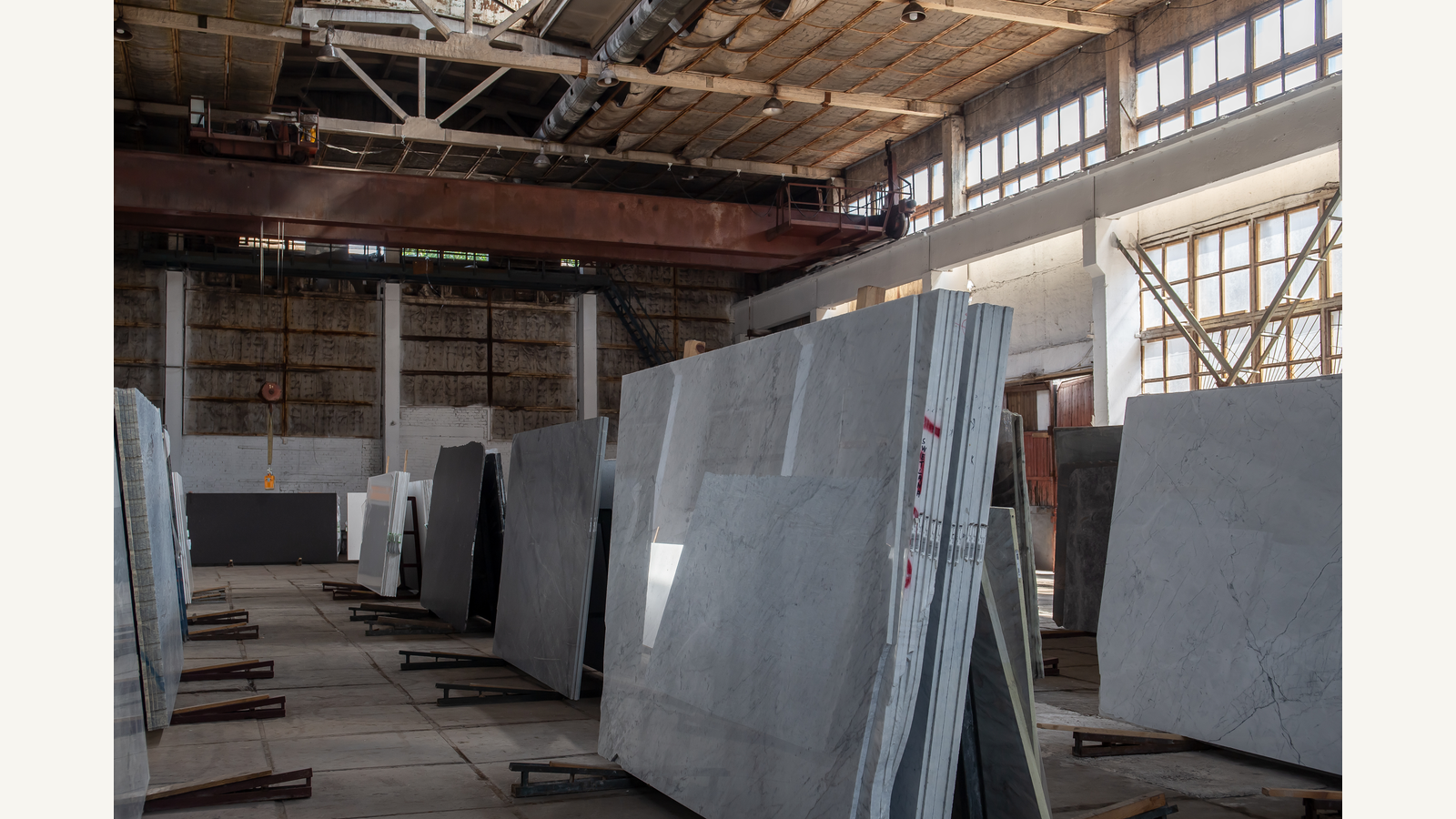
Illustration of upright polished stone slabs arranged in rows inside a large industrial warehouse, with reflective surfaces, vertical supports and open floor space visible.

Rerouting through ASEAN offers little shelter

The regional map is uneven. Singapore is excluded under a trade agreement and Indonesia is on the developing-country exemption list. Vietnam, Malaysia and Thailand appear on neither.

These splits may tempt buyers to reroute orders across Southeast Asia, but simple transhipment carries severe risks. US scope rules explicitly capture covered material finished in a third country through cutting, polishing, curing or edging.

US authorities have kept the power to counter circumvention and import surges from excluded countries. Earlier US anti-dumping and countervailing cases targeted China, India and Turkey, and Malaysia has faced circumvention scrutiny in the past.

For regional groups, traceability is the practical defence. Factories must assemble supplier declarations, production records, bills of materials and plant-level evidence of transformation that shows where the engineered slab was actually made, not merely where it was edged or boxed.

That trail runs upstream too. Resin, silica inputs and semi-finished slabs may move between regional plants before export. A group that cannot match material flows to export volumes could face customs delays, penalties or a damaging loss of buyer trust.

Product mix can stretch scarce quota

Exporters ought to manage the quota as a portfolio. Standard, lower-value slabs are least able to absorb a 25 per cent surcharge, whereas premium designs or fabricated pieces may earn margins high enough to justify using up scarce in-quota space.

Redesign offers little escape. Changing thickness, finish or shape will not take a silica-dominated engineered surface outside the safeguard rules. A genuine switch to quarried natural stone avoids the measure, but demands different sourcing and a different pitch to customers.

Other markets offer a buffer, even if they cannot replace US volume quickly. Manufacturers should test demand where their designs, certification and distributor ties carry weight, and aim at markets that reward finished pieces, short runs or fast delivery.

Any pivot needs pricing discipline. Offloading surplus stock into new markets risks fresh trade disputes or the collapse of baseline margins. A deliberate mix of US quota allocation and wider diversification is the safer course.

Distributors now decide the tariff band

US distributors now offer more than sales reach. Their customs systems, entry timing and inventory records determine whether Vietnamese products land in the intended tariff band. Exporters should favour partners that can report quota usage and landed-cost exposure quickly.

Inventory planning changes too. Building stock ahead of peak demand may secure availability, but it ties up working capital and raises warehousing fees. Waiting preserves cash, yet makes it more likely that shipments pay above-quota tariffs.

A sound commercial plan should test three paths: a base case that relies on in-quota access, a stress case at 50 per cent tariffs and a mixed case that spreads both rates across the year’s pipeline. Every client agreement needs to hold up under all three.

The four-year window gives exporters room to adapt, but only those who act early. Vietnamese producers must build quota management, origin verification and channel performance into their pricing models, so that execution at customs becomes a core source of competitive advantage.
Vietnam’s steel surge raises the stakes on trade and carbon

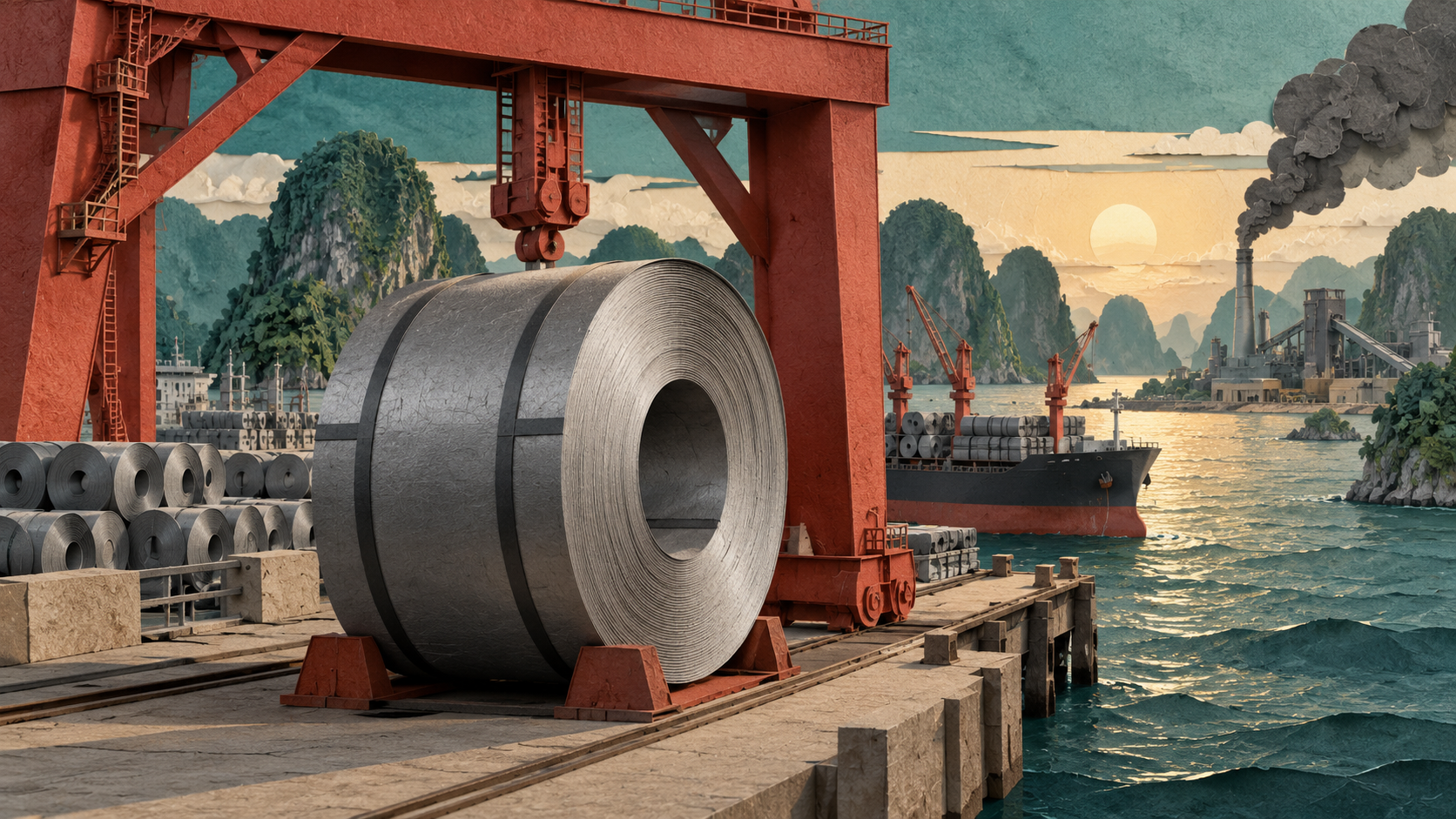
Illustration of a steel coil beneath a red port gantry, with a cargo vessel and an industrial plume against a layered Vietnamese coastal setting.

Vietnam’s steel industry has moved from recovery to rapid expansion. It produced 17.92 million tonnes of crude steel in the first seven months of 2026, up 28 per cent from a year earlier. Finished-steel output reached 21.4 million tonnes and sales rose to 21.186 million tonnes, both up by more than 15 per cent.

That is a strong industrial signal, though tonnage alone is not a simple measure of competitiveness. A durable steel industry has to sell the right grades at viable margins, and it has to withstand volatile input costs, trade barriers and demands for verified emissions data. Vietnam’s latest figures show progress on scale but leave each of those tests open.

The Organisation for Economic Co-operation and Development (OECD) puts Vietnam’s annual steelmaking capacity at 29 million tonnes. A government plan announced in February targets crude-steel production of 33–36 million tonnes by 2035, and 65–70 million tonnes by 2050.

Domestic demand is doing the heavy lifting

Construction steel and hot-rolled coil led the stronger product groups over the seven months, and they point to two different sources of demand. Construction steel goes into buildings and infrastructure, while hot-rolled coil feeds manufacturers that turn flat steel into machinery, vehicles and other products.

Volume alone can hide weakness in the product mix: coated sheet and cold-rolled steel both recorded lower production and sales. These are downstream products, where finish, consistency and customer qualification can count for as much as tonnage.

The contrast suggests that Vietnam’s near-term strength rests on basic construction demand and growing domestic supply of flat steel. It does not yet show that every processor is gaining pricing power. Producers adding capacity therefore need committed domestic buyers and a broader range of higher-value grades, rather than merely fuller furnaces.

Imports expose the limits of self-sufficiency

Vietnam imported almost 9 million tonnes of steel worth more than $6.68 billion during the seven months. It exported 6.69 million tonnes worth $4.54 billion. The resulting steel trade deficit was $2.13 billion, despite exports growing slightly faster by volume than imports.

A deficit is not in itself a sign of industrial failure. Imports may fill specifications, dimensions or delivery needs that domestic mills cannot meet economically, and they can supply processors whose finished goods create value elsewhere in the economy. Yet persistent imports alongside fast capacity growth raise a harder question about whether the new plants are closing product gaps.

Upstream, there is a further dependency. The Vietnam Steel Association says the industry still relies on imported iron ore, scrap and coking coal. More domestic crude-steel capacity can cut reliance on imported finished products, but it leaves mills exposed to freight, foreign exchange and disruption in raw-material markets.

For operators, that turns procurement from a support function into a strategic defence. Mills need a spread of suppliers, sensible inventories and contracts that share price risk. They also need flexibility in production, because a plant tied to one input route can become expensive when the cost of energy or seaborne materials moves sharply.

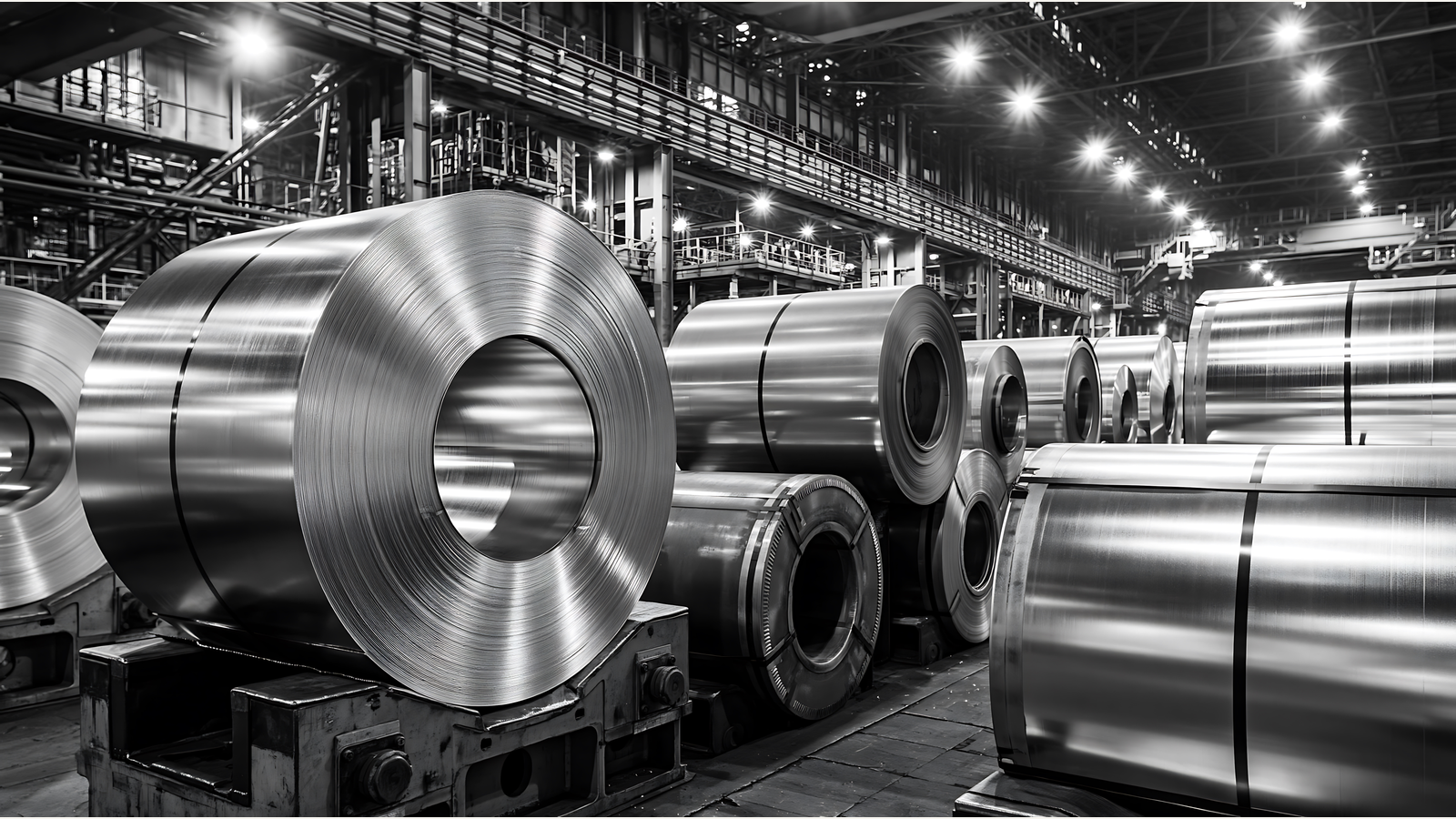
Illustration of steel coils arranged inside an industrial manufacturing factory.

ASEAN offers scale but concentrates risk

The Association of Southeast Asian Nations (ASEAN) absorbed 31.33 per cent of Vietnam’s steel exports and was the largest regional destination. The European Union took 17.5 per cent. ASEAN gives Vietnamese mills a nearby market, with shorter shipping distances and familiar commercial links.

That proximity can deepen regional supply chains. Vietnamese hot-rolled coil can supply fabricators elsewhere in Southeast Asia, while specialised imports flow the other way. The result can be a more connected production base rather than a set of national markets each trying to make every grade.

Concentration also leaves exporters vulnerable to a regional slowdown or a policy response. The OECD says Southeast Asian capacity is still growing. It also found patterns consistent with trade diversion after measures against Chinese steel, including rising flows through ASEAN. That brings closer scrutiny of origin and processing, even for legitimate regional suppliers.

The wider market is unforgiving. The OECD expects global excess capacity to reach 745 million tonnes by 2028, and it recorded 75 new anti-dumping and countervailing-duty investigations in 2025. More supply chasing slow demand tends to weaken prices, and governments answer import surges with broader barriers.

Carbon data become a commercial requirement

The European Union’s Carbon Border Adjustment Mechanism, which covers iron and steel, entered its definitive regime on 1 January. European importers must declare embedded emissions and surrender certificates linked to the price in the European Union Emissions Trading System. That pushes a practical data burden back through the supply chain.

For Vietnamese mills, the immediate issue is more than paying a carbon charge. Customers need reliable plant-level emissions information to calculate their obligations. Producers that cannot provide it risk slower customs clearance, conservative default values or weaker bids against suppliers with auditable records.

Europe takes less Vietnamese steel than ASEAN does, but it can set demanding commercial standards. Investment in energy efficiency, cleaner electricity and scrap-based production can lower a mill’s exposure. Measurement systems, product-level accounting and independent verification count just as much.

Turning tonnage into resilience

Vietnam’s surge is building real industrial capability. Strong demand for construction steel and hot-rolled coil can support larger, more integrated mills. Regional exports can widen their customer base, and domestic capacity can replace selected imports.

The test is whether that scale strengthens the whole system. Success would mean fewer critical product gaps, stronger downstream sales and less fragile sourcing, along with traceable emissions and export growth that survives trade scrutiny.

If capacity rises faster than these capabilities, Vietnam could swap one dependence for another, importing more raw materials, carrying more fixed costs and competing harder in protected markets. The strongest strategy is therefore selective expansion: add capacity where domestic or regional customers need it, and treat product quality, resilient procurement and carbon records as core assets.