
Linesight’s insider CEO bets on sustaining double-digit data-centre growth

Illustration of a hard hat resting on rolled site plans on a table, in front of a large data centre under construction with a single crane at dusk.

By promoting John Butler, a 25-year company veteran, to chief executive, global construction consultancy Linesight claims it can sustain double-digit growth in the data-centre, life-sciences and high-tech work that sets its pace. The company says its revenue has risen year-on-year by between 15 per cent and 24 per cent since 2021 and it is forecasting continued double-digit growth over the next three years. However, the company’s forecast appears to rest on clients’ capital spending more than on who runs the firm.

The expansion has been rapid. Under Paul Boylan, who leads its parent group, Linesight grew from 20 offices and 700 people in 2021 to 44 offices across 30 countries and more than 2,500 people. It sells cost, project controls, programme and project management services across data centres, life sciences, high-tech industrial and commercial sectors. Linesight has not said how its revenue divides between the sectors, which leaves the forecast hard to test.

Butler takes over on 1 January 2027, and his case rests on Asia. Over the past fifteen years he has built Linesight’s APAC and Middle East business from a small team to over 600 people across 10 offices and eight markets. Linesight says the region supports its largest global clients, including four of the top 10 technology companies in the Fortune Global 500, and has delivered more than 200 data centre projects across 15 countries. This is a credible template for the growth Linesight wants elsewhere.

Scott Halyday will succeed Butler as managing director for APAC and the GCC on the same date and join Linesight’s global executive team. Based in Singapore, he joined the firm in 2018 and has more than 20 years’ experience leading complex programmes and client relationships across APAC and international markets. Promoting from within at both levels keeps client relationships stable when they are most exposed to change. Asian clients can expect continuity of contacts, and hiring is more likely to follow project wins than any change of strategy.
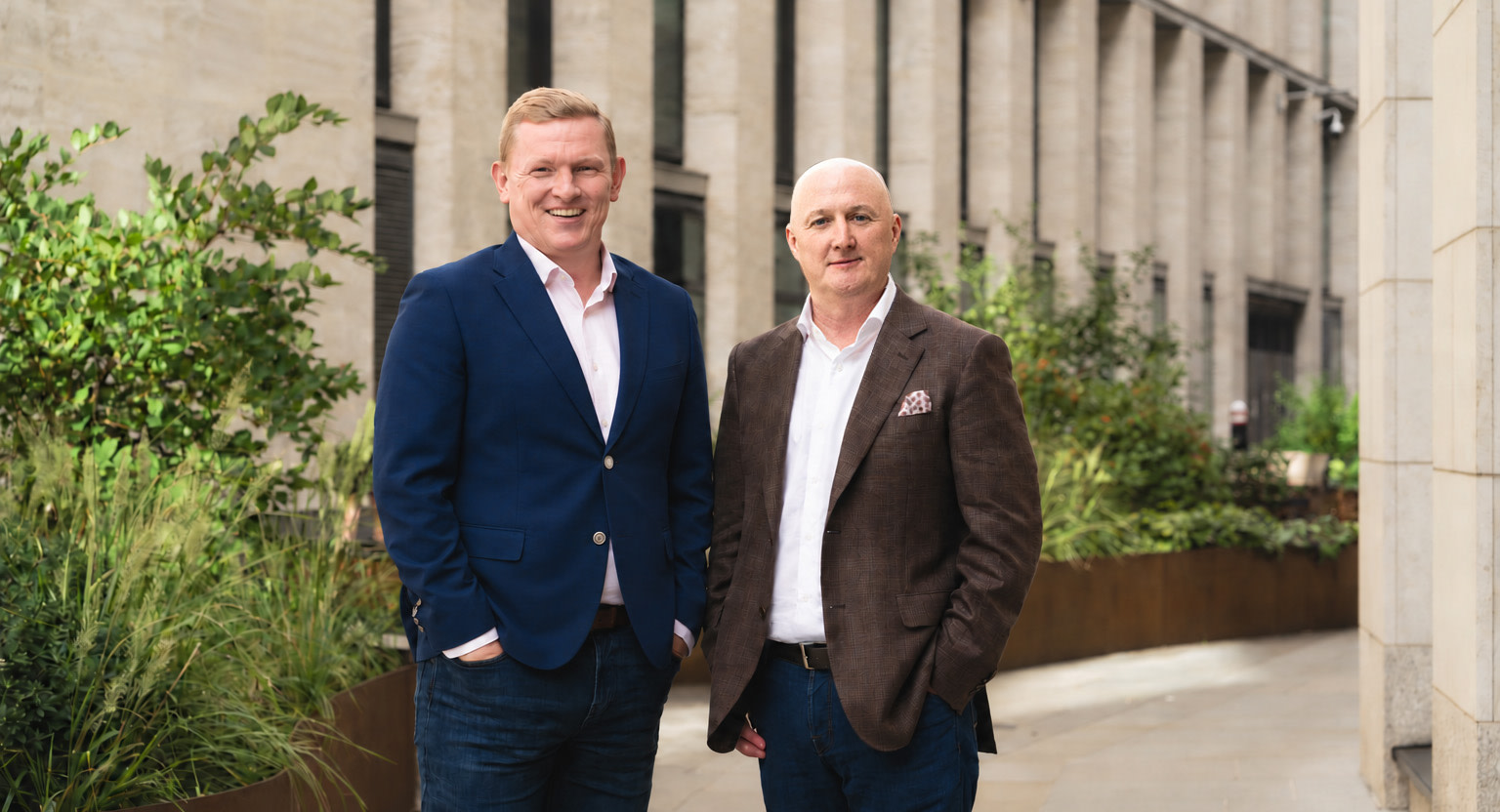
John Butler, in a blue jacket, stands beside Paul Boylan, in a brown jacket
John Butler (left), incoming chief executive of Linesight, with Paul Boylan, group chief executive of IPS Photo: Linesight

Cushman & Wakefield, a global real estate services firm, reports that construction costs across Asia Pacific rose by an average of 10 per cent year-on-year in 2025 as demand intensified and supply chains remained under pressure. Where consultancy fees follow project value, part of Linesight’s growth may reflect higher prices rather than more projects. If cost growth eases, volume will have to carry the forecast. Linesight has not split the two.

Linesight’s forecast is not the group’s. IPS-Integrated Project Services is part of the Berkshire Hathaway group of companies and comprises IPS, Linesight and Springtide. It has more than 4,500 people, operates across 40 countries and generates approximately $2 billion in net revenue. Boylan stays as group chief executive and, the company says, will remain closely involved with Linesight and its clients. Springtide, led by Michael Riordan, specialises in PMC and EPCM services for data centre and advanced technology environments. Group headcount and revenue therefore say little about Linesight alone, and Springtide works in overlapping sectors. For a client, the question is whether the two brands are offered together or compete for the same scope.

Butler has said he wants to extend Linesight’s reach ‘in the markets where our clients are investing and growing’. That ties the plan to client spending, so the signals are practical: whether Linesight discloses revenue by sector, whether the Asia-Pacific team keeps growing beyond 600 people, and whether it keeps winning data-centre work at the pace of the 200 projects already delivered.
BDx’s West Java halt puts permit risk on Indonesia’s data-centre boom

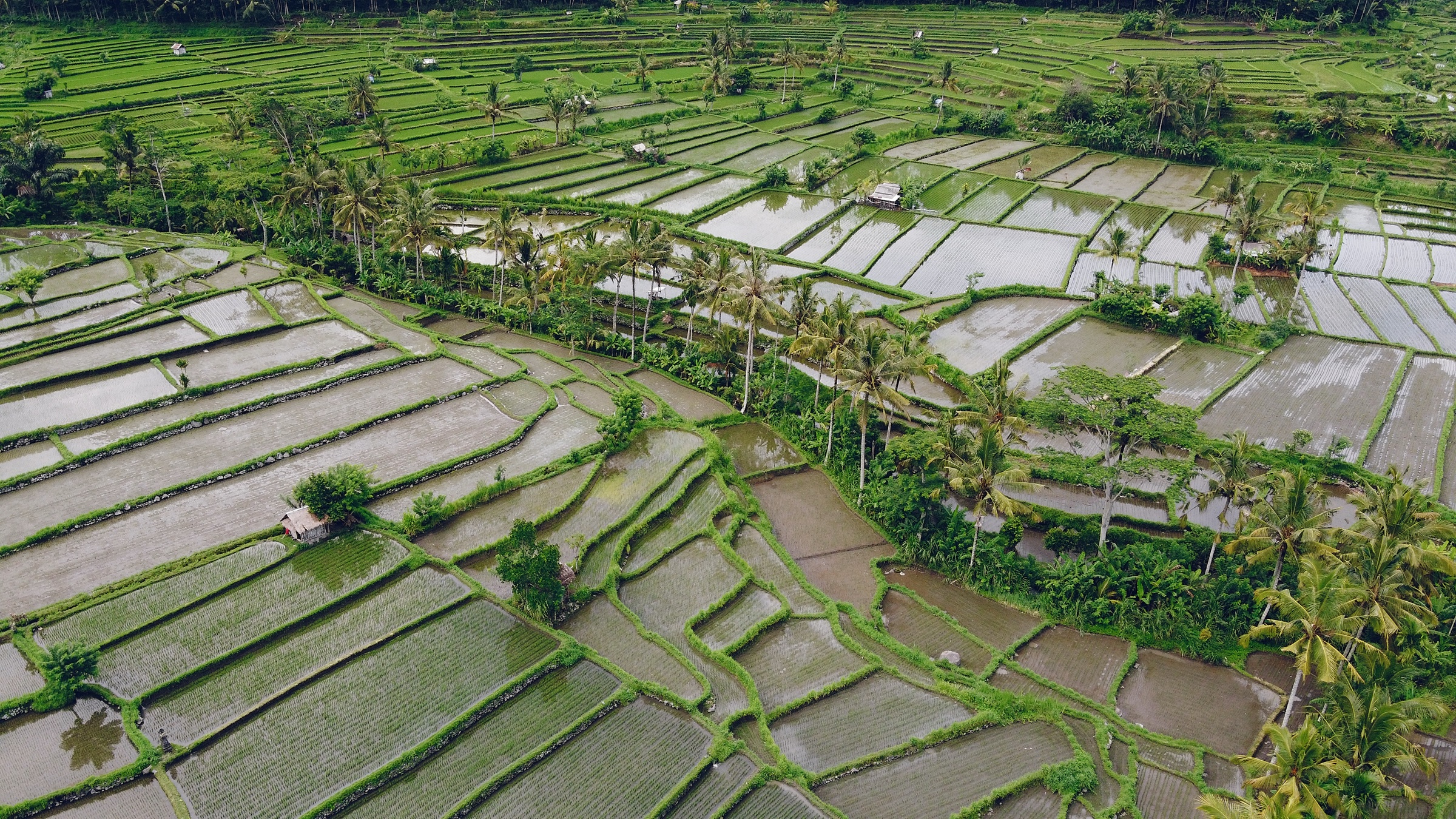
Aerial view of terraced rice paddies filled with water among palm trees.

BDx had most of what an AI data-centre developer needs in Indonesia. It had a grid allocation from the state electricity company, a bank facility, NVIDIA certification and a customer for its first phase. It did not have an environmental impact assessment or a building approval from the Purwakarta administration, and the governor who attended its groundbreaking has now stopped the work. For foreign developers chasing AI demand on Java, the order moves schedule risk from the grid queue to local permit offices. It also puts water at the centre of the approval argument.

Construction on AI Campus 2, known as CGK4, stopped on 28 September after an inspection by Dedi Mulyadi, governor of West Java, Indonesia’s most populous province. Singapore’s BDx Data Centers, which is backed by I Squared Capital, had broken ground on the 640 MW campus at Jatiluhur in Purwakarta on 22 September. In a video of a meeting posted to Instagram on 30 September, Dedi told BDx representatives that work had to stop until the required permits were obtained and the environmental impact assessment process was complete. BDx said it was still confirming the details.

The scale of the project means the stoppage reaches well beyond one site. The campus has six planned buildings. Building 1 is to deliver 120 MW of IT capacity in phases, with the first contracted phase due to enter service in early 2027, and the whole campus is expected to take about three years. BDx called it a 500 MW campus in 2024 and raised the plan to 640 MW after its power agreement with PLN in May. Its local vehicle, BDx Indonesia, is a joint venture formed in 2022 with telecom operator Indosat Ooredoo Hutchison and IT services group Lintasarta.

Dedi drew the line himself. ‘The project is being halted not because it violates environmental rules. It’s being halted because the permits have not yet been issued,’ he said in a separate video posted on YouTube on 29 September. The two missing documents are not alike, though. The building approval is the easier of the two to resolve, and BDx has every incentive to resolve it quickly.

The AMDAL, Indonesia’s environmental impact assessment, is where the delay could stretch. The Institute for Essential Services Reform (IESR) has backed the governor and wants construction to stay halted until environmental and building permits are complete. It also wants the AMDAL to involve affected communities, including farmers who depend on Jatiluhur irrigation, and the documents made public. If Purwakarta takes that course, the assessment becomes a consultation with people who have their own claim on the reservoir, and BDx will not control the timetable.

BDx’s commitments at national level were in place. Antara reported that BDx and PLN signed the power supply agreement on 19 May, including a new 150 kV substation at Jatiluhur. The missing documents were the Purwakarta administration’s to issue.

For a foreign developer, the lesson is uncomfortable. A grid contract with a state company and a ceremony attended by the governor and Purwakarta regent Saepul Bahri Binzein did not amount to consent to build. The central government may yet set firmer rules: IESR has urged it to establish national safeguards for AI and data centres, covering environmental, social and energy standards. A national standard would at least give developers one set of terms to design against, rather than a separate negotiation in each regency.

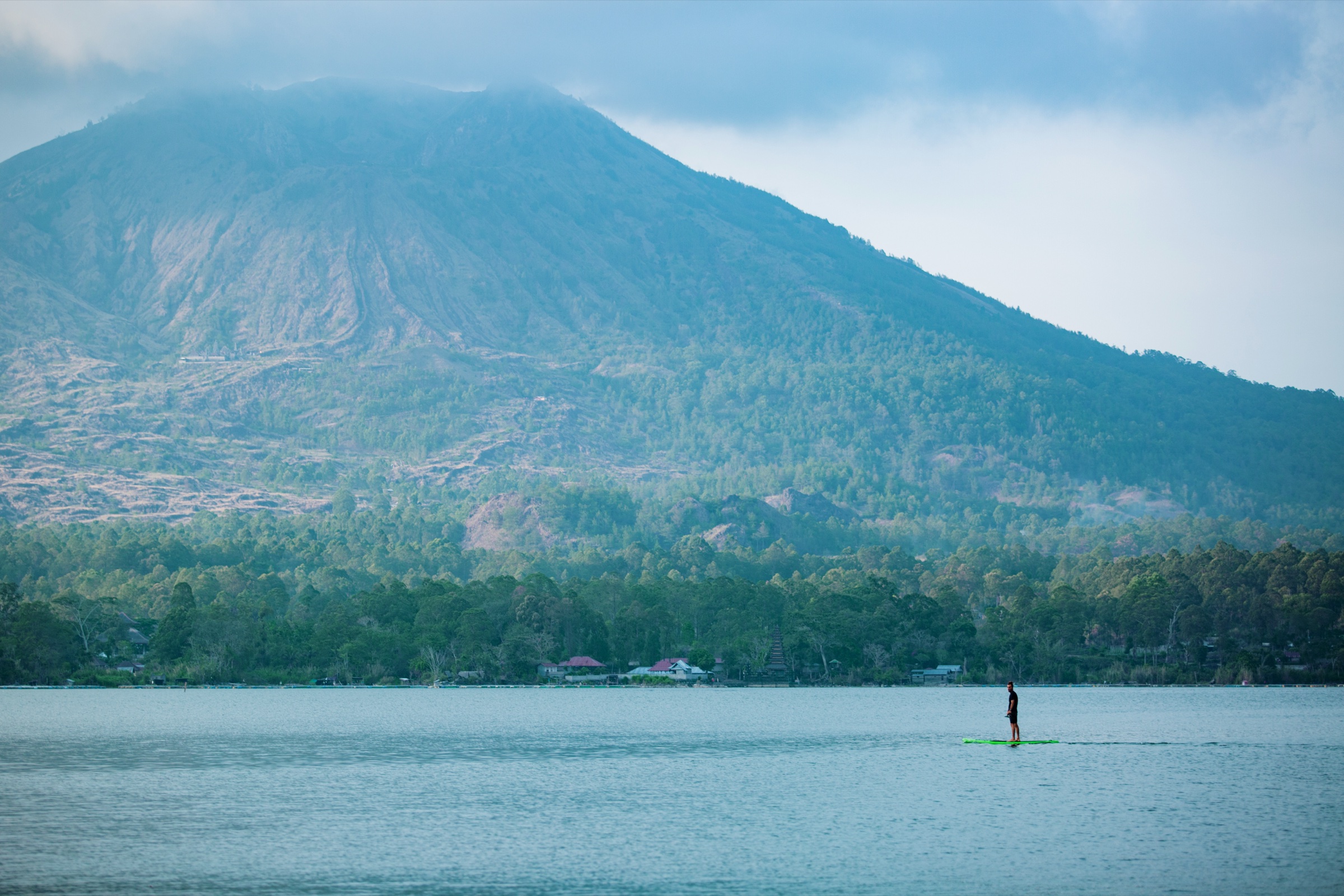
A distant paddleboarder on a calm lake beneath a forested, cloud-topped mountain.

About 5 km from an irrigation reservoir

The campus is about 5 km from the Jatiluhur Reservoir, a major source of irrigation water for rice-growing areas in West Java. IESR puts the facility’s projected water demand at up to 384 litres per second in later stages, equivalent to about 33,000 cubic metres per day or more than 12 million cubic metres a year. Dedi has said he supports investment in West Java provided projects are environmentally friendly, while noting concerns that some data centres have been associated with water shortages.

BDx has part of an answer. CGK4 uses direct-to-chip liquid cooling built to support up to 500 kW per rack, and the company is pursuing a hydroelectric power arrangement with Perum Jasa Tirta II, which runs the dam’s 187.5 MW plant. BDx has not published how much water its cooling will draw or where that water will come from. IESR wants waterless or closed-loop cooling made mandatory. A developer that publishes its water balance before the AMDAL consultation will be better placed than one that waits to be asked.

The lenders are the bigger audience. The $320 million facility, led by Bank Permata, BCA and KB Bank, funds BDx’s CGK3 campus in Jakarta, refinancing and grid capacity at CGK4 and at CGK5 in Karawang. Construction finance for Building 1 is the next milestone, and lenders will be reluctant to fund a building that lacks a building approval. If the AMDAL drags on, the financing and the early-2027 date are likely to slip together.

Competitors are scaling up on a similar model. Princeton Digital Group is putting $1 billion into a 120 MW campus near Jakarta, with its first phase due in the fourth quarter. Cushman & Wakefield counted 322 MW operational in Jakarta at the end of 2025, with 186 MW under construction and 901 MW planned. Much of that pipeline will need the same local approvals. Hyperscalers comparing campuses should check permit status alongside energisation dates and delivery schedules, before they reserve space.

Demand will keep the pressure on developers to move fast. In August, Danantara’s chief technology officer said: ‘If we build 100 megawatts, 200 megawatts, it is immediately sold out.’ Business intelligence company Research and Markets values Indonesia’s data-centre market at $2.81 billion in 2025 and forecasts $6.08 billion in 2031. That pull can encourage developers to hold a ceremony before the paperwork is finished. After Jatiluhur, the local permit sits on the critical path.

The quickest route back is an AMDAL issued after genuine consultation, together with the building approval, and BDx publishing its water and power figures. The power question is a large one. IESR says the campus could use up to 5.6 terawatt-hours of electricity a year at full capacity, and BDx’s 845 MVA equals about 41 per cent of the 2,038 MVA that PLN says it has connected to all 159 of its data-centre customers. The Communications and Digital Ministry estimated in May that Indonesia’s data-centre electricity demand could exceed 2 GW by 2029, and PLN has projected 25 GW by 2035.

The bigger risk is that other provinces copy the order. Opposition to data centres has already emerged in Malaysia, the region’s fastest-growing data-centre market. If other regencies treat Jatiluhur as a precedent, developers across Java will face the same questions on water before they pour concrete. Fabby Tumiwa, chief executive of IESR, set out the terms plainly: ‘Indonesia wants to become a data centre hub in the region. That is an opportunity, but only if data centres are water-efficient, energy-efficient and powered by renewable energy.’